If your home relies on a private well, you’ve likely heard of jet pumps—but how does a jet pump water well work? This clever above-ground system uses the power of fluid dynamics to pull water from depths up to 160 feet, making it a popular choice for homes with shallow to moderately deep wells. Unlike submersible pumps that sit underwater, jet pumps operate at ground level, using a unique recirculation process to overcome the natural limits of suction.
At its core, a jet pump combines a centrifugal pump with a specialized ejector assembly that leverages the Venturi effect—a principle where fast-moving water creates a vacuum to draw in more water from the well. This allows the pump to lift water far beyond the 20-22 foot limit of standard suction pumps. Whether you’re troubleshooting low pressure, sizing a new system, or just curious about your water source, understanding how a jet pump works is key to reliable performance.
In this guide, we’ll break down every component, explain shallow vs. deep-well configurations, and reveal why proper installation and maintenance matter. You’ll learn how water gets from your aquifer to your faucet—and what can go wrong if things aren’t set up right.
Jet Pump Basics: Above-Ground Water Lifting
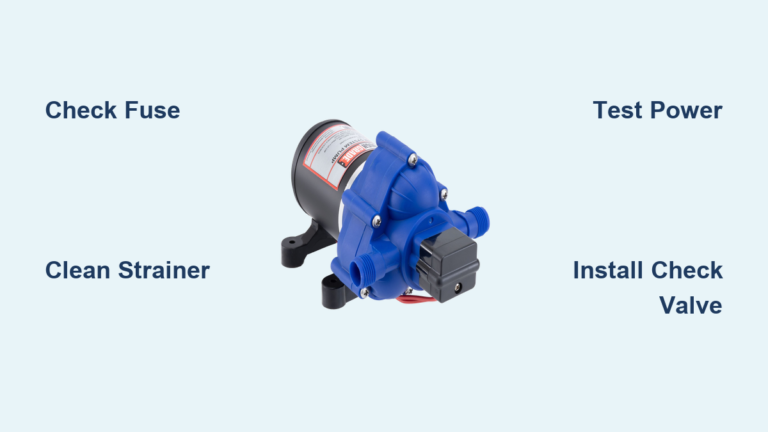
A jet pump is an above-ground water pump designed to extract water from wells without being submerged. It’s commonly used in residential settings where the water table is within 160 feet of the surface. Because it sits outside the well, it’s easier to service than a submersible unit—but it also depends on precise hydraulic principles to function properly.
The biggest challenge in well pumping is suction has physical limits. Atmospheric pressure can only push water up about 22 feet under ideal conditions. Beyond that, a standard centrifugal pump cannot pull water effectively. That’s where the jet pump’s design shines: it does not rely solely on suction. Instead, it uses recirculated pressurized water to create a vacuum below ground, boosting lift capacity dramatically.
This makes jet pumps ideal for areas with moderate well depths, warm climates, and accessible mechanical setups. They’re often chosen for their lower upfront cost and ease of repair compared to submersible systems.
Why Choose a Jet Pump for Your Well
Jet pumps are selected for several practical reasons:
- Easy maintenance with all components above ground
- Lower installation cost with no need for expensive well seals
- Convertible models can switch between shallow and deep-well use
- Reliable performance with proper priming and a working foot valve
However, they’re not suited for very deep wells over 160 feet, sandy water, or freezing environments unless properly protected. Efficiency is also lower than submersible pumps due to internal recirculation losses.
Common Applications for Jet Pump Systems
Jet pumps serve a variety of needs:
- Home water supply delivering pressurized water to fixtures and appliances
- Irrigation systems supplying water for lawns, gardens, or livestock
- Pressure boosting for homes with weak municipal pressure
- Water treatment feeding filtration, softening, or disinfection systems
They work best with clean, debris-free water and stable water levels. In agricultural or rural settings, portable jet pumps can even draw from ponds or streams.
The Venturi Effect: How Suction Becomes Lift

The secret behind a jet pump’s ability to exceed normal suction limits lies in the Venturi effect—a fundamental principle of fluid dynamics. When water flows through a narrowed section of pipe, its speed increases while its pressure drops. This pressure drop creates a vacuum that can pull in additional fluid from a secondary source.
In a jet pump, this effect is harnessed through a nozzle and venturi assembly. Here’s how it works:
- Pressurized water is forced through a constricted nozzle
- As it accelerates into the venturi throat, pressure drops sharply
- This low-pressure zone sucks in well water through a separate inlet
- The two streams mix and are re-pressurized by the pump’s impeller
This process transforms the pump from a simple mover of water into a self-boosting system capable of lifting water from much greater depths.
Nozzle and Venturi: The Heart of the System
The nozzle and venturi must be precisely matched to the pump’s output:
- A smaller nozzle increases velocity but reduces volume
- Misalignment or wear causes turbulence and efficiency loss
- High-quality materials like brass or stainless steel resist erosion from sand and minerals
Even minor damage or scaling can degrade performance, so regular inspection is critical—especially in hard-water areas.
Real-World Analogy: The Garden Hose Trick
Think of putting your thumb over a garden hose. The water speeds up as the opening narrows, creating a strong jet. Now imagine that fast stream pulling air or another liquid into the flow. This is essentially what the Venturi effect does inside a jet pump. The faster the drive water moves, the stronger the vacuum, and the more well water gets pulled in.
Essential Components of a Jet Pump System
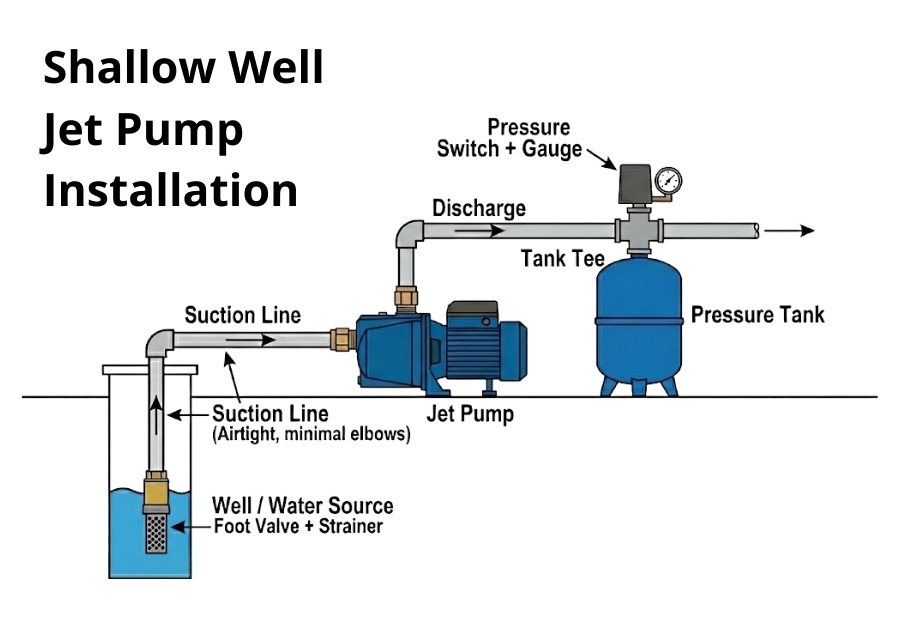
Every jet pump relies on a coordinated set of parts to function. Understanding each component helps diagnose issues and ensure proper installation.
Impeller and Pump Casing
The impeller is the rotating part inside the pump casing that generates centrifugal force. It spins rapidly, creating pressure that pushes water through the system. In jet pumps, the impeller does double duty: it pressurizes the initial water flow and re-pressurizes the combined stream after induction.
The casing must be fully primed—filled with water—before startup. Air pockets prevent proper suction and can cause the pump to run dry, damaging seals and bearings.
Ejector Assembly (Jet Kit)
Also known as the jet or ejector kit, this includes the nozzle, venturi, and diffuser. In shallow-well pumps, it’s built into the pump body. In deep-well systems, it’s installed downhole.
- Nozzle: Accelerates drive water into the venturi
- Venturi: Creates the vacuum that draws in well water
- Diffuser: Expands the mixed flow, converting speed back into pressure
This assembly must be hydraulically matched to the pump. Using the wrong ejector leads to poor performance or cavitation.
Foot Valve: Prevents Prime Loss
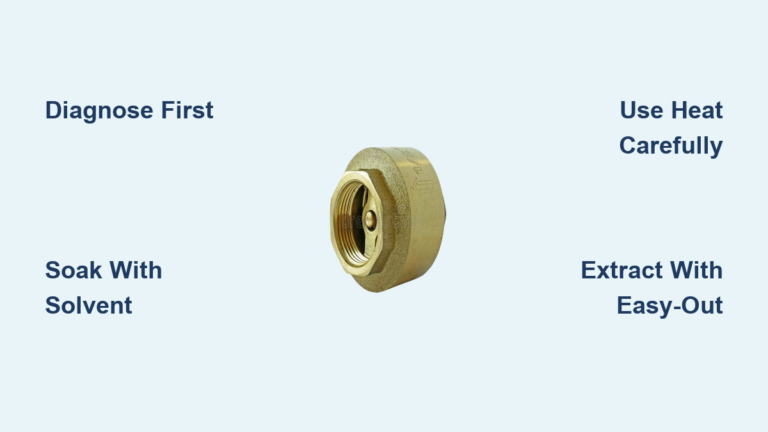
Located at the bottom of the suction pipe, the foot valve is a one-way check valve with a built-in screen. It stops water from draining back into the well when the pump shuts off, maintains prime so the pump can restart automatically, and blocks sand, silt, and debris from entering the system. A stuck or leaking foot valve is a common cause of intermittent operation or failure to prime.
Drive and Return Lines in Deep-Well Systems
Deep-well jet pumps use two pipes. The drive line carries pressurized water down to the ejector. The return line brings the combined flow up to the pump. These lines are typically made of schedule 40 PVC or steel and must be airtight. Any leak introduces air, breaking the vacuum and stopping water flow.
Shallow-Well Jet Pumps: Up to 25 Feet
Shallow-well jet pumps are designed for wells with a water level within 25 feet of the surface. These systems are simpler, using only one pipe to draw water from the well.
Single-Pipe Configuration
The entire ejector assembly is housed inside the pump. Water is drawn up through a single suction line, pressurized by the impeller, and partially recirculated through the internal jet. The Venturi effect enhances suction, allowing lifts slightly beyond what a standard centrifugal pump can achieve.
Because everything is above ground, these pumps are easy to install and maintain. However, their performance drops as depth increases—flow rates decline significantly beyond 20 feet.
Performance Limits at Maximum Depth
At 25 feet of lift, available discharge pressure and flow are greatly reduced. Friction loss and atmospheric pressure work against the system. Prime loss becomes more likely due to air leaks or low water levels. Most manufacturers rate shallow-well pumps for up to 25 feet, though some high-performance models may reach 28 feet under perfect conditions.
Ideal Use Cases for Shallow Systems
These pumps are ideal for dug wells or shallow boreholes, homes with high water tables, and backup or temporary water systems. They’re often used in warm climates where freezing is not a concern and where well depth is not excessive.
Deep-Well Jet Pumps: 25 to 160 Feet
When water lies deeper than 25 feet, a deep-well jet pump is required. These systems shift the suction point below ground using a submerged ejector, overcoming atmospheric pressure limits.
Two-Pipe System Explained
Deep-well jet pumps use two separate pipes. The drive (supply) line sends pressurized water down to the ejector. The return (suction) line carries the mixed flow back up to the pump. The ejector is installed below the water level, typically 10-20 feet beneath the static water table. This ensures it remains submerged and avoids air intake during operation.
How Deep Lifting Works
- The pump pressurizes water and sends it down the drive line
- At the ejector, water blasts through the nozzle into the venturi
- A vacuum forms, drawing in well water through the foot valve
- The combined stream flows up the return line to the surface pump
- The impeller re-pressurizes the full volume for household use
By moving the induction point underground, the system bypasses the 25-foot suction barrier. The surface pump only needs to push water down and then boost the returning flow.
Depth vs. Flow Trade-Off
As depth increases, more energy is spent lifting water. Available flow rate decreases. Efficiency drops due to recirculation losses. A pump delivering 10 GPM at 30 feet might deliver only 5 GPM at 100 feet. Always size the pump based on total dynamic head, not just depth.
Convertible Jet Pumps: Flexible Installation
Some jet pumps are labeled convertible, meaning they can be configured for either shallow or deep-well service. This offers flexibility during installation or if well conditions change.
Dual-Mode Functionality
In shallow mode, the internal jet assembly is used with a single suction pipe. In deep mode, an external ejector kit is added, and the system is converted to a two-pipe setup. This allows homeowners or contractors to adapt the pump to different well depths without buying a new unit.
Matching the Ejector Kit Correctly
Not all ejectors are interchangeable. The nozzle and venturi must be sized for the pump’s flow and pressure, rated for the intended depth, and installed at the correct depth in the well. Using an incorrect kit leads to poor performance, excessive cycling, or premature wear.
Best Situations for Convertible Pumps
Convertible pumps are useful when replacing an old shallow pump in a deepening well, when uncertain water levels require future adaptability, or when budget constraints favor a single-pump solution. Always follow manufacturer guidelines when converting between modes.
Priming: Why Jet Pumps Must Be Filled
Unlike self-priming sump pumps, jet pumps must be manually primed before first use and after any maintenance that breaks the water seal.
What Is Priming and Why It Matters
Priming means filling the pump casing, suction line, and drive line (if applicable) with water to remove air. Without a full column of water, the pump cannot create the vacuum needed to start flow. Failure to prime results in no water output, dry running which overheats seals, and rapid wear on the impeller and bearings.
Steps to Prime a Jet Pump Properly
- Close the discharge valve if equipped
- Remove the priming plug on the pump casing
- Pour clean water into the casing until it overflows
- Fill the suction line and drive line for deep-well systems
- Replace the plug and open the discharge valve
- Start the pump and monitor for steady flow
Some modern jet pumps have automatic priming systems, but most require manual filling.
Maintaining Prime: The Foot Valve’s Role
Once primed, the foot valve keeps water in the line when the pump turns off. If the valve leaks, water drains back into the well, the pump loses prime, and manual re-priming is needed before restart. Regularly inspect the foot valve for debris, corrosion, or wear.
Flow Dynamics: Recirculation and Water Mixing
Jet pumps rely on internal recirculation to generate lift. This process involves multiple stages of water movement and mixing.
The Recirculation Loop Explained
- The impeller draws water from the return line (deep) or suction line (shallow)
- A portion is sent to the discharge
- Another portion is diverted to the drive line (deep) or internal jet (shallow)
- This pressurized drive water powers the ejector
- The ejector pulls in additional induced water from the well
- The combined flow returns to the pump for final pressurization
This loop means the pump moves more water than the impeller alone could produce—but at the cost of efficiency.
Energy Trade-Offs You Should Know
Because energy is used to recirculate water rather than push it directly upward, jet pumps are less efficient than submersible pumps. In deep wells, up to half the energy may go toward recirculation. However, this trade-off enables greater lift capability without placing the motor underground.
Visualizing the Flow Process
Imagine two streams merging. One is fast, high-pressure water from the pump (drive water). The other is slower, ambient-pressure water from the well (induced water). When they mix in the venturi, momentum transfers, and the combined flow gains pressure. The diffuser then slows the flow slightly, converting kinetic energy into usable pressure for your plumbing.
Performance Limits and Common Issues
While jet pumps are reliable, they have inherent limitations and failure points every owner should understand.
Depth and Flow Decline
As well depth increases, available flow rate drops, pressure at fixtures may weaken, and pump cycles more frequently. For example, a pump rated for 8 GPM at 40 feet may deliver only 4 GPM at 100 feet. Always consult performance curves when selecting a model.
Air Leaks Break the Vacuum
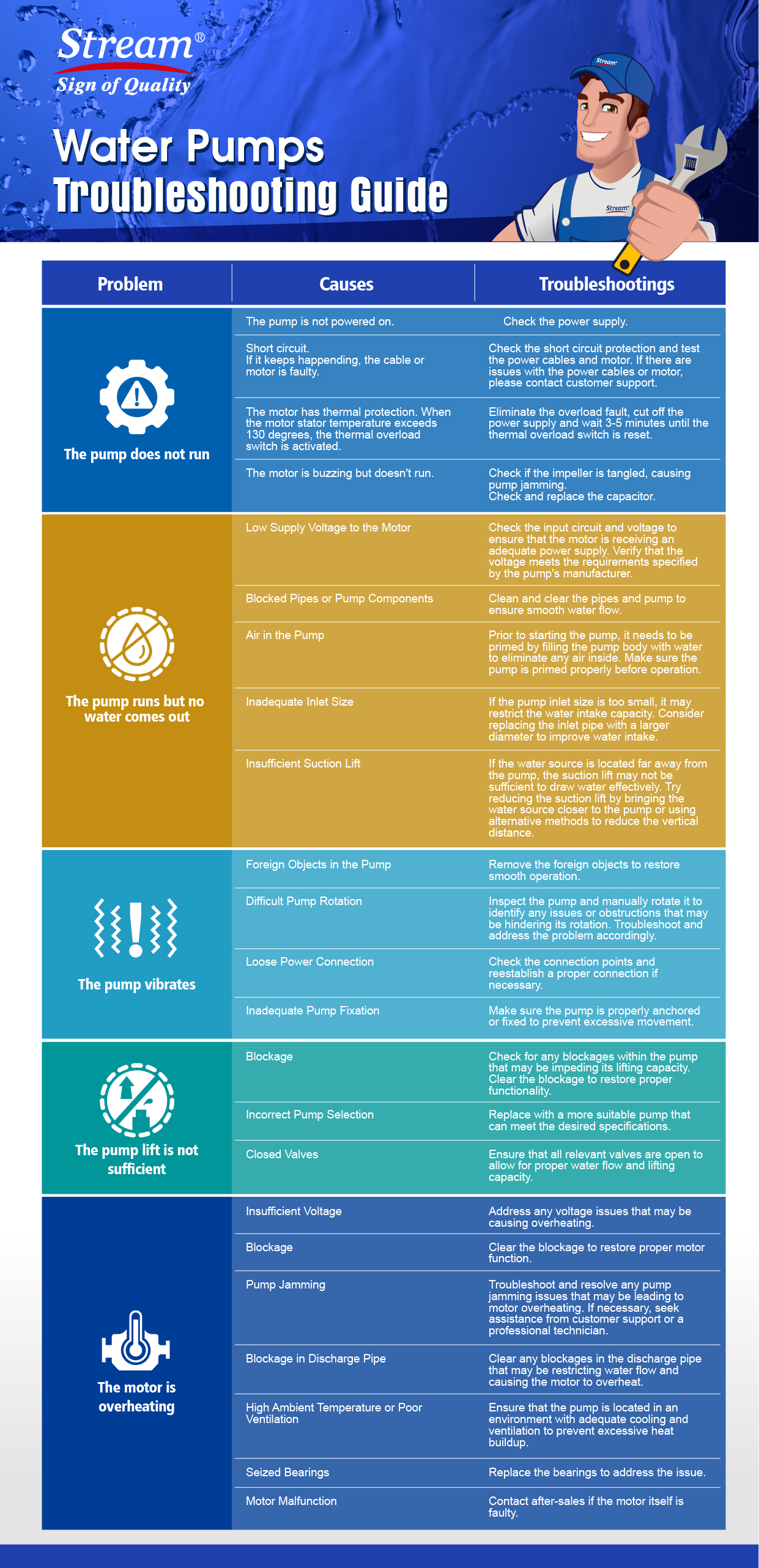
Even a tiny air leak in the suction line can prevent priming, cause the pump to lose prime after shutdown, and lead to erratic operation. Common leak points include threaded fittings, pipe joints, worn gaskets, and cracked casing. Use pipe dope or Teflon tape on all connections and inspect regularly.
Cavitation and Overheating Problems
Cavitation occurs when vapor bubbles form due to low pressure, then collapse violently. It sounds like marbles rattling and can damage the impeller. Causes include a clogged foot valve, undersized piping, ejector mismatch, and low water level. Overheating often follows, especially if the pump runs dry due to loss of prime.
Maintenance: Keep Your Jet Pump Running
Regular upkeep prevents failures and extends pump life significantly.
Monthly Checks You Should Perform
- Listen for unusual noises like grinding or rattling
- Inspect for leaks around fittings and pipes
- Monitor pressure switch for normal cut-in/cut-out (typically 30/50 psi)
Annual Maintenance Tasks
- Test the foot valve by removing and checking for debris or wear
- Clean the ejector by inspecting nozzle and venturi for clogs or erosion
- Verify tank pressure and adjust air charge in the pressure tank if needed
Warning Signs of Trouble
Watch for longer priming time, reduced water flow, frequent cycling, or when the pump runs but produces no water. These often point to a failing foot valve, clogged ejector, or air leak.
Sizing and Selection: Right-Sizing Your Pump
Choosing the correct jet pump ensures efficiency and reliability for your specific situation.
Calculate Total Dynamic Head (TDH)
TDH includes vertical lift from pumping water level to highest fixture, friction loss based on pipe length and diameter, and desired discharge pressure typically 40-60 psi. Use manufacturer charts to match TDH with flow requirements.
Determine Your Flow Needs
Typical household demand is 6-12 GPM for normal use. Large homes or irrigation systems may require 15+ GPM. Account for simultaneous use such as shower plus washing machine plus outdoor hose.
Match Ejector to Depth
Always use the manufacturer-recommended ejector kit for your well depth. A mismatched kit reduces efficiency and may cause damage over time.
Consider Your Water Quality
Hard water, iron, or sand accelerates wear. Choose pumps with stainless steel or bronze ejectors, brass or stainless impellers, and corrosion-resistant casing for longer life.
Frequently Asked Questions About Jet Pump Water Wells
How does a jet pump differ from a submersible pump?
A jet pump sits above ground and uses the Venturi effect to pull water from the well, while a submersible pump sits underwater and pushes water directly upward. Jet pumps are easier to maintain but less efficient in deep wells.
Can a jet pump draw from deeper than 25 feet?
Yes, deep-well jet pumps can draw from 25 to 160 feet by using a submerged ejector and two-pipe system. The ejector is installed below the water level in the well to create suction underground.
Why does my jet pump lose prime frequently?
Common causes include a leaking foot valve, air leaks in the suction line, low water level in the well, or a worn nozzle and venturi. Inspect these components regularly to maintain proper prime.
How often should I prime my jet pump?
You should prime the pump initially during installation and any time maintenance breaks the water seal. After that, a working foot valve should maintain prime automatically. If you need to prime frequently, check for leaks or valve problems.
What is the maximum depth for a jet pump system?
Most jet pumps effectively work up to 160 feet with the right ejector configuration. Beyond that, submersible pumps are recommended due to efficiency and power limitations.
Key Takeaways for Understanding Jet Pump Water Well Systems
A jet pump works by combining centrifugal force with the Venturi effect to lift water from shallow to moderate depths. Its above-ground design makes it accessible and affordable, but proper priming, air-tight plumbing, and matched components are essential for reliable operation. Whether you’re installing, maintaining, or troubleshooting, understanding how a jet pump water well works ensures clean, reliable water for years to come.