Your engine runs hot. During combustion, temperatures inside the cylinders can spike past 2,000°C, generating enormous heat that would destroy metal components in seconds. This is why every car needs a cooling system, and at its heart sits the water pump. Understanding how does a water pump work in a car is essential for any vehicle owner because this component keeps coolant circulating through the engine block, radiator, and heater core to prevent catastrophic overheating.
In this guide, you’ll discover exactly how the water pump creates coolant flow using centrifugal force, the critical differences between mechanical and electric designs, early warning signs of failure, and simple maintenance practices that can save you thousands in engine repairs.
The Water Pump’s Critical Role in Engine Cooling
The water pump serves as the mechanical heart of your vehicle’s cooling system. Its sole purpose is maintaining continuous coolant circulation from the radiator through the engine and back again. Without this constant flow, coolant would stagnate in the engine passages, creating hot spots that warp cylinder heads, blow head gaskets, or seize engine components entirely.
How Coolant Absorbs Engine Heat
Your engine generates heat primarily during the combustion process, but also from friction between moving parts and exhaust gases. Coolant absorbs this heat from the cylinder walls, combustion chambers, and exhaust ports before returning to the radiator where airflow dissipates it. The water pump maintains the pressure needed to force coolant through these tight internal passages efficiently.
Why Flow Rate Matters
A working water pump moves approximately 10-20 gallons of coolant per minute, depending on engine size and operating conditions. This high circulation rate ensures even heat distribution across all cylinders. Insufficient flow causes localized boiling even when coolant levels are correct, leading to rapid overheating and damage.
Mechanical vs Electric Water Pumps

Modern vehicles use either mechanical water pumps driven by belts or electric pumps controlled by the engine computer. Each type has distinct operational characteristics that affect performance and maintenance requirements.
Mechanical Water Pumps: Belt-Driven Operation
Mechanical pumps connect directly to the engine crankshaft via a serpentine or timing belt. They spin at a fixed ratio to engine speed, meaning flow increases with RPM but drops significantly at idle. This creates a fundamental limitation: your engine needs the most cooling at high load, but the pump delivers maximum flow when demand is already high.
Three belt-driven configurations exist. Serpentine belt pumps share drive with the alternator and air conditioning, making them accessible at the front of the engine. Timing belt pumps hide behind the timing cover and require extensive disassembly for replacement. Gear-driven pumps, found in some performance engines, operate internally within the timing case.
Electric Water Pumps: Computer-Controlled Cooling
Electric water pumps represent modern thermal management technology. Powered by your vehicle’s 12-volt electrical system, they operate independently of engine RPM. The engine control unit adjusts pump speed based on real-time data from coolant temperature sensors, engine load, and ambient conditions.
This variable speed control provides significant advantages. Electric pumps can continue running for up to 10 minutes after engine shutdown to manage residual heat from turbochargers in hybrid vehicles. They also warm up faster by reducing flow when the engine is cold, improving fuel economy and reducing emissions during cold starts.
How Centrifugal Force Moves Coolant Through Your Engine
The water pump doesn’t suck coolant through the system. Instead, it uses centrifugal force generated by a spinning impeller to create flow. Understanding this process helps you diagnose circulation problems accurately.
The Flow Path Step-by-Step
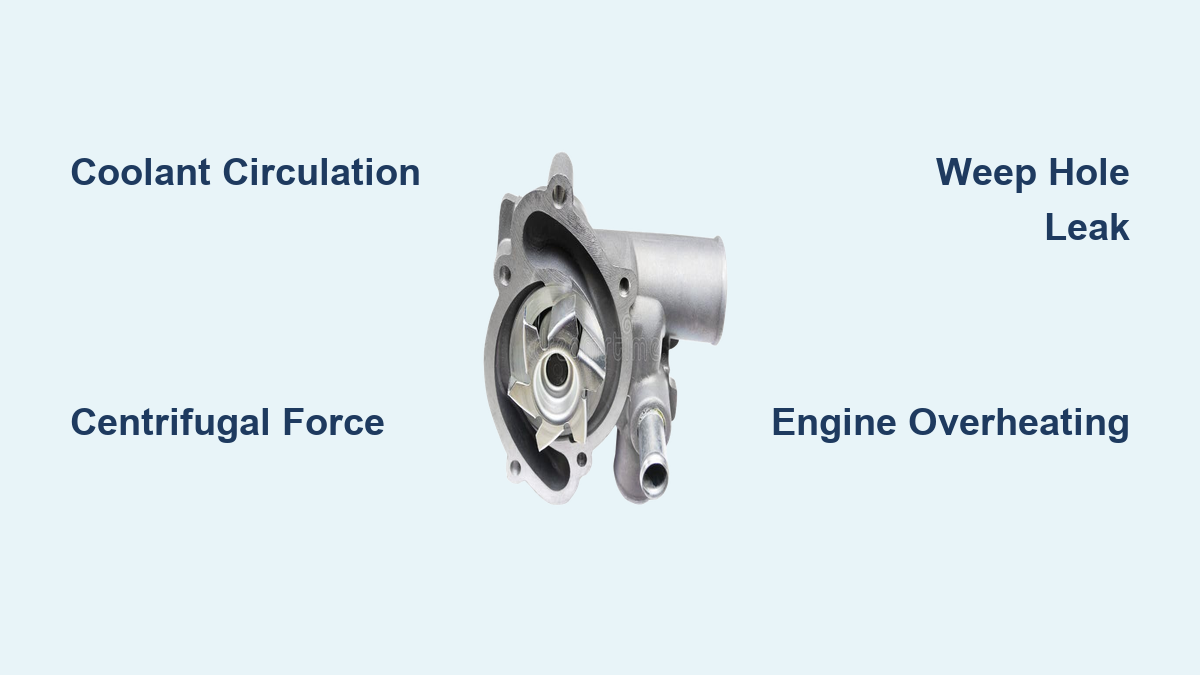
Cooled fluid enters the pump through a bottom inlet connected to the radiator outlet. As the impeller spins, it draws liquid into its center and flings it outward due to centrifugal force. This creates a low-pressure zone at the impeller’s eye that continuously pulls in more coolant.
The high-velocity fluid then enters a spiral-shaped housing called the volute. This chamber gradually widens, converting the fluid’s kinetic energy into pressure while slowing its speed. The pressurized coolant then exits through the outlet and travels into the engine block, absorbing heat before cycling back to the radiator.
Why This Design Works
Centrifugal pumps are remarkably simple and reliable because they have few moving parts. The impeller simply spins, and physics does the rest. This design handles varying flow demands naturally, delivering more coolant as engine speed increases without requiring complex control systems.
Key Components Inside the Water Pump

Several internal components work together to create reliable coolant circulation. Knowing these parts helps you understand failure modes and diagnostic procedures.
The Impeller and Housing
The impeller is a fan-like component with curved blades that spin to move coolant. Modern impellers use plastic composites for corrosion resistance and reduced weight, though metal versions in older designs offer durability. The housing channels fluid from the impeller to the engine and contains mounting points for the drive pulley or electric motor.
Bearings and Mechanical Seals
A bearing supports the rotating shaft and must remain sealed from coolant. The mechanical seal consists of two highly polished faces pressed together by a spring, with a microscopic layer of coolant lubricating the interface. If this seal fails, coolant leaks into the bearing area, rapidly destroying it.
The Weep Hole: Your Early Warning System
Every water pump includes a small weep hole below the seal that allows minor seepage to escape safely. A slight dampness around this hole is normal, but steady dripping or white crystallized deposits indicate seal failure requiring immediate replacement. Never plug the weep hole, as pressure buildup would destroy the bearing.
How the Water Pump Works With Other Cooling System Parts
The water pump doesn’t operate alone. It integrates with several other components to manage engine temperature precisely.
The Thermostat: Temperature Traffic Controller
The thermostat controls when coolant flows to the radiator. When cold, it stays closed, routing coolant through the engine only for faster warm-up. Once the engine reaches operating temperature around 195-220°F, the thermostat opens to allow full radiator flow. Without a functioning thermostat, your engine never reaches optimal temperature, hurting fuel economy and increasing wear.
The Heater Core and Radiator
The water pump also drives flow through the heater core inside your dashboard, providing cabin heat and defrosting capability. After absorbing engine heat, coolant passes through the radiator where thin tubes and fins transfer heat to incoming air, cooled by the vehicle’s movement or electric fans.
Signs of Water Pump Failure to Watch For

Recognizing water pump problems early prevents engine damage. Watch for these common symptoms that indicate your pump needs attention.
Coolant Leaks and Weep Hole Discharge
Puddles of green, orange, or red coolant under your vehicle, especially near the front, suggest pump seal failure. Check the weep hole for steady dripping or white residue. Minor dampness is acceptable, but visible dripping means the pump is failing.
Unusual Noises from the Front of the Engine
Grinding, growling, or high-pitched whining noises often indicate worn bearings. To diagnose, remove the drive belt and try spinning the pump pulley by hand. It should rotate smoothly with no roughness or play. Rough movement confirms bearing failure.
Engine Overheating with Cold Cabin Air
If your temperature gauge climbs while the heater blows cold air, the impeller may be damaged or detached. Coolant isn’t circulating even though the engine is producing heat. Perform a pulsation test by squeezing the top radiator hose after the engine reaches operating temperature. A healthy system shows a strong pressure pulse; absence indicates circulation failure.
When to Replace Your Water Pump
Timing belt-driven pumps should be replaced simultaneously with the timing belt every 60,000-90,000 miles. This avoids repeating the labor-intensive timing cover removal. Serpentine-driven and electric pumps typically last 60,000-90,000 miles but should be replaced when symptoms appear.
Replacement Cost Considerations
Serpentine-driven pumps cost $200-400 including labor. Timing-belt-driven replacements run $400-700 due to extensive disassembly. While expensive, water pump replacement costs far less than engine damage from overheating, which can require $1,500+ for head gasket repair or $3,000+ for a complete engine rebuild.
Maintenance Tips to Extend Water Pump Life
Proper maintenance significantly extends water pump lifespan and prevents premature failure.
• Replace coolant at manufacturer intervals, typically every 30,000-100,000 miles depending on coolant type
• Flush the cooling system during coolant changes to remove sludge and contaminants
• Avoid stop-leak additives that can clog weep holes and destroy bearings
• Inspect serpentine and timing belts regularly for cracks or fraying
• Use the correct coolant type for your vehicle to prevent corrosion
Frequently Asked Questions About How Water Pumps Work
What happens if a water pump fails while driving?
A failed water pump stops coolant circulation entirely. Your engine will overheat within minutes, potentially causing severe damage like a blown head gasket or warped cylinder head. If you notice overheating, pull over immediately and shut off the engine to minimize damage.
How long does a typical car water pump last?
Most water pumps last between 60,000 and 90,000 miles. However, lifespan depends on coolant maintenance, operating conditions, and pump quality. Regular coolant changes and avoiding harsh conditions can extend service life.
Can I drive with a leaking water pump?
Minor weeping may allow short-distance driving, but a significant leak risks rapid overheating. Monitor coolant levels and temperature gauge closely. If you see a steady drip or temperature climbs, arrange transportation rather than risking engine damage.
What’s the difference between mechanical and electric water pumps?
Mechanical pumps are belt-driven and flow rate correlates directly with engine speed. Electric pumps are computer-controlled, can run independently of engine RPM, and often continue operation after shutdown for hybrid thermal management. Electric pumps offer better temperature control but add complexity.
How do I know if my water pump impeller is failing?
Symptoms include overheating despite adequate coolant, cold heater vents when the engine is warm, and no pressure pulse when performing the radiator hose pulsation test. A visual inspection may reveal damaged or missing impeller blades during replacement.
Key Takeaways for Understanding Your Car’s Water Pump
The water pump is the circulatory system of your engine, using centrifugal force to move coolant through a closed loop from radiator to engine and back. Mechanical pumps driven by belts remain common, while electric pumps offer sophisticated thermal control for modern vehicles. Watch for coolant leaks, unusual noises, and overheating with cold cabin air as failure indicators. Replace timing-belt-driven pumps with the timing belt at 60,000-90,000 miles, and maintain coolant to extend pump life. Regular maintenance and prompt attention to symptoms prevent costly engine damage and keep your vehicle running reliably.