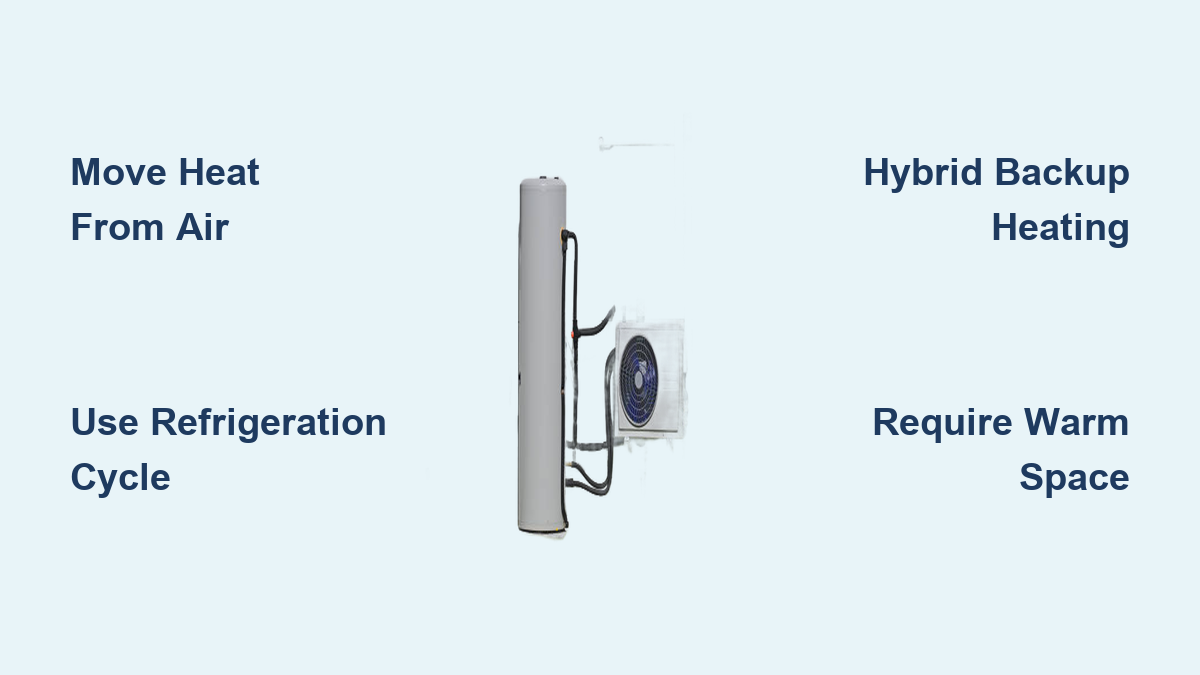
If you have ever wondered how a heat pump water heater works, you are not alone. Unlike traditional water heaters that generate heat directly, a heat pump water heater uses a smart, energy efficient method to move heat from the surrounding air into your water tank. This innovative approach allows it to deliver three to four times more heat energy than the electricity it consumes, making it one of the most efficient home water heating solutions available today.
Think of it like a refrigerator working in reverse: instead of removing heat from an insulated space and releasing it into the room, a heat pump water heater pulls thermal energy from the air and transfers it to your water. This process not only slashes energy use by up to 75 percent compared to standard electric models but also reduces greenhouse gas emissions by about one ton per year, according to EPA estimates.
In this guide, you will learn exactly how a heat pump water heater works, from the refrigeration cycle to hybrid backup systems, and what conditions are ideal for peak performance.
The Core Heat Transfer Principle

At the heart of every heat pump water heater is the vapor compression refrigeration cycle, a closed loop system that moves heat rather than creating it. This process relies on four essential components: the evaporator, compressor, condenser, and expansion valve. The key player is a refrigerant fluid that absorbs and releases heat as it changes from liquid to gas and back again.
The system operates most efficiently in spaces between 40 degrees Fahrenheit and 90 degrees Fahrenheit with enough air volume to sustain heat extraction. As it runs, the unit cools and dehumidifies its surroundings, offering a bonus effect in damp basements during summer months.
Evaporator: Pulling Heat from Air
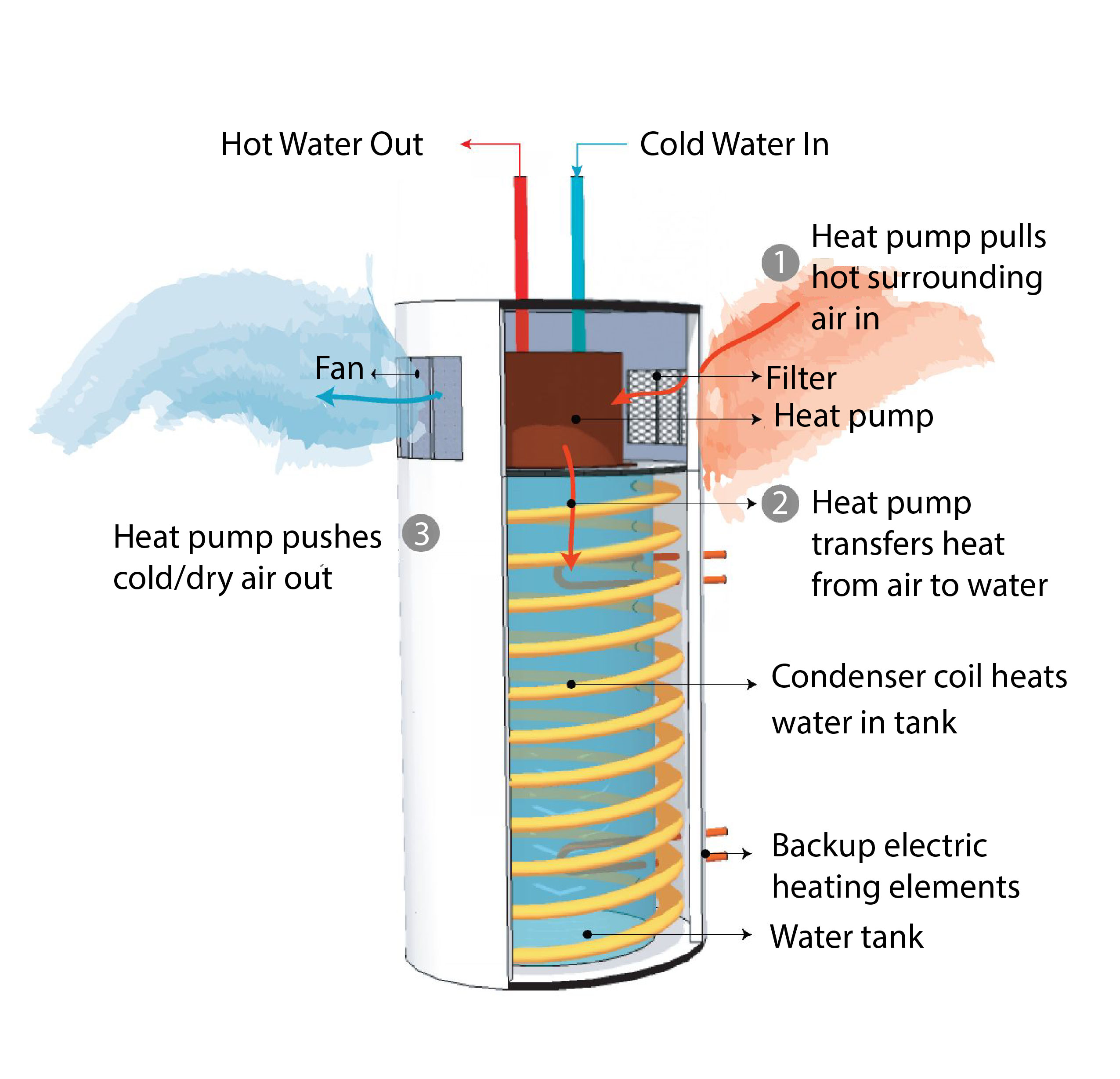
A fan draws ambient air over the evaporator coil, located near the base of the unit. Inside this coil flows cold, low pressure liquid refrigerant. When warm air passes over the coil, the refrigerant absorbs thermal energy and evaporates into a low temperature vapor. This phase change cools the air, causing moisture to condense on the coil, much like dew forms on a cold drink.
This condensate must be drained via a tube to a floor drain or sump pump. Ignoring proper drainage can lead to water damage or mold growth. The cooled air is either released back into the room or ducted away, depending on the setup.
Compressor: Boosting Temperature with Power
The now gaseous refrigerant enters the compressor, where electrical energy squeezes it into a high pressure, high temperature state. Though this is the only major power draw in the cycle, it enables the refrigerant to reach temperatures of 120 to 180 degrees Fahrenheit, hot enough to effectively heat water.
This step is crucial: without compression, the extracted ambient heat would not be sufficient for domestic use. The compressor efficiency directly impacts the overall system performance, especially in cooler environments.
Condenser: Heating Water Without Flames
The superheated refrigerant flows into the condenser coil, which wraps around or immerses inside the water storage tank. As the hot gas moves through the coil, it releases heat into the cooler water, causing the refrigerant to condense back into a liquid.
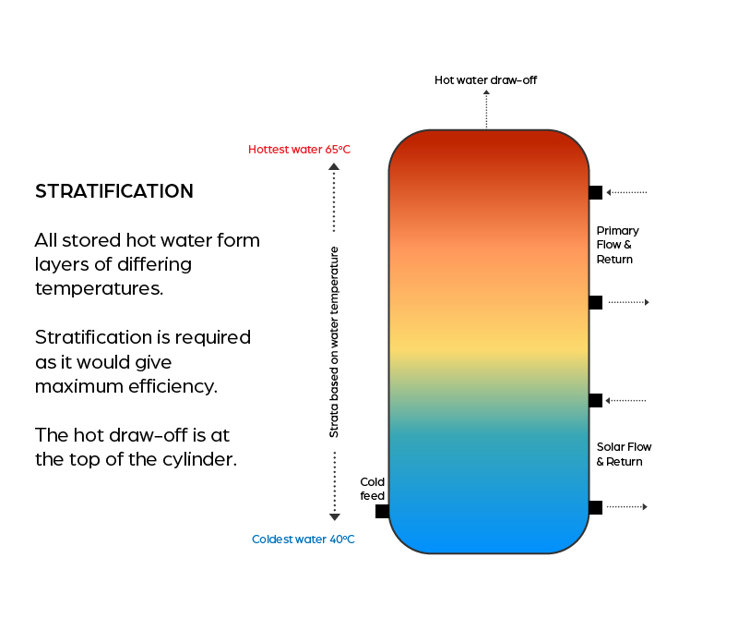
Copper or aluminum coils ensure rapid heat transfer, warming the water efficiently. Hot water rises to the top of the tank due to natural convection, creating thermal stratification, a layer of hot water at the top ready for showers, laundry, or dishwashing.
Expansion Valve: Resetting the Cycle
After releasing its heat, the high pressure liquid refrigerant passes through the expansion valve, which rapidly drops its pressure and temperature. This prepares the refrigerant to re-enter the evaporator as a cold liquid, restarting the cycle.
The entire process repeats until the water reaches the thermostat setpoint, typically 120 to 140 degrees Fahrenheit, then shuts off until demand triggers another cycle.
Hybrid Operation and Backup Heating
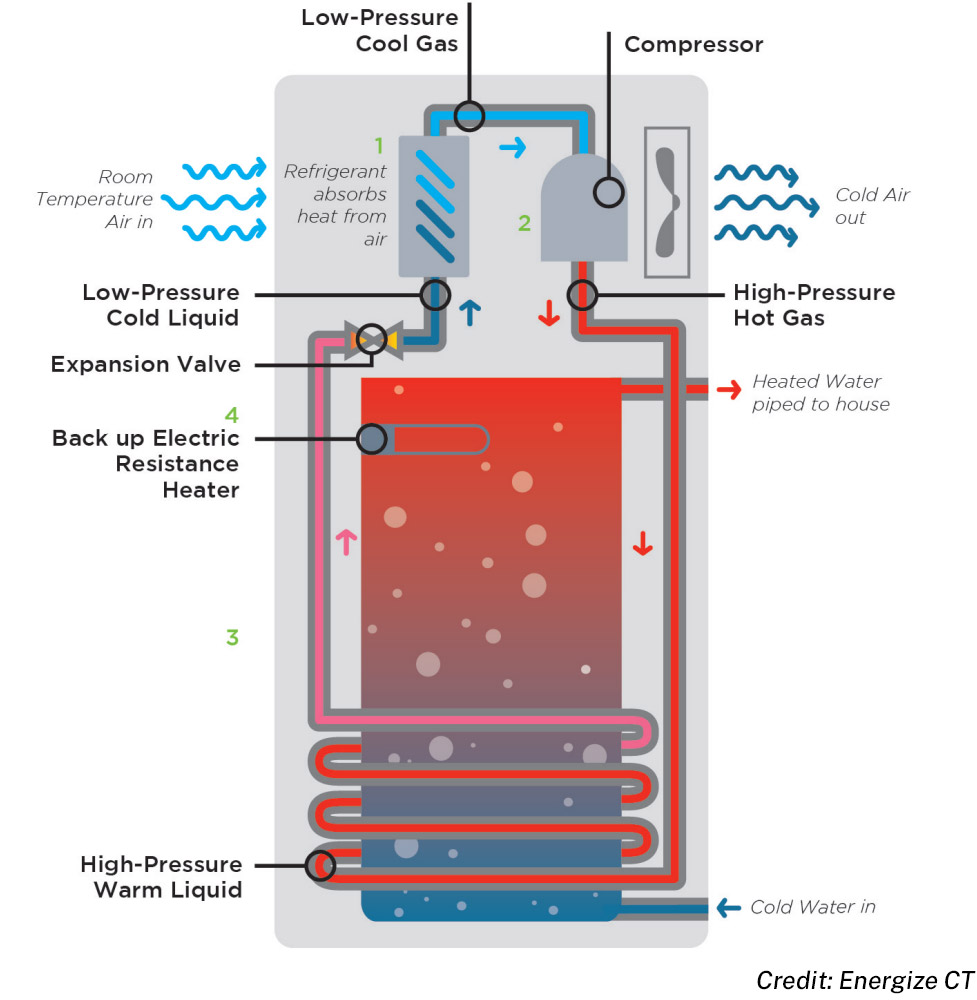
Most modern heat pump water heaters are hybrid systems, combining the efficiency of heat pump technology with reliable electric resistance heating elements for backup. This dual capability ensures consistent hot water, even when demand spikes or temperatures drop.
When Backup Heating Activates
The resistance elements kick in automatically under three conditions. First, high demand occurs when multiple showers or appliance use happens in quick succession. Second, extended usage means long periods of hot water draw exceed the heat pump recovery rate. Third, cold ambient air below 40 degrees Fahrenheit causes the heat pump to shut off or operate inefficiently.
Without this hybrid design, users in colder climates would face long recovery times or cold showers during winter.
Selectable Operating Modes
Users can choose from several modes via a control panel or smartphone app. Heat pump only mode maximizes efficiency and works best in warm conditions. Hybrid or auto mode balances efficiency and performance, using resistance heat only when needed. Electric only mode bypasses the heat pump and is useful in cold spaces or during maintenance. Vacation mode maintains a low tank temperature to save energy during absence.
Smart models even learn usage patterns or integrate with time of use electricity rates to run during off peak hours.
Tank Design and Water Delivery
The insulated storage tank is not just a reservoir. It is engineered for efficiency and consistent delivery.
Cold Water In, Hot Water Out
When you turn on a hot tap, cold water enters at the bottom of the tank. Heated water exits from the top, where it naturally accumulates due to convection. This design maintains thermal stratification, minimizing mixing and preserving usable hot water volume.
Stratification for Efficient Use
Because hotter water rises, the system delivers high temperature water first. Some advanced models use multiple temperature sensors to monitor layers within the tank and optimize heating cycles. This prevents unnecessary reheating and extends efficiency.
Once the stored hot water is depleted, the heat pump restarts to replenish supply, typically recovering at a rate of 20 to 40 gallons per hour, depending on model and ambient temperature.
Measuring Efficiency: COP and UEF
Unlike traditional heaters, heat pump water heaters exceed 100 percent efficiency because they move heat rather than generate it. Two key metrics help compare performance.
Coefficient of Performance
COP measures how much heat energy is delivered per unit of electricity consumed. For example, a COP of 3.0 means three units of heat are produced for every one unit of electricity used. Typical COP range is 2.0 to over 4.0, peaking in warm, humid conditions.
Efficiency drops in colder air, so placement matters. A unit in a heated basement will outperform one in an unheated garage.
Uniform Energy Factor
UEF is the standardized rating used on EnergyGuide labels, accounting for recovery efficiency, standby heat loss, and cycling losses. Heat pump water heaters typically have UEF ratings of 3.0 to 4.2, far surpassing standard electric models at approximately 0.95 and gas models at roughly 0.67.
Higher UEF means lower operating costs. Look for ENERGY STAR certified models with UEF of 3.0 or higher for best results.
Energy and Cost Savings
Switching to a heat pump water heater pays off quickly through reduced energy bills.
Annual and Lifetime Savings
Energy reduction reaches up to 75 percent less than standard electric resistance heaters. Yearly savings range from $200 to $491, depending on climate and usage. Ten year savings total $2,000 to $4,910. Fifteen year savings can reach up to $5,610 for a family of four.
Even with higher upfront costs ranging from $1,000 to $3,500 installed, most homeowners see a payback period of three to eight years.
Federal and State Incentives
Financial support makes adoption easier. A 30 percent federal tax credit applies through the Inflation Reduction Act with no cap through 2032. State rebates, such as New York Clean Heat Program offering $700 to $1,000, provide additional savings. Utility incentives may further reduce net cost.
These programs can cut the effective price by thousands, accelerating return on investment.
System Types and Configurations
Not all heat pump water heaters are the same. Several configurations meet different needs.
Integrated Units
The most common type combines a water tank of 50 to 80 gallons, a top mounted heat pump module, backup heating elements, and an insulated casing with controls. Designed as a direct replacement for electric models, these units are optimized for performance and ease of installation.
Retrofit Heat Pump Add-Ons
For those with a functional electric tank, a retrofit heat pump module can be installed on top. It heats the existing tank without full replacement, saving money if your current heater is less than eight years old.
While slightly less efficient than integrated models, retrofits offer a lower cost path to electrification.
120-Volt Plug-In Models
New plug-in heat pump water heaters run on standard 120 volt outlets, eliminating the need for electrical panel upgrades. These are ideal for renters, homes with outdated electrical systems, and gas to electric conversions.
Though slower to recover than 240V models, they still achieve COPs of 2.5 to 3.5, delivering major efficiency gains.
Commercial and Multi-Family Systems
Larger heat pump water heaters serve high demand settings like apartment buildings, hotels, laundromats, and dormitories. These often include multiple compressors, advanced controls, or integration with building management systems for scalable, efficient operation.
Ideal Installation Conditions
For peak performance, location is everything.
Required Ambient Conditions
The temperature range should be 40 to 90 degrees Fahrenheit. Air volume must be at least 1,000 cubic feet. Clear airflow is needed with no obstructions near intake or exhaust.
Installing in a cold space forces reliance on backup heating, erasing energy savings.
Best Locations
Top performing spots include furnace or boiler rooms with excess heat available, conditioned basements with stable temperatures and dehumidification benefit, garages in warm climates, and mechanical rooms with good airflow.
Avoid unheated garages, crawl spaces, or extremely tight closets.
Ducting for Better Performance
Duct kits allow drawing warm air from attics or adjacent rooms and exhausting cooled air outdoors or into basements for summer cooling. This boosts efficiency in confined or temperature limited spaces.
Climate Suitability and Geographic Fit
Heat pump water heaters thrive in warm and moderate climates. They are especially effective in southern U.S. states, coastal and humid regions, and mixed humid zones like the Mid-Atlantic.
In colder northern regions, indoor installation in heated or semi-conditioned spaces is essential. In very cold areas below 40 degrees Fahrenheit, performance declines and resistance heating dominates, reducing savings.
However, even in cooler zones, a well placed heat pump water heater in a basement can still outperform standard electric heaters and qualify for incentives.
Geothermal and Combination Systems
Beyond air source models, some systems integrate with geothermal or HVAC setups.
Desuperheaters on Geothermal Heat Pumps
A desuperheater captures waste heat from a geothermal system compressor and uses it to preheat domestic water. During summer cooling mode, it can supply most or all of a home hot water needs.
In winter, when heating mode runs, the desuperheater produces less heat, requiring a backup source.
Triple-Function Geothermal Systems
Advanced setups include a dedicated water heating circuit, allowing one system to handle space heating, cooling, and hot water. This is ideal for all electric, high efficiency homes.
HVAC Plus Water Heating Combos
Some air source units combine space heating, air conditioning, and water heating. These integrated systems extract heat from outside air in winter and from indoor air in summer, serving as a total energy solution for modern homes.
Sizing and Selection Tips
Choosing the right unit ensures reliability and efficiency.
First-Hour Rating Matters
While tank size indicates capacity, the first hour rating tells you how much hot water the system can deliver in one hour. Consider that a typical shower uses 20 gallons, a dishwasher uses four to seven gallons, and a washing machine uses seven to 13 gallons.
A family of four with back to back showers may need a first hour rating of 60 to 80 gallons.
Prioritize High UEF
Look for models with UEF of 3.0 or higher, ENERGY STAR certification, and smart controls for scheduling and monitoring. Higher efficiency pays off over time through lower bills and faster payback.
Maintenance and Longevity
With proper care, heat pump water heaters last longer than conventional heaters.
Routine Maintenance Tasks
Clean the air filter every three to six months. Inspect evaporator and condenser coils annually. Check the condensate drain line for clogs. Flush the tank every one to two years to prevent sediment buildup.
Neglecting filters reduces airflow, forcing the system to work harder and lowering efficiency.
Expected Lifespan
Average life spans 13 to 15 years. With maintenance, it can exceed 15 years. Warranties typically last six to 10 years, covering tank and components.
This exceeds standard electric models lasting 10 to 12 years, adding to long term value.
Smart Features and App Control
Modern heat pump water heaters come with Wi-Fi and smart capabilities.
Remote Monitoring and Scheduling
Via smartphone apps, users can adjust temperature remotely, schedule heating during off peak hours, track energy usage, and receive maintenance alerts. These features are especially valuable with time of use electricity rates, allowing operation during cheaper rate periods.
Energy Optimization
Smart systems can learn usage patterns, switch to electric only mode during peak demand, and send alerts for filter changes or drain issues. This maximizes savings and minimizes user effort.
Who Should Install One?
Heat pump water heaters are not for everyone, but many homes are ideal candidates.
Ideal Users
Homeowners replacing water heaters over 10 years old are good candidates. Those in conditioned basements or utility rooms above 40 degrees Fahrenheit year-round benefit the most. Households seeking lower bills and carbon footprint should consider this upgrade. Eco conscious buyers pursuing all electric homes will find it valuable. Residents in warm or humid climates gain bonus dehumidification.
Not Recommended For
Heat pump water heaters do not work well in uninsulated spaces below 40 degrees Fahrenheit. Homes with less than 1,000 cubic feet of air space face limitations. Situations without drain access for condensate create problems. Renters unable to modify plumbing or electrical systems should look for other options.
Frequently Asked Questions About Heat Pump Water Heaters
How efficient is a heat pump water heater compared to a standard electric water heater?
Heat pump water heaters are three to four times more efficient than standard electric resistance models. They achieve this by moving heat from the air rather than generating it electrically, resulting in coefficients of performance between 2.0 and 4.0. This translates to 75 percent less energy use and significantly lower operating costs.
Can a heat pump water heater work in cold climates?
Yes, but with limitations. Heat pump water heaters work best in temperatures above 40 degrees Fahrenheit. In colder climates, they should be installed in conditioned spaces like heated basements. Below 40 degrees, the backup electric resistance heating kicks in more often, reducing energy savings. However, they still outperform standard electric heaters even in cooler environments.
Do heat pump water heaters require special installation?
Yes, specific requirements exist. They need adequate air volume of at least 1,000 cubic feet, ambient temperatures between 40 and 90 degrees Fahrenheit, and a drain for condensate water. Electrical requirements vary, with 240V models needing a dedicated circuit and 120V plug-in models offering simpler installation. Proper location selection is critical for performance.
How long do heat pump water heaters last?
The average lifespan is 13 to 15 years with proper maintenance. This exceeds traditional electric water heaters lasting 10 to 12 years. Regular filter cleaning, annual coil inspection, and periodic tank flushing help maximize longevity. Most models come with six to 10 year warranties covering both tank and heat pump components.
Are there financial incentives for installing a heat pump water heater?
Yes, multiple incentives are available. A 30 percent federal tax credit with no cap applies through 2032 under the Inflation Reduction Act. Many states offer additional rebates, such as New York Clean Heat Program providing $700 to $1,000. Utility companies often have their own incentives. These programs can reduce the effective cost by thousands of dollars.
Does a heat pump water heater cool the surrounding space?
Yes, this is a natural byproduct of the heat extraction process. The unit pulls thermal energy from the air, which cools and dehumidifies the surrounding area. This is beneficial in warm, humid basements during summer but may be undesirable in already cool spaces during winter. Ducting options can redirect cooled air to more useful locations.
Key Takeaways for Understanding Heat Pump Water Heaters
A heat pump water heater works by moving heat from the air into water using a refrigeration cycle, similar to a reverse refrigerator. It delivers three to four times more heat energy than the electricity it uses, cutting energy bills by up to 75 percent and reducing emissions by about one ton per year. The system uses four key components: an evaporator that absorbs heat from air, a compressor that boosts temperature, a condenser that transfers heat to water, and an expansion valve that resets the cycle.
Most models are hybrid systems with backup electric resistance heating for high demand or cold weather operation. They require installation in spaces between 40 and 90 degrees Fahrenheit with at least 1,000 cubic feet of air volume and proper condensate drainage. With smart controls, hybrid functionality, and strong financial incentives including a 30 percent federal tax credit, a heat pump water heater is a smart, sustainable upgrade for most homes. Just ensure proper installation in a warm, well ventilated space with drainage, and maintain filters and coils for lasting performance.