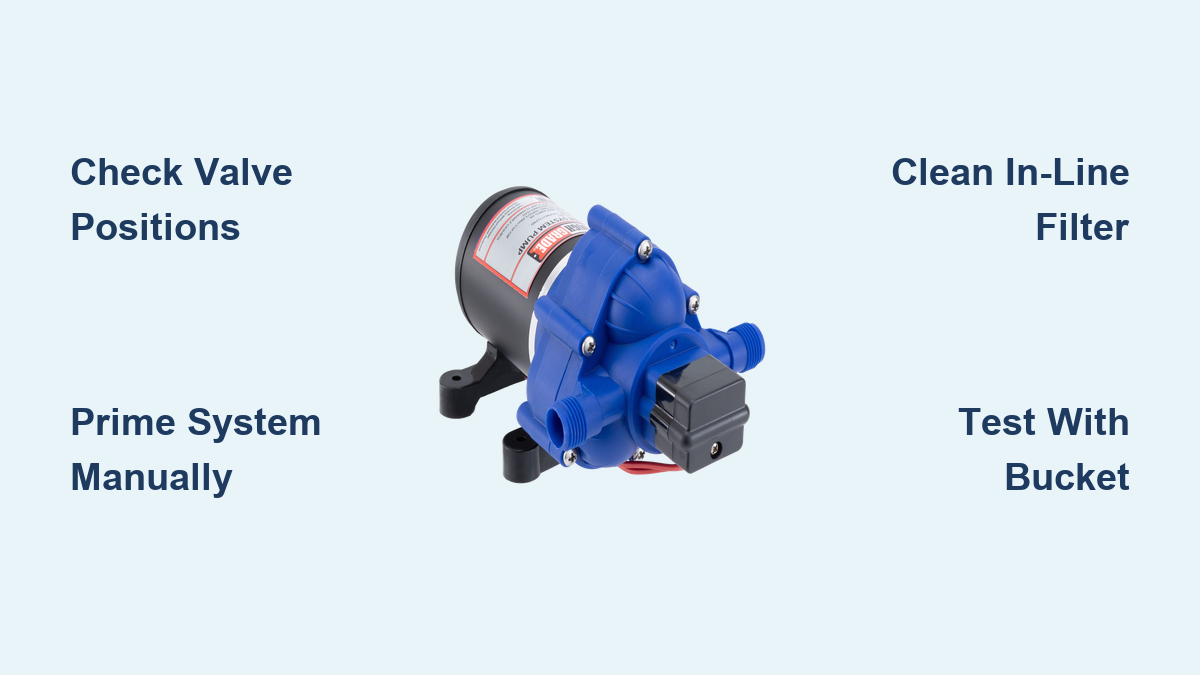
You’re ready for a weekend getaway, but when you flip the water pump switch, you hear it humming, yet not a drop comes out of the faucet. This is a common RV issue: the water pump runs but delivers no water. The good news is that in most cases, it’s not a broken pump. More often, the problem lies in valve positions, air locks, clogged filters, or system misconfigurations, not electrical or mechanical failure.
This guide walks you through every possible cause, from the most frequent and easiest to fix to internal pump issues. You’ll learn how to diagnose, troubleshoot, and resolve the issue step by step using proven methods from experienced RV technicians and thousands of user reports. By the end, you’ll know exactly what to check and how to get water flowing again fast.
Check Valve Positions First
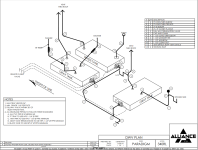
The first thing to check when your RV water pump turns on but no water comes out is the position of your system valves. Incorrect valve positioning is the most frequently reported cause across all sources, often misdiagnosed due to inconsistent labeling and unclear manuals.
Winterization Valve Set Wrong
If your RV water pump runs but no water flows, check the winterization valve. This three-way valve controls whether the pump draws water from the freshwater tank or a portable jug used during winterizing. If left in the winterize position, the pump sucks air instead of water.
What to do:
- Locate the valve near the pump, often connected to a clear vinyl hose
- Ensure the lever points to tank or normal mode
- If unsure, switch positions and test the pump
Even if you didn’t winterize recently, someone might have, especially on a rental or recently serviced RV.
City Water Lever Misunderstood
Some RVs, like Delta models by Alliance, have counterintuitive valve labeling. The lever labeled City Fill may actually be required to draw from the freshwater tank, despite what the manual says.
User-reported fix:
- One owner spent hours troubleshooting only to discover that City Fill equals tank draw
- Manuals for some models contain incorrect instructions
What to do:
- Do not trust labels blindly
- Test each lever position while running the pump
- Mark the correct setting with tape for future reference
Bypass or Drain Valves Left Open
Open bypass or drain valves prevent the system from building pressure. Common culprits include water heater bypass valves, low-point drain cocks, and the shower saver valve.
Signs of an open loop:
- Pump runs continuously
- No water at any fixture
- System never shuts off
What to do:
- Close all bypass and drain valves
- Reset water heater if it was drained
- Test the shower saver valve and ensure it is in off or normal mode with the lever straight down
Confirm Freshwater Tank Has Enough Water
Before diving deeper into troubleshooting, verify that your freshwater tank has adequate water. Even if the tank isn’t empty, one to two gallons may not be enough for the pickup tube to reach water.
Tank Level Too Low
Most systems need five to ten gallons minimum, depending on tank depth. If you have less than that, the pump won’t be able to draw water.
What to do:
- Visually inspect the tank because gauges are often inaccurate
- Fill the tank completely when testing after winterizing or sanitizing
- Add at least fifteen gallons if you have just sanitized the system
When sanitizing your RV, use one-quarter cup of bleach per fifteen gallons of water, circulate it through all lines, wait three to twelve hours, then flush thoroughly before use.
Eliminate Air Locks and Restore Prime
Even self-priming pumps like Shurflo, SureFlow, and Pentair can fail to prime after running dry, long-term storage, de-winterizing, or tank refill. This is a common cause of the pump runs but no water issue.
Pump Lost Its Prime
Symptoms of a lost prime include the pump running but no flow, gurgling or pulsing sounds, and delayed or no water delivery.
Prime the System Manually
Method one involves opening all faucets. Turn on all hot and cold faucets including the shower, activate the pump, and wait two to five minutes. As air clears, water should start flowing. Close faucets one by one, starting from the closest to the pump.
Method two uses city water to prime. Connect a pressurized hose to the city water inlet, open all faucets briefly to purge air, then close faucets and disconnect the hose. Switch to normal mode and turn on the pump. Flow often resumes immediately.
Expert trick: Use Power Fill or Sanitize mode, if available, with the pump on to force water backward through the pump, re-lubricating seals.
Force Prime Through Winterization Hose
Attach a funnel to the clear winterization hose and pour clean water into it until flow starts at a faucet. This forces water into the pump and breaks the air lock.
Cycle the Fresh Tank Drain
Open and close the freshwater tank drain valve while the pump is running. This can dislodge trapped air from low points in the line. One Bay Star owner restored flow after ten minutes of cycling the drain.
Inspect and Clean Filters
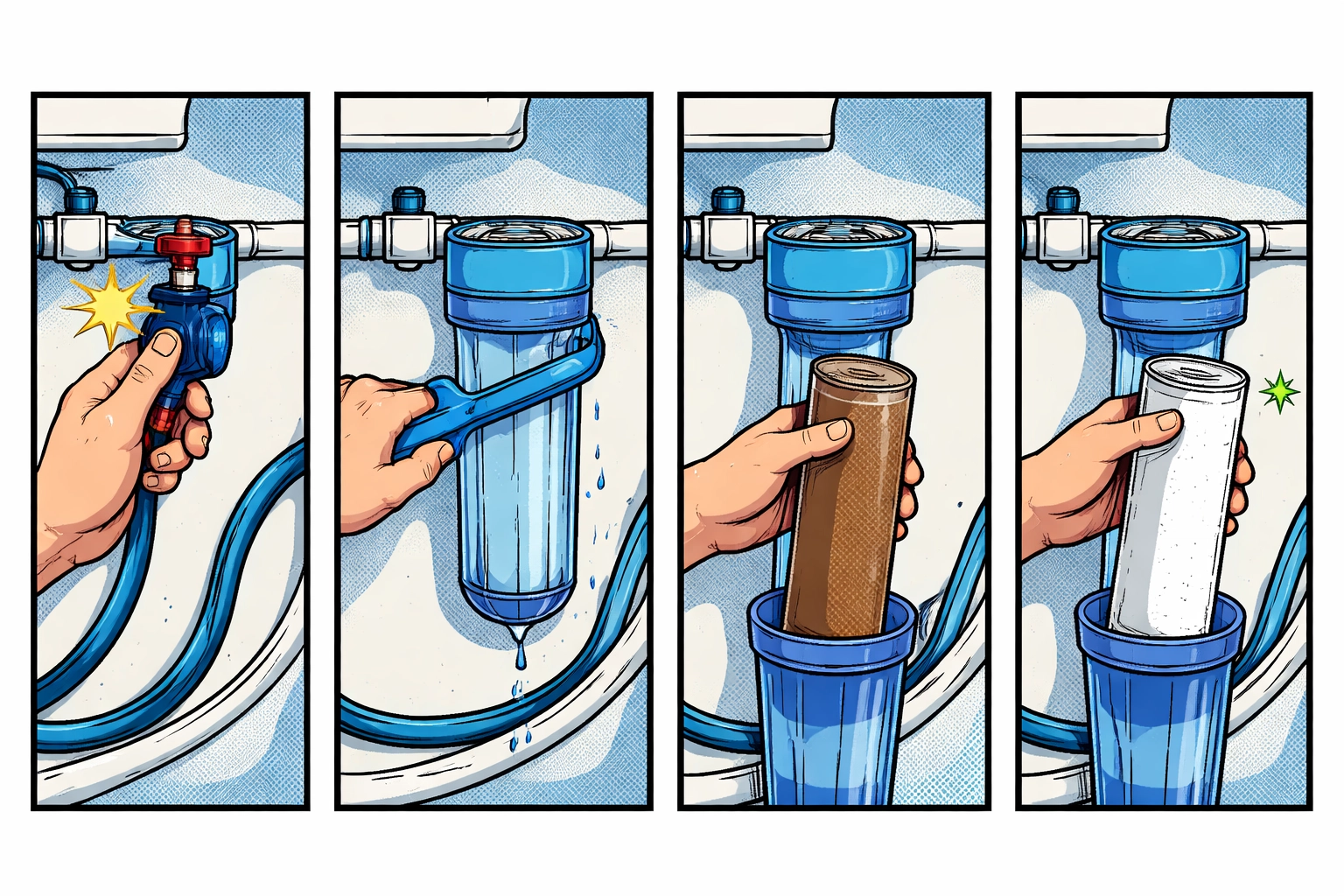
A clogged or damaged filter breaks suction and prevents water flow. This is an often-overlooked cause of the RV water pump turns on but no water problem.
In-Line Filter Clogged or Leaking
Most RVs have a clear plastic filter between the freshwater tank and pump. It contains a mesh screen that can get clogged with debris, crack from freezing, or leak air if the cap is loose.
What to do:
- Remove the filter housing
- Take out and clean the screen
- Check for cracks or cloudiness
- Hand-tighten the cap. Over-tightening can crack the housing
- Replace if damaged
A loose or cracked filter lets in air, breaking suction.
Faucet Aerators Blocked
Even if water reaches the fixtures, clogged aerators can block flow.
What to do:
- Unscrew aerators from all sinks and showers
- Soak in vinegar or clean with a brush
- Reinstall and test
Test the Pump Directly
To determine if the pump itself is faulty, perform a bucket test to isolate the problem.
Bucket Test: Isolate the Pump
Disconnect the inlet hose from the freshwater tank and submerge it in a bucket of water. Turn on the pump.
Results:
- Water flows: The problem is in the tank, hose, or filter
- No flow: The pump is defective
If the pump still does not draw from the bucket, it is likely internal failure.
Diagnose Internal Pump Failure
If all external causes are ruled out, the pump itself may be defective despite running. Several internal components can fail while the motor still operates.
Stuck Pressure Regulator Valve
Common in SureFlow and Shurflo pumps, the pressure regulator valve can seize due to mineral buildup, sediment, or long-term inactivity.
Symptoms:
- Pump runs but no output
- Air passes through inlet but not outlet
Fix:
- Remove pump housing, typically six to eight screws
- Locate the spring-loaded valve in the center
- Gently push or wiggle it to free it
- Reassemble carefully
Prevention: Run the pump every three to five days during storage to keep parts lubricated.
Diaphragm Failure
The flexible diaphragm creates suction and pressure. If it is cracked, hardened, torn, or stuck, it will not move water even if the motor runs.
What to do:
- Replace the diaphragm. Repair kits are available
- Or replace the entire pump. Expect to pay seventy to eighty-five dollars on Amazon
One new Class A owner replaced a working pump only to find the internal diaphragm was intact but non-functional. This was likely a manufacturing defect.
Cracked or Frozen Pump Housing
Freezing can crack the housing or jam internal parts, even if no damage is visible externally.
What to do:
- Inspect for cracks
- If suspected, replace the pump
- In winter, always drain the system before storing
Check Plumbing Connections
Loose or damaged plumbing connections can cause air ingestion, resulting in the pump running but no water delivery.
Loose or Disconnected Hoses
A loose inlet hose from the tank to the pump can suck air instead of water.
What to do:
- Inspect all connections
- Tighten clamps
- Ensure the cone washer on the inlet side faces outward. If reversed, it can hold the check valve open
Damaged Pickup Tube
The pickup tube inside the freshwater tank can crack, disconnect, or get blocked by debris.
What to do:
- Inspect through the fill port or access panel
- Ensure it is intact and properly seated
Prevent Future No-Flow Issues
Regular maintenance prevents the RV water pump turns on but no water issue from recurring.
Run the Pump Periodically
Even when on city water, run the onboard pump every three to five days to keep seals lubricated, prevent mineral buildup, and avoid diaphragm sticking.
Expert advice: Exercise the pump regularly. Dry storage kills more pumps than use.
Install a Clear In-Line Filter
Replace the stock filter with a high-quality clear housing so you can see if water is moving, spot cracks or debris early, and monitor for air bubbles.
Keep Spare Parts Onboard
Always carry replacement filter housing, pump diaphragm kit, hose clamps, Teflon tape, and a funnel for priming.
Final Diagnosis Checklist
Use this quick checklist to resolve the pump runs but no water issue:
| Step | Action |
|---|---|
| 1 | Check winterization valve. Set to tank draw |
| 2 | Verify no open bypass or drain valves |
| 3 | Ensure freshwater tank has five or more gallons |
| 4 | Disconnect city water hose |
| 5 | Clean in-line filter and aerators |
| 6 | Prime system using open faucets, city water, or bucket prime |
| 7 | Test pump with bucket. If no flow, pump is bad |
| 8 | Inspect for loose hoses or reversed washers |
| 9 | Disassemble pump if stuck regulator is suspected |
| 10 | Replace pump if all else fails |
When to Replace the Pump
Replace the pump if it fails the bucket test, the diaphragm is damaged, the housing is cracked, or you have freed the regulator but still have no flow.
Best replacement options include the Shurflo 4008-E47-112, which is the most common and reliable, SureFlow which is good but prone to mineral buildup, Pentair Whisper which is loud but strong, and Barnacle which is quiet and budget-friendly.
Key Takeaways for Fixing Your RV Water Pump
An RV water pump that runs but delivers no water is rarely a dead pump. Most often, it is a simple configuration or priming issue. Start with the valve positions, then check water level, filters, and air locks. Use the bucket test to isolate the problem.
Top three quick fixes:
- Switch winterization valve to tank draw
- Prime with city water or open all faucets
- Clean the in-line filter and aerators
By following this guide, you will avoid unnecessary pump replacements and get back to enjoying your trip with water flowing in minutes, not hours.
Frequently Asked Questions About RV Water Pump Turns On But No Water
Why does my RV water pump run but not deliver water?
The most common causes are incorrect valve positions, loss of prime, clogged filters, or air locks in the system. The pump motor working does not mean the hydraulic system is functioning properly.
How do I prime my RV water pump manually?
Open all faucets, turn on the pump, and wait two to five minutes for air to clear. Alternatively, connect city water to force water backward through the pump, or pour water into the winterization hose using a funnel.
Can a clogged filter cause no water flow?
Yes. A loose, cracked, or clogged in-line filter between the freshwater tank and pump can let in air or block water entirely, causing the pump to run without delivering water.
How do I test if my RV pump is working?
Perform a bucket test. Disconnect the inlet hose, submerge it in a bucket of water, and turn on the pump. If water flows, the issue is in the tank, hose, or filter. If no flow, the pump is defective.
How often should I run my RV water pump during storage?
Run the pump every three to five days during storage to keep seals lubricated and prevent mineral buildup that can cause the pressure regulator or diaphragm to seize.
Do I need to replace the entire pump if it fails?
Not always. If the pressure regulator valve is stuck, you can free it by disassembling the pump. If the diaphragm is damaged, you can replace it with a repair kit. However, if the pump fails the bucket test or the housing is cracked, replacement is necessary.