If your water pump won’t stop running, it’s not just annoying—it signals a serious problem. A pump that runs continuously is a clear warning sign of a fault in your system, whether it’s a faulty pressure switch, hidden leak, or failing check valve. Left unchecked, this issue can destroy the motor, overheat wiring, and lead to costly repairs or flooding.
This guide gives you a step-by-step plan to diagnose and fix why your water pump won’t shut off. You’ll learn the top causes, how to test each component safely, and when to call a professional. We cover well pumps, jet pumps, and RV systems, so you get accurate, actionable advice no matter your setup.
Check the Pressure Switch First
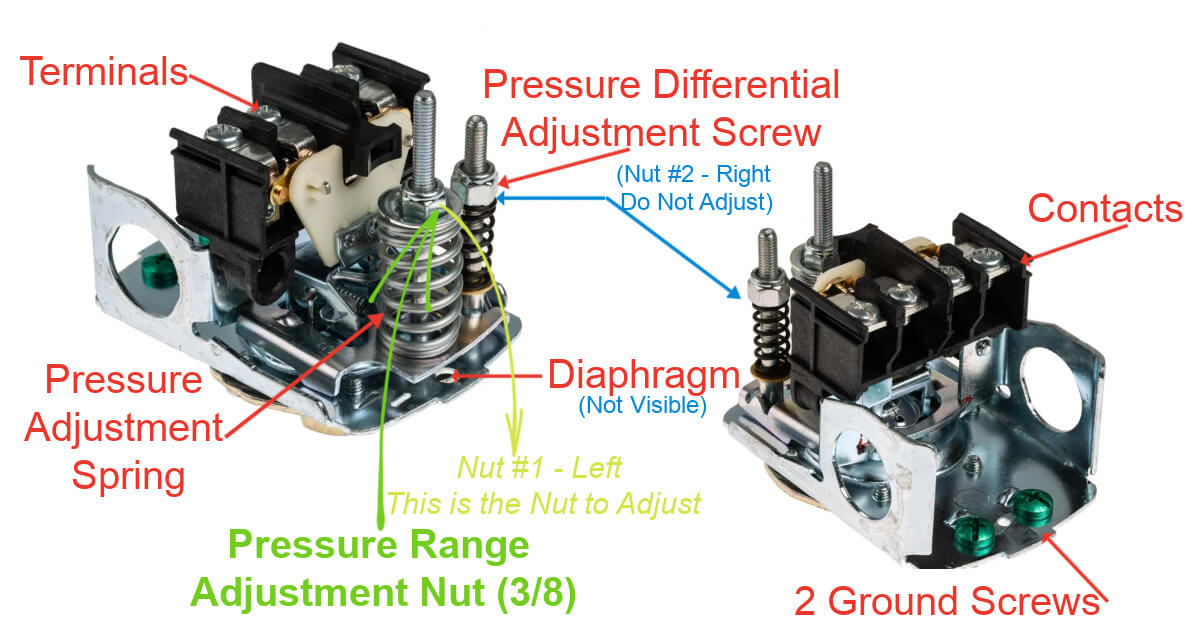
The pressure switch is the most common reason a water pump won’t stop. This component acts as the “brain” of your water system, turning the pump on when pressure drops and off when it reaches the cut-out level. If it fails, the pump keeps running even when pressure is high.
Stuck or Fused Contacts
Over time, electrical contacts inside the switch can fuse shut due to arcing or corrosion. When this happens, the circuit stays closed, and the pump runs nonstop.
What to do:
- Turn off power at the breaker
- Remove the switch cover (do not touch live wires)
- Look for blackened or melted terminals, contacts stuck together, or corrosion
- Gently clean contacts with a non-metallic wire brush
- Try prying fused contacts apart with a wooden stick (never metal)
If cleaning doesn’t work, replace the switch. Cost ranges from $40–$200.
⚠️ Never work on live electrical parts. Always shut off power first.
Clogged Pressure Sensing Tube
A small 1/4-inch tube connects the switch to the water line. If it clogs with rust or sediment, the switch cannot “feel” pressure and keeps the pump running.
How to fix:
- Shut off power
- Disconnect the tube from the switch
- Blow air through it or flush with vinegar
- Reconnect and test
If water doesn’t flow freely, replace the tube.
✅ Pro tip: Tap the switch lightly with a screwdriver handle—sometimes this frees a stuck diaphragm.
Rule Out Hidden Plumbing Leaks
Even a tiny leak can prevent pressure buildup, making the pump run forever. Common culprits include toilet flappers, dripping faucets, or buried pipe cracks.
Test with the Water Meter
- Close all water outlets (faucets, showers, washing machines)
- Watch the water meter for 30–60 minutes
- If the dial moves, you have a leak
A leak of just one drop per second can stop the pump from shutting off.
Isolate the House Plumbing
- Close the main shutoff valve between the pump and house
- Turn the pump back on
– If it stops, the leak is in the house
– If it keeps running, the problem is upstream (pump, tank, or well line)
This simple test saves hours of guesswork.
Inspect the Check Valve
The check valve stops water from flowing back into the well when the pump turns off. If it fails, water drains backward, pressure drops, and the pump restarts—sometimes continuously.
Signs of Failure
- Gurgling sounds after shutdown
- Rapid pressure drops on the gauge
- Pump restarts seconds after stopping
How to Test
- Let the pump pressurize the system
- Turn it off
- Watch the pressure gauge: if it drops fast, the check valve is leaking; if it holds, the valve is good
Replace the check valve if faulty. Cost: $15–$50 for DIY.
✅ Expert tip: Some systems have two check valves—one at the pump, one in the well. Both must work.
Restore Prime (Jet Pumps Only)

Jet pumps and above-ground systems can lose prime, meaning air enters the intake line, breaking the vacuum needed to pull water.
Causes of Lost Prime
- Cracked intake pipe
- Loose priming plug
- Low water level
- Leaky filter cap
How to Re-Prime
- Fill the water source (well or tank)
- Open all faucets (indoor and outdoor)
- Turn on the pump
- Let water run until no air bubbles appear
- Close all outlets
⚠️ Never run a jet pump dry—this damages seals and impellers fast.
Clear a Blocked Pump Inlet
Debris like sand, rust, or limescale can clog the pump’s inlet or venturi, stopping water flow and pressure buildup.
Where to Look
- Plastic venturi (funnel-shaped part inside the pump)
- Foot valve at the bottom of the well
- Inline filter
Cleaning Steps
- Shut off power and relieve pressure
- Disconnect the intake pipe
- Remove the pump housing (use a wrench, save the gasket)
- Inspect the venturi—flush with water in reverse
- Soak in white vinegar for mineral deposits
- Reassemble and test
✅ Success sign: After cleaning, manually trigger the pressure switch until pressure builds to 15–20 psi.
Verify Water Source Level
If your well, cistern, or RV tank runs dry, the pump draws air and cannot build pressure—so it never shuts off.
What to Check
- Well depth vs. water level (use a wet tape or sensor)
- RV tank gauge accuracy (drain and refill to verify)
- Float valve operation in storage tanks
Prevent Dry Running
Install a low-water cutoff switch or dry-run protection device. These shut off the pump automatically when water is low.
✅ Modern pumps like Grundfos SCALA2 have built-in dry-run protection—no extra parts needed.
Break an Airlock
Trapped air can block water flow, preventing pressure buildup and causing continuous pump operation.
Common After
- System maintenance
- Draining for winter
- Refilling an empty tank
How to Fix
- Open all faucets (start low, move high)
- Open the pump’s air relief valve if equipped
- Run the pump until water flows smoothly
- Close outlets one by one
Test the Pressure Tank
A waterlogged tank (failed bladder) usually causes short cycling, not continuous running. But if pressure won’t build, the tank could be part of the problem.
How to Check
- Tap the tank vertically: hollow at top, solid at bottom means good; solid all over means likely waterlogged
- Drain the tank
- Check air pressure at the Schrader valve: should be 2–3 psi below cut-in (e.g., 28 psi for a 30/50 system)
- Recharge with a bike pump if low
❌ Myth: A bad bladder makes the pump run nonstop. False. It causes rapid on/off cycles.
Replace a Faulty Pressure Gauge
While the gauge doesn’t control the pump, a stuck needle can mislead your diagnosis.
Test It
- With pump off, open a faucet—the gauge should drop
- Close faucet, turn pump on—the gauge should rise
- No movement? Replace the gauge
⚠️ Never remove a gauge under pressure—have a plug ready.
Diagnose Pump Wear or Failure
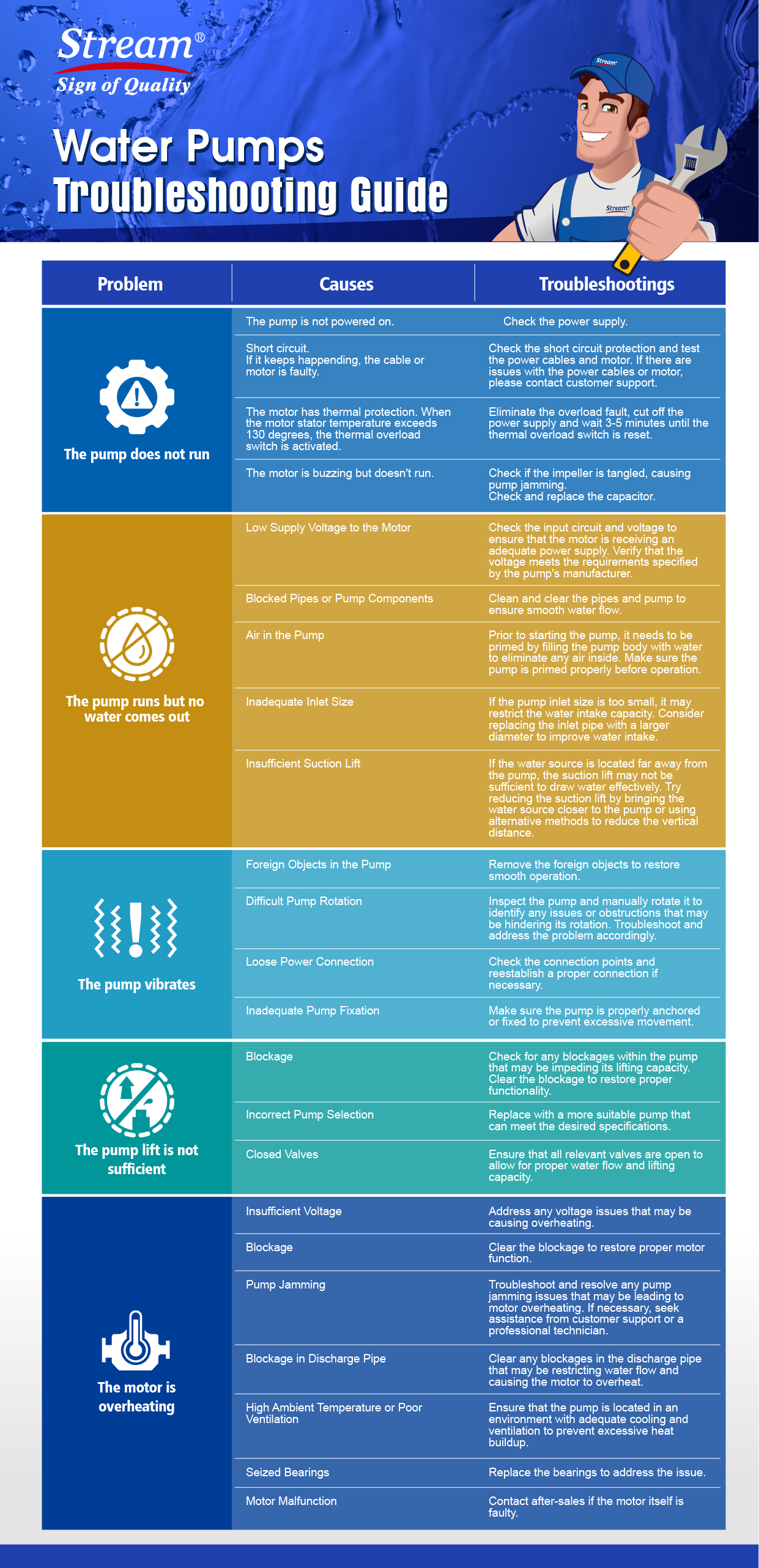
An old or damaged pump may spin but not build pressure—so the switch never tells it to stop.
Signs of Pump Failure
- Slow pressure buildup
- Low or high amperage (use a clamp meter)
- Unusual noise or vibration
- Motor hums but no water
Electrical Testing
| Amperage | Likely Issue |
|---|---|
| High | Impeller binding, sand damage |
| Low | Sheared shaft, broken impeller |
| Zero | Open circuit, tripped breaker |
If readings are off, the pump likely needs replacement. Pumps over 10 years old are often cheaper to replace than repair.
Follow This Diagnostic Flow
Use this sequence to find the cause fast:
- Stop all water use—close every outlet
- Watch the pump: stops means hidden leak; runs means continue
- Check pressure gauge: rises but pump won’t shut off means pressure switch; no rise means pump, blockage, or leak
- Close house shutoff valve: pump stops means leak in house; runs means issue upstream
- Inspect pressure switch and sensing tube
- Test check valve and tank air charge
- Verify water level and prime
This method isolates the problem in under 30 minutes.
Know When to Call a Pro
DIY-Friendly Fixes
- Cleaning or replacing the pressure switch
- Fixing a toilet flapper or faucet
- Recharging a pressure tank
- Clearing a clogged inlet
Call a Technician If
- The pump is submersible (in a well)
- You suspect a buried pipe leak
- Wiring is damaged or corroded
- Amperage is abnormal
- Multiple fixes haven’t worked
Prevent Future Problems
Maintenance Checklist
- Clean pump inlet and filter every 6 months
- Test tank air charge twice a year
- Replace pressure switch every 5–7 years
- Install a liquid-filled pressure gauge ($50) for accuracy
- Use a larger pressure tank to reduce cycling
Set aside $50/month for maintenance—most repairs cost under $1,000 if caught early.
Upgrade to a Smart Pump
Modern pumps like Grundfos SCALA2 or UPA eliminate mechanical switches and offer built-in dry-run protection, flow sensing (no pressure switch needed), app-based alerts, and automatic diagnostics. These systems rarely suffer from continuous running issues.
Final Steps: Stop the Pump Now
- Shut off power if it’s been running more than 30 minutes
- Close all water outlets
- Check water level in well or tank
- Test pressure switch—clean or replace
- Inspect for leaks and check valve function
- Call a pro if the problem persists
Frequently Asked Questions About Water Pump Running Continuously
Why does my water pump keep running even when no water is being used?
This indicates either a hidden leak, failed check valve, or faulty pressure switch. Close the main shutoff valve after the pump—if it stops, the leak is downstream. If it continues, the issue is in the switch or upstream components.
Can a pump that won’t stop damage itself?
Yes. Continuous operation leads to overheating, bearing failure, seal leaks, and motor burnout. Damage can occur within hours. Maximum safe duration is 20–30 minutes under normal conditions.
What’s the difference between continuous running and short cycling?
Continuous running means the pump never shuts off—caused by leaks, switch failure, or lack of pressure buildup. Short cycling means the pump turns on/off every few seconds—usually due to a waterlogged tank, lost air charge, or small leak.
How much does it cost to fix a water pump that won’t stop?
Pressure switch replacement costs $60–$100. Check valve replacement runs $15–$50 DIY or $150–$300 professional. Pump replacement ranges from $200–$600 for jet pumps to $500–$1,500 for submersible units.
Can I temporarily use my pump if the switch fails?
You can manually plug and unplug the pump as needed as a temporary workaround. However, this is not practical long-term and risks dry running if you forget to turn it off.
Do I need a pressure switch to run a water pump?
Yes. The pressure switch is essential protection that prevents dry running and motor burnout. Running a pump without one is impractical and risky.
Key Takeaways for Fixing a Water Pump That Won’t Stop
A water pump that won’t stop running is never normal—it’s a warning sign of a specific, diagnosable fault. Start your troubleshooting with the pressure switch, as it’s the most common culprit. Rule out hidden leaks by isolating your house plumbing with the main shutoff valve. Check the check valve for backflow and verify your water source level to prevent dry running.
With systematic diagnosis, most continuous running issues resolve in under an hour and cost under $200. Don’t ignore the problem—shut off the pump, work methodically through these steps, and call a professional if the cause remains unclear or involves submersible components.