Waiting for hot water can waste gallons of water and valuable time every day. A hot water recirculating pump solves this frustrating problem by keeping hot water circulating through your pipes, so it’s ready the moment you turn on any faucet or shower. Instead of letting cooled water sit stagnant in your plumbing until the next use, the pump continuously or on-demand moves lukewarm water back to the water heater to be reheated, instantly replacing it with fresh hot water at every fixture.
This guide explains exactly how these systems function, the two main configuration types available, the control methods that optimize performance, and what you can expect regarding water savings, energy costs, and maintenance. Whether you own a large multi-story home or a smaller residence with moderate pipe runs, understanding the mechanics behind recirculating pumps helps you decide if this upgrade makes sense for your household.
Why You Wait: The Core Problem With Traditional Plumbing
In a standard plumbing system, hot water travels from the water heater through pipes to reach your sinks, showers, and appliances. After you turn off the tap, the water remaining in those pipes slowly cools down over time. The next time you want hot water, you must run the tap and let all that cooled water flow out before fresh hot water arrives from the heater.
This waiting period typically lasts one to three minutes per use, and it happens dozens of times daily across all household members. The result is over 12,000 gallons of water wasted per year in an average household, equivalent to more than ten gallons per person each day. In drought-prone regions or areas with expensive water and sewer rates, this waste represents both an environmental and financial concern that motivates many homeowners to seek solutions.
The fundamental limitation is that traditional plumbing treats the hot water system as a one-way path from heater to fixture, with no mechanism to recapture and recycle the cooling water sitting in the pipes. This is the exact problem that recirculating pumps address.
How a Recirculating Pump Creates Instant Hot Water
A hot water recirculating pump works by establishing a closed loop that continuously moves water between your water heater and the farthest fixtures in your home. Instead of allowing cooled water to stagnate in the pipes, the pump draws that lukewarm water back toward the heater, where it gets reheated and sent back out through the hot water lines.
The basic operating cycle works like this. Hot water exits your water heater and travels through the standard supply pipes to reach all fixtures. After use, the water left in the pipes gradually cools over time. When the recirculating pump activates, it pulls this cooled water from the far end of the hot water line and returns it to the water heater through either a dedicated return pipe or the cold water line. Fresh hot water immediately pushes forward into the distribution pipes, replacing the returned water.
This closed-loop process ensures that hot water remains thermally ready at every fixture at all times. When you turn on any tap, hot water arrives within seconds rather than minutes. The system eliminates the need to run water while waiting, directly addressing the waste problem that plagues traditional plumbing setups.
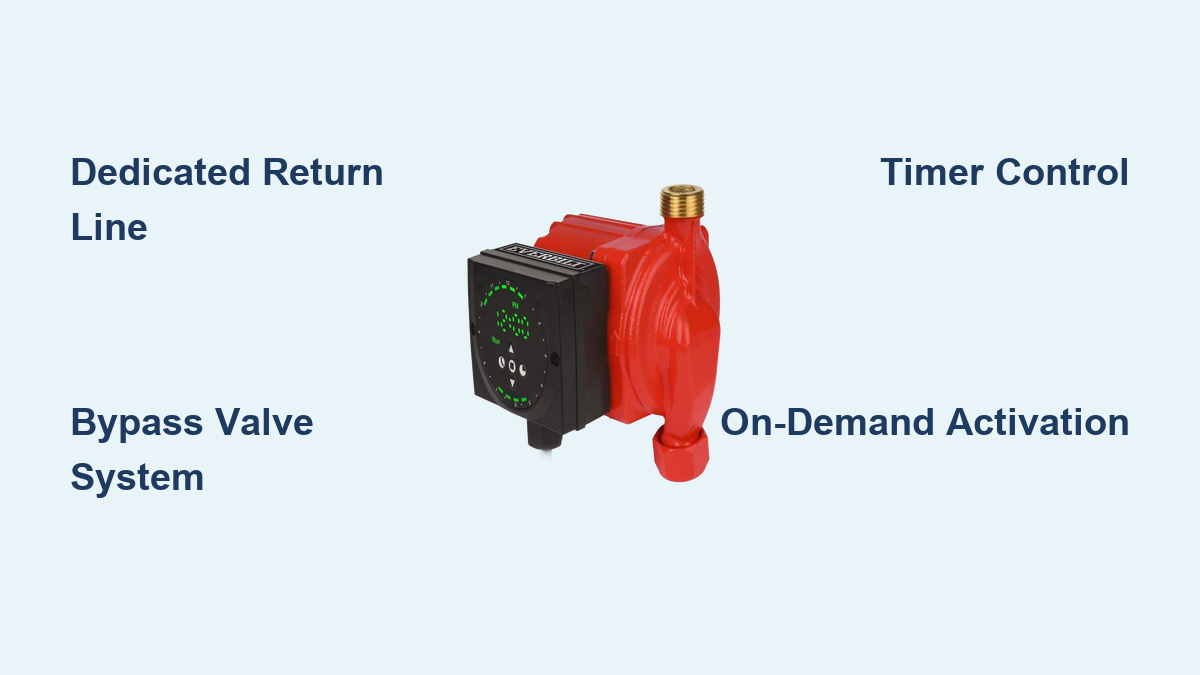
Two System Types: Dedicated Return Line vs Bypass Valve
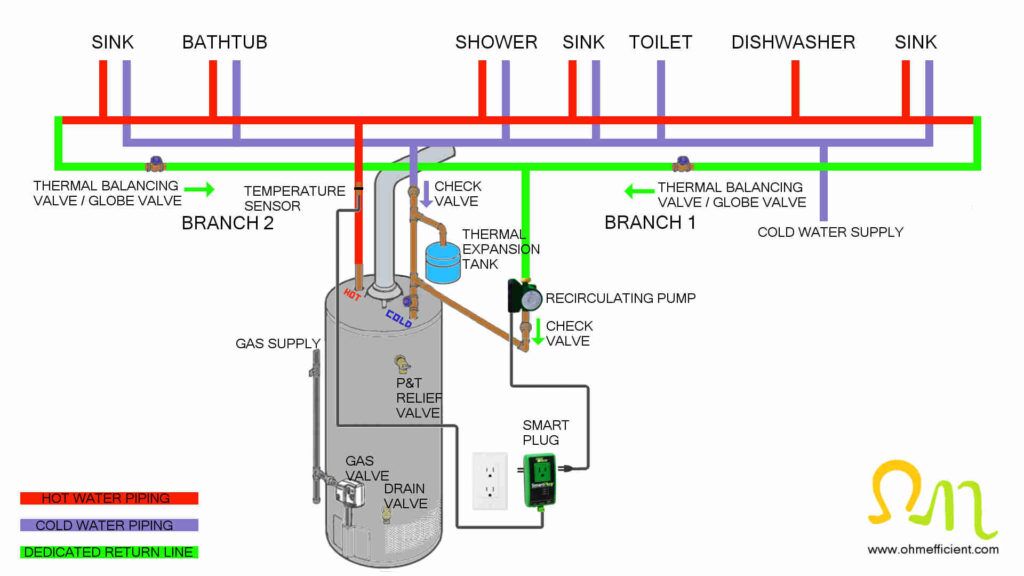
Dedicated Return Line Configuration
A dedicated return line system uses a third pipe that forms a continuous loop from the farthest fixture back to your water heater. The recirculating pump, typically mounted near the heater, pulls cooled water from the end of the hot water line through this dedicated return pipe, and fresh hot water instantly replaces it in the supply lines.
This setup keeps your hot and cold water systems completely separate, preventing any thermal crossover. The pump activates based on timer, thermostat, or demand switch settings. When water temperature in the loop drops below a set point, usually between 95°F and 105°F, the pump kicks in. Once the returning water reaches approximately 110°F to 115°F, the pump shuts off.
Because this system only reheats slightly cooled water and avoids heating cold lines, it offers the highest energy efficiency and most consistent performance. It works best in new construction or major renovations where installing the return line during framing avoids cutting walls later. While more expensive to install, ranging from $800 to over $2,500, the long-term reliability and water savings justify the cost for large homes with long pipe runs.
Bypass Valve System Setup
A bypass valve system, also called a Comfort System, is designed for existing homes without a third pipe. Instead of a dedicated return line, it uses your cold water line to send cooled hot water back to the heater. A crossover valve installs under the sink farthest from the water heater, connecting the hot and cold lines at that point.
When the pump activates, it draws cooled water from the hot line, and the bypass valve opens to allow that water to flow backward through the cold line toward the heater. Simultaneously, fresh hot water moves forward from the heater into the hot piping. A check valve at the water heater prevents the returning warm water from entering the main cold supply, ensuring safety and code compliance.
This retrofit-friendly system typically costs $500 to $800 and can often be installed in under three hours. While effective at delivering instant hot water, it carries a risk: if the pump runs too frequently or check valves fail, your cold water may become lukewarm, especially during summer months. Many users disable the system seasonally to preserve cold water quality.
Key Differences Between System Types
| Feature | Dedicated Return Line | Bypass Valve System |
|---|---|---|
| Third Pipe Required | Yes | No |
| Cold Water Impact | None | Possible warming |
| Installation Cost | $800–$2,500+ | $500–$800 |
| Best For | New builds, large homes | Retrofits, budget installs |
| Energy Efficiency | Highest | Moderate |
| DIY Feasibility | Low | Moderate |
Pump Activation Methods: Timer, Thermostat, and Demand Controls
Timer-Based Operation
A timer-controlled recirculating pump runs during preset periods, usually aligning with peak household usage like 6 to 9 AM and 5 to 10 PM. You program the schedule based on shower times, dishwashing, or morning routines. Outside those windows, the pump remains off, reducing energy use and heat loss.
This method works well for families with predictable schedules. Since the pump only operates when needed, it avoids constant cycling. However, it won’t respond to unexpected demands like a late-night shower or guest use, so hot water may still require a brief wait outside scheduled hours.
Most timer models allow multiple on/off cycles per day and can be adjusted seasonally. Digital displays simplify programming. While not the most responsive option, it strikes a good balance between convenience and cost, especially in homes where usage patterns remain consistent.
Thermostatic Control Activation
A thermostatic recirculating pump turns on automatically when water temperature in the loop drops below a set threshold, typically between 95°F and 105°F. A sensor placed at the farthest fixture or near the pump monitors return water temperature. Once the water cools past the trigger point, the pump activates and circulates it back to the heater.
This system ensures hot water stays ready without fixed schedules. It adapts to actual conditions such as how often fixtures are used or how quickly pipes lose heat. When the returning water hits the target temperature, the pump shuts off, conserving energy.
While more responsive than timer systems, thermostatic controls can cause slight delays if the water cools too much before activation. They also consume more energy than demand systems since they cycle based on temperature loss. But for homes wanting continuous availability, this method offers reliable performance with minimal user input.
On-Demand and Smart Controls
Demand-activated pumps run only when triggered by the user via push-button, motion sensor, or smartphone app. Pressing a switch under the sink or using a voice command starts the pump, which runs for a preset time or until hot water arrives.
This method is the most energy-efficient because the pump operates exclusively when needed. There’s no standby cycling or scheduled runtime. It’s ideal for low-traffic bathrooms, guest suites, or energy-conscious households.
Smart controls take this further with Wi-Fi connectivity. Systems like the Grundfos Alpha HWR learn usage patterns, adjust pump speed, and integrate with home automation platforms. Features include remote diagnostics, real-time alerts, and adaptive scheduling. Though pricier, they maximize convenience and efficiency, especially in homes with irregular routines.
Essential Components That Make the System Work
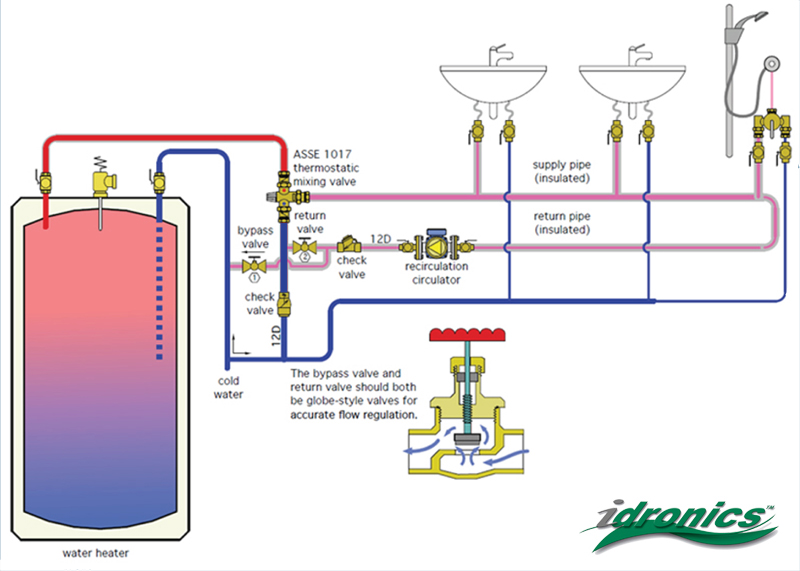
Circulation Pump and Motor
The circulation pump serves as the heart of the system, moving water through the loop. It contains an electric motor that drives an impeller, creating flow without significantly increasing water pressure. Most residential models use wet-rotor circulator pumps where the motor is sealed and surrounded by water for natural cooling and quiet operation.
Modern pumps feature variable speed motors that adjust flow based on demand, pipe size, and layout. This reduces noise, wear, and energy use. High-end models like the Grundfos Alpha HWR consume only 50 to 60 watts and operate below 45 dB, quieter than a refrigerator.
Pump placement varies: most install near the water heater, but point-of-use models mount under sinks for single-fixture service. Proper sizing and orientation per manufacturer specifications are critical to avoid cavitation, vibration, or premature failure.
Check Valves and Flow Direction
Check valves are essential safety components that ensure water flows in one direction only. In a recirculating system, they prevent backflow into the cold water supply, especially in bypass configurations.
At minimum, a check valve should install on the cold water inlet at the water heater. This stops warm return water from entering the main cold line, which could otherwise lead to lukewarm drinking water or scalding risks. Some advanced setups use three check valves: one at the pump, one at the heater, and one at the bypass valve.
Without functioning check valves, thermal crossover compromises both safety and performance. Regular inspection is recommended. Replace them if you notice fluctuating temperatures or reduced hot water volume.
Temperature Sensors and Aquastats
Temperature sensors monitor water temperature in the recirculation loop and signal the pump to start or stop. These thermistors typically locate at the farthest fixture or near the pump inlet.
When the sensor detects water below the set point, it activates the pump. Once the returning water hits the upper limit, the pump turns off. This closed-loop control maintains optimal readiness while minimizing unnecessary operation.
In hybrid systems, sensors work alongside timers or demand switches for smarter performance. Some models even self-calibrate based on ambient conditions and usage history, improving efficiency over time.
Installation Options for New and Existing Homes
Pump Location Choices
Recirculating pumps can install in three primary locations, each with pros and cons. The most common is at the water heater, which simplifies wiring and plumbing and works for both dedicated return and bypass systems. This location requires access to hot and cold lines and power.
Point-of-use installation under the farthest sink serves a single remote fixture like a master bath. A compact pump activates by button or motion sensor, reducing wait time locally without affecting whole-house plumbing.
Inline with main supply works in large homes with multiple loops. Pumps place in strategic branches to serve different zones independently. For whole-house coverage, heater-mounted pumps are standard. Point-of-use models complement existing systems or serve additions like guest houses. Always install with shutoff valves and unions for easy maintenance.
New Build vs Retrofit Installation
In new construction, installing a dedicated return line is straightforward. Plumbers route a third pipe from the farthest fixture back to the water heater during rough-in. This is the optimal time to insulate all hot water pipes, boosting efficiency.
For retrofits, the bypass system is preferred. No new pipes are needed, just a crossover valve under the sink and a pump near the heater. Access to underfloor spaces or basements improves feasibility. Homes with PEX plumbing or accessible joists are easiest to modify.
Average installation takes one to three hours. While some kits are DIY-friendly, professional installation is recommended to ensure proper valve placement, electrical connections, and code compliance.
Compatibility With Water Heater Types
Recirculating pumps work with both tank-type and tankless water heaters, but compatibility matters. Tank-type heaters are naturally compatible since the return line connects directly to the cold inlet or a dedicated port.
Tankless heaters require special considerations. Many models have a minimum flow rate to activate, and continuous low-flow recirculation can cause short-cycling or overheating. Solutions include using a buffer tank with integrated recirculation, installing an external pump with demand control, or choosing a tankless model with a built-in recirculation pump or port. Always verify manufacturer specifications before installation to avoid voiding warranties or reducing heater lifespan.
Water and Energy Impact: What to Expect
Water Savings Per Household
A typical household wastes one to three minutes of running water per hot water use. That adds up to over 12,000 gallons per year, more than ten gallons per person per day. Showers, handwashing, and dishwashing contribute most to this loss.
A recirculating pump eliminates this waste by delivering hot water instantly. No more letting the tap run while waiting. In drought-prone areas, this conservation is both environmentally and financially valuable. Even in homes with short pipe runs, the cumulative savings justify the investment. Municipalities with usage-based sewer charges see direct cost reductions as less water enters the drainage system.
Energy Use and Efficiency Trade-Offs
Contrary to marketing claims, recirculating pumps do not reduce energy bills. They often increase them slightly due to standby heat loss in pipes, frequent reheating of circulated water, and thermal crossover in bypass systems.
The energy cost comes from keeping water warm in the pipes, not from the pump’s electricity use, which is minor, around $5 to $10 per year. However, the primary benefit is water conservation, not energy savings.
That said, systems with timers, sensors, or demand controls minimize excess operation. Pairing the pump with insulated pipes reduces heat loss by up to 80%, improving overall efficiency.
Real-World Cost and Payback Period
Pump unit costs range from $400 to $700 for mid-to-high-end models. Installation runs $500 to $800 for a bypass system or $800 to $2,500 or more for a dedicated return system. Annual water savings can reach up to 12,000 gallons, translating to $50 to $150 per year in sewer and water bill savings depending on your region.
Payback typically takes five to ten years, depending on local utility rates and usage frequency. Homes with high water costs or large families see faster returns. While not a quick financial win, the convenience and environmental benefits often outweigh the cost. Many users report increased home value and satisfaction, especially in luxury or smart-home markets.
Maintaining Your Pump for Long-Term Performance
Expected Pump Lifespan
Most recirculating pumps last 5 to 15 years, depending on water quality, usage, and maintenance. Seals, impellers, and motor bearings degrade over time, especially in hard water areas.
Signs of aging include reduced flow or pressure, unusual noises like grinding or humming, failure to activate, and leaks at connections. Grundfos, Taco, and Uponor models are known for durability, with many lasting over a decade. Regular inspection helps catch issues early.
Annual Maintenance Checklist
Perform these checks yearly to extend pump life. Inspect for leaks at fittings, valves, and connections. Test timer and sensor operation. Verify check valve function by listening for backflow or testing cold water temperature. Flush the system if mineral buildup is suspected. Clean or replace filter screens if equipped.
In hard water regions, consider installing a water softener or flushing the system with vinegar solution annually to prevent scale buildup.
Warranty and Replacement Guidance
Most residential pumps come with a 3 to 5 year limited warranty. Extended coverage is available on premium models. Register your product online to activate warranty benefits.
If your pump fails, check power supply and control settings first. Inspect for tripped breakers or blown fuses. Test sensor and valve operation. Consult a professional if issues persist. When replacing, consider upgrading to a smart or variable-speed model for better efficiency and control.
Choosing the Right System for Your Home
New Construction Recommendations
For new builds, install a dedicated return line during plumbing rough-in. This is the most efficient, future-proof option. Route the return pipe from the farthest fixture back to the water heater, and insulate all hot water lines.
Pair the system with a variable-speed pump like the Grundfos Alpha HWR, programmable timer and thermostatic control, and insulated piping and smart controls. This setup supports radiant floor heating or solar thermal integration and ensures instant hot water for decades.
Retrofit Solutions for Existing Homes
In finished homes, a bypass valve system is the practical choice. Install a Comfort Valve under the farthest sink and connect a pump near the heater. Use the cold line as the return path.
Best options include Grundfos Alpha Comfort, Taco 008-VM with bypass kit, or Uponor AquaCirc SMART for single fixtures. Ensure check valves are installed and consider disabling the system in summer to avoid warm cold water.
Multi-Story and Large Home Considerations
Homes with long pipe runs or multiple floors benefit most from recirculation. Consider zoned systems with multiple pumps for different areas, point-of-use pumps for remote bathrooms, and buffer tanks with tankless heaters to prevent cold spots. Prioritize insulation and smart controls to maintain efficiency.
Frequently Asked Questions About Hot Water Recirculating Pumps
Does a recirculating pump increase my energy bill?
Recirculating pumps may slightly increase your energy costs due to standby heat loss in pipes and the continuous reheating of circulated water. The pump motor itself uses minimal electricity, roughly $5 to $10 per year. The primary benefit is water savings, not energy savings. Using timers, sensors, or demand controls helps minimize excess operation and reduce costs.
Can I install a recirculating pump myself?
Bypass valve systems are relatively DIY-friendly and can often be installed in under three hours. Dedicated return line systems require plumbing work and are typically best left to professionals. Professional installation ensures proper valve placement, electrical connections, and code compliance.
Will a recirculating pump make my cold water warm?
This can happen with bypass valve systems, especially if the pump runs frequently or check valves fail. In summer months, many users disable their bypass system to preserve cold water quality. Dedicated return line systems completely separate hot and cold water, so they never affect cold water temperature.
How long do hot water recirculating pumps last?
Most pumps last 5 to 15 years with proper maintenance. Lifespan depends on water quality, usage frequency, and regular maintenance. Hard water areas may see shorter lifespans due to mineral buildup on seals and impellers.
What happens if my check valve fails?
A failed check valve allows hot water to backflow into the cold water line, causing lukewarm cold water at fixtures. This creates a scald risk and compromises drinking water quality. Regular inspection of check valves prevents this issue. Replace any faulty valves immediately.
Key Takeaways for Understanding Hot Water Recirculating Pumps
A hot water recirculating pump works by continuously or on-demand moving cooled water back to the heater through either a dedicated return line or the cold water line, ensuring instant hot water at every fixture. The two main system types are dedicated return line (best for new construction and maximum efficiency) and bypass valve (ideal for retrofitting existing homes).
Control methods including timers, thermostatic sensors, and on-demand buttons determine when the pump activates, balancing convenience with energy efficiency. Essential components like check valves prevent thermal crossover and ensure safety. While water savings can reach 12,000 gallons per year, energy costs may increase slightly due to pipe heat loss.
For the best results, choose a system matched to your home’s construction, install with proper check valves and insulated pipes, and perform annual maintenance to extend pump life. Whether you prioritize convenience, water conservation, or both, a properly selected and installed recirculating pump transforms your hot water experience.