You turn on the faucet, use some water, and hear your well pump start up. A few minutes pass then five, then ten. But the pump never stops running. That constant hum or loud cycling is not just annoying, it is a red flag. A water pump that won’t shut off can burn out in hours, waste energy, and signal serious problems in your water system.
The most common cause is a faulty pressure switch. But that is not the only culprit. Your pump might be battling leaks, a waterlogged tank, a clogged filter, or even a dry well. This guide walks you through every possible reason your water pump won’t shut off and how to diagnose and fix each one.
Start with the Pressure Switch
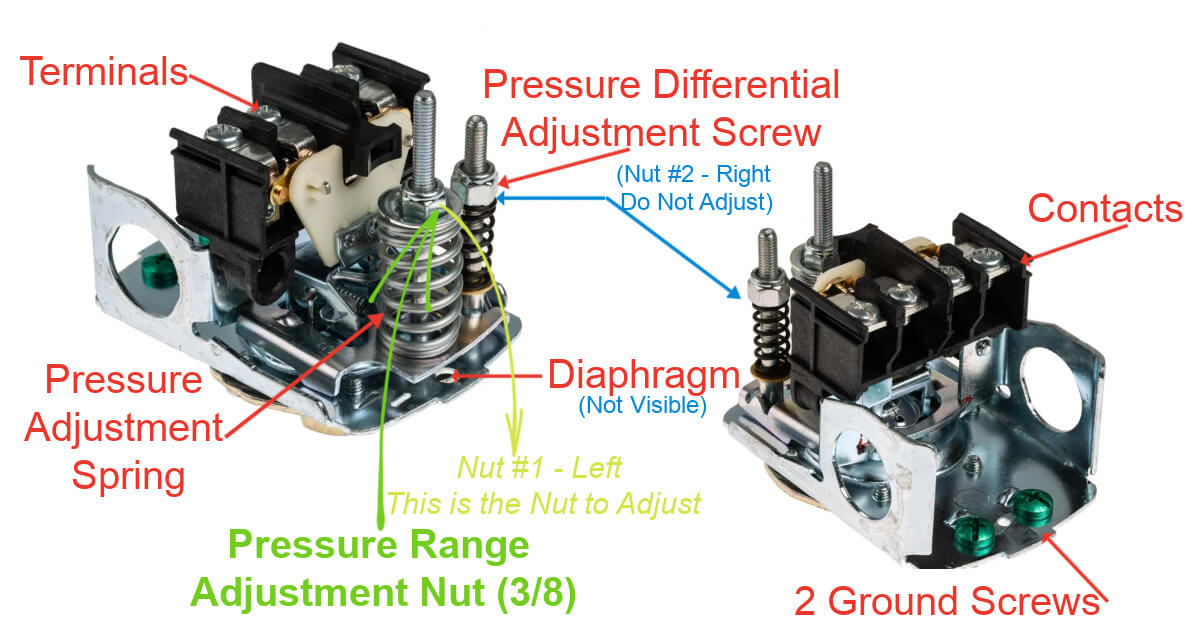
The pressure switch controls when your pump turns on and off based on system pressure. If it fails, the pump runs nonstop even if pressure is high. This component sits in a small metal or plastic box near the pressure tank and connects to the water line via a quarter-inch tube called a pigtail.
Stuck or Welded Contacts
Inside the switch, electrical contacts open to cut power when pressure reaches the cut-out point, typically sixty psi. Over time, arcing can weld these contacts shut.
What to look for:
- Pump runs even with no water use
- Pressure gauge reads normal or high, but pump does not stop
- Contacts inside the switch do not open at cut-out pressure
How to test:
- Turn off power at the breaker
- Remove the switch cover
- Watch the contacts as pressure builds
- They should open when pressure hits the cut-out level
- If they stay closed, the switch is likely faulty
Fix: Replace the pressure switch. Clean minor corrosion with an emery board, but do not file heavily pitted contacts. Replacement is safer and more reliable.
Pro Tip: Use a multimeter to test continuity. No continuity means contacts are open. Continuous beep means contacts are stuck closed.
Clogged Pressure Sensing Tube
A quarter-inch copper or plastic tube connects the switch to the water line. If blocked by rust, sediment, or biofilm, the switch cannot feel system pressure.
Symptoms:
- Pump runs constantly
- Switch appears functional but does not respond to pressure changes
How to check:
- Turn off power
- Disconnect the tube from the switch
- Briefly power the pump with caution and see if water shoots out
- If no water flows, the tube or connection is clogged
- If water sprays, the sensing line is clear
Fix: Blow out the tube with compressed air or replace it entirely.
Warning: Never probe the tube with wire. It can damage the switch diaphragm.
Faulty Diaphragm or Calibration
The switch has an internal rubber diaphragm that moves with pressure changes. If torn or stiff, it will not trigger the contacts properly.
Signs of failure:
- Pump does not shut off even at high pressure
- Adjusting the switch spring does nothing
- Chattering or rapid clicking near shutdown
Can you adjust it? Yes, but only temporarily. Turn the large spring counter-clockwise to lower the shut-off point. For example, if your system stalls at fifty-five psi but will not shut off at sixty, lower the cut-out to fifty-five psi. This stops the pump from burning out while you plan a permanent fix. Do not rely on adjustment long-term. If the diaphragm is ruptured, the switch must be replaced.
Test for System Leaks
Even with a perfect switch, your pump will not shut off if pressure cannot build, usually due to a leak somewhere in the system.
Isolate the Leak: House vs. Well Side
Step-by-step diagnostic:
- Shut off the main water valve leading into your house
- Turn the pump back on
- Observe the results
- If the pump shuts off, the leak is inside your home
- If it keeps running, the leak is between the well and the valve
Common household leak sources:
- Toilet flappers add food coloring to the tank and wait fifteen minutes
- Outdoor spigots or irrigation lines
- Washing machine hoses
- Hidden slab or underground pipes
Well-side leak indicators:
- Wet ground near the well or pressure tank
- Rapid pressure drop after pump shuts off
- Pump cycles every few minutes
Inspect the Pressure Tank

A waterlogged tank lacks air cushion, causing rapid pressure drops and constant pump cycling.
How to Check Air Charge
- Turn off the pump
- Open a faucet to drain all water from the system
- Use a tire gauge on the Schrader valve on top of the tank
- Compare reading to two psi below cut-in pressure
- For a forty-sixty system, pre-charge should be thirty-eight psi
- For thirty-fifty, it should be twenty-eight psi
What if pressure is too low? Recharge with an air compressor and test again after refilling the system.
What if pressure will not hold? The bladder is likely ruptured. You must replace the tank.
Pro Tip: Tap the tank with your knuckle. A hollow sound at the top means good. Solid thud all the way down means waterlogged.
Rule Out Pump Performance Issues

Your pump may be running but not pumping effectively.
Low or High Amperage Reading
Use a clamp-on ammeter to measure motor current.
- Low amperage compared to nameplate suggests no load, possibly a sheared coupling or broken impeller
- High amperage indicates internal friction, binding, or dry running
Other signs of pump failure:
- Gurgling or cavitation noises
- Reduced water flow
- Pressure stalls at fifty to fifty-five psi but never reaches cut-out
A pump with worn impellers or sand damage may spin but move little water, enough to run endlessly without tripping the switch.
Check for Loss of Prime
If your jet pump cannot maintain suction, it loses prime, breaking the vacuum needed to draw water.
Causes:
- Cracked intake pipe
- Leaky foot valve
- Loose priming plug
- Low well level
Symptoms:
- Pump runs but delivers weak flow
- Pressure builds to fifty to fifty-five psi but no higher
- Gurgling or sputtering at faucets
Fix: Re-prime the pump using the fill plug. Inspect all suction-side fittings for leaks. Ensure the foot valve is seated and debris-free.
Warning: Never run a jet pump dry. Seal damage can occur in under five minutes.
Look for Blockages and Clogs
Even small obstructions can prevent pressure buildup.
Clogged Water Filter
Filters installed between the pump and tank can restrict flow.
How to test: Bypass the filter if equipped, or remove and clean the cartridge. Restart the pump and see if it now shuts off.
Jet Pump Venturi Blockage
The venturi inside the pump housing boosts suction. Rust or debris here reduces efficiency.
How to clean:
- Turn off power
- Remove the two bolts holding the pump halves
- Pull apart at the gasket
- Flush the plastic venturi with water in reverse
- Reassemble and test
One user fixed a constantly running pump by clearing a tiny rust flake from the venturi.
Assess Well Water Level
If the well is going dry, the pump cannot draw water, so pressure will not build.
Signs:
- Pump runs with little or no output
- Air in the lines
- Pressure stalls below cut-out
- Overheating motor
Risks: Dry running destroys pumps fast. Sand influx accelerates wear.
Prevention: Install a low-pressure cut-off switch that shuts the pump off if pressure does not build in thirty to sixty seconds. Measure static water level annually.
Investigate Frozen Lines
In cold climates, a frozen pipe can block flow.
Check: Outdoor spigots or exposed basement pipes. Use a hair dryer or heat tape to thaw. Insulate lines to prevent recurrence.
One homeowner resolved a non-stopping pump by thawing a frozen outdoor line.
When to Call a Professional
DIY works for switches, tanks, and filters. But some issues need expert help.
Call a pro if:
- You suspect a well-side leak or foot valve failure
- The submersible pump needs pulling
- There are electrical issues in the control box
- The pressure tank is leaking or failed
- You are uncomfortable with electricity or pressure systems
Final Steps to Stop the Pump Now
If your pump has been running for hours, shut it off immediately to avoid burnout.
Emergency Shutdown Checklist:
- Turn off power at the breaker
- Close the main water valve
- Check for leaks
- Inspect pressure switch and tank
- Temporarily lower cut-out pressure to stop cycling
- Plan permanent repair
Frequently Asked Questions About Water Pump Won’t Shut Off
Why does my water pump keep running even when no water is being used?
This usually indicates a faulty pressure switch with stuck contacts, a system leak preventing pressure buildup, or a waterlogged pressure tank. Start by checking the pressure switch first, then test for leaks by closing the main valve.
Can I adjust the pressure switch to make the pump shut off?
Yes, temporarily. Turn the large spring counter-clockwise to lower the cut-out pressure. This is a temporary fix to prevent burnout while you arrange a permanent repair. Do not rely on adjustment long-term if the diaphragm is damaged.
How do I know if my pressure tank is waterlogged?
Tap the tank with your knuckle. A hollow sound at the top is good. A solid thud all the way down indicates waterlogging. You can also check air pressure at the Schrader valve after draining the system.
Could a clogged filter cause the pump to run continuously?
Yes. A water filter between the pump and pressure tank can become clogged, restricting flow and preventing the system from reaching shut-off pressure. Bypass or clean the filter to test.
Is a dry well causing my pump to run nonstop?
Yes, if the well water level is too low, the pump cannot draw water or build pressure. Install a low-pressure cut-off switch to protect the pump from dry running damage.
When should I call a professional for a pump that will not shut off?
Call a professional if you suspect a well-side leak, foot valve failure, need to pull the submersible pump, have electrical control box issues, or are uncomfortable working with pressurized systems.
Key Takeaways for Fixing Your Water Pump
A water pump that will not shut off is a warning, not a mystery. The pressure switch is the most common culprit, but system leaks, waterlogged tanks, clogged filters, and low well levels can also cause this problem. Start with the pressure switch inspection, test for leaks by closing the main valve, and check the tank air charge. Most fixes are affordable and DIY-friendly. But when in doubt, call a licensed well contractor. Your pump and your water supply depend on quick action.