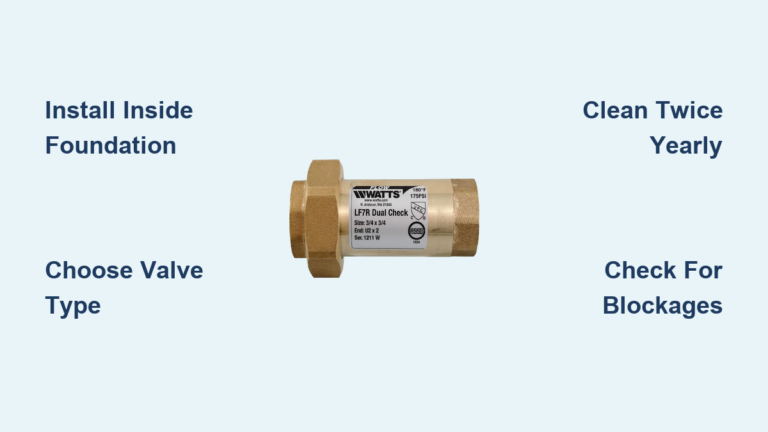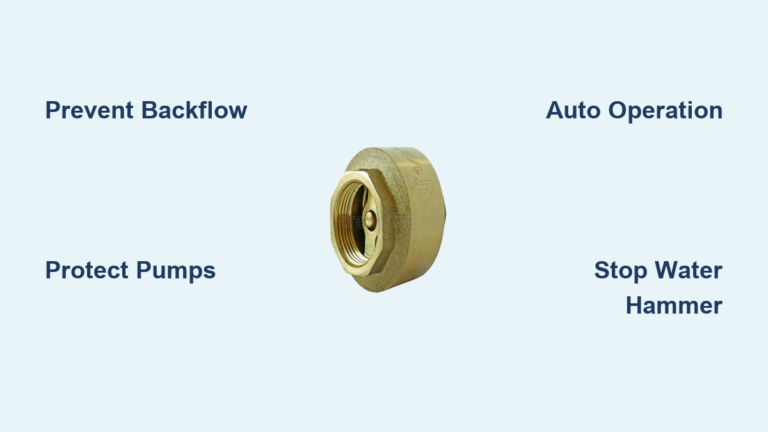
A pump that suddenly loses prime or a sprinkler line that drains every time the system shuts off usually points to one small, overlooked component. How does a check valve work to prevent these headaches? This automatic, one-way flow device operates without electricity, handles, or human input. It silently protects pumps, prevents contamination, and stops destructive pressure surges across plumbing, aerospace, and industrial systems.
This guide breaks down the mechanics, types, and real-world applications of check valves. You will learn how pressure differentials open and close the valve, which design fits your system, and how to avoid common installation mistakes that lead to failure.
Core Operating Principle Behind How a Check Valve Works
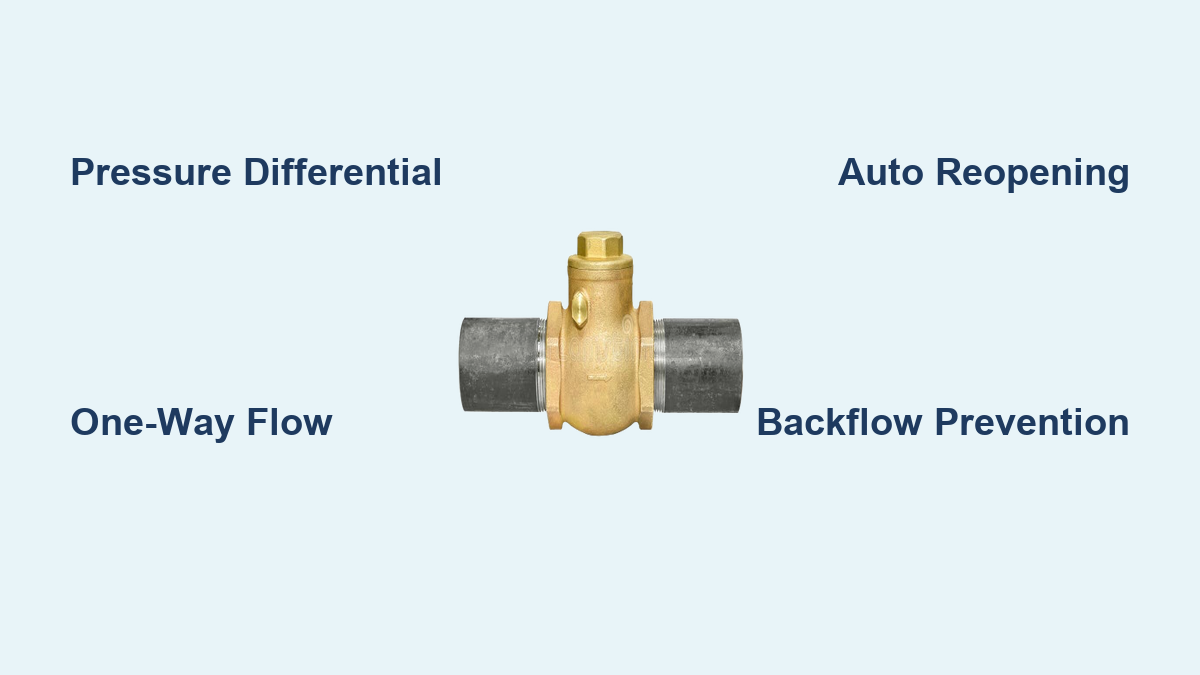
A check valve responds automatically to pressure differences across its body. It allows flow in one direction and blocks reverse flow without any external control.
Automatic Flow Control
The valve operates solely based on inlet and outlet pressure. When upstream pressure exceeds the cracking pressure (the minimum force required to open the valve), the closure element lifts, slides, or pivots away from the seat. Fluid then flows freely through the opening. As soon as forward pressure drops or reverse flow begins, internal forces such as spring tension, gravity, or downstream pressure push the closure back into place, sealing the passageway.
This self-actuating behavior makes check valves ideal for fail-safe protection. On a pump discharge line, for instance, the valve keeps the system primed when the pump stops, preventing dry running on restart. No sensors or actuators are required, just physics in action.
Cracking and Reseal Pressure Explained
Two key metrics define performance:
- Cracking pressure is the minimum differential needed to initiate flow, often 5 to 10 PSI in standard designs. In spring-loaded valves, this value is set by spring strength.
- Reseal pressure is the point at which the valve fully closes and stops leakage during reverse pressure buildup.
These values are not identical. A valve may crack open at 7 PSI but reseal completely only when reverse pressure drops below 5 PSI. This hysteresis prevents chattering in fluctuating systems but must be considered during design.
Why Backflow Prevention Matters
Uncontrolled backflow leads to serious issues:
- Water hammer: a sudden pressure surge from abrupt valve closure that can burst pipes
- Contamination: sewage or chemicals entering clean water lines
- Equipment damage: pumps spinning backward, seals failing, motors overheating
In municipal water systems, a failed check valve could allow fertilizer-laden irrigation water to siphon back into drinking supplies. That is why codes often require redundant protection, such as double-check assemblies.
Main Types of Check Valves and How Each Works
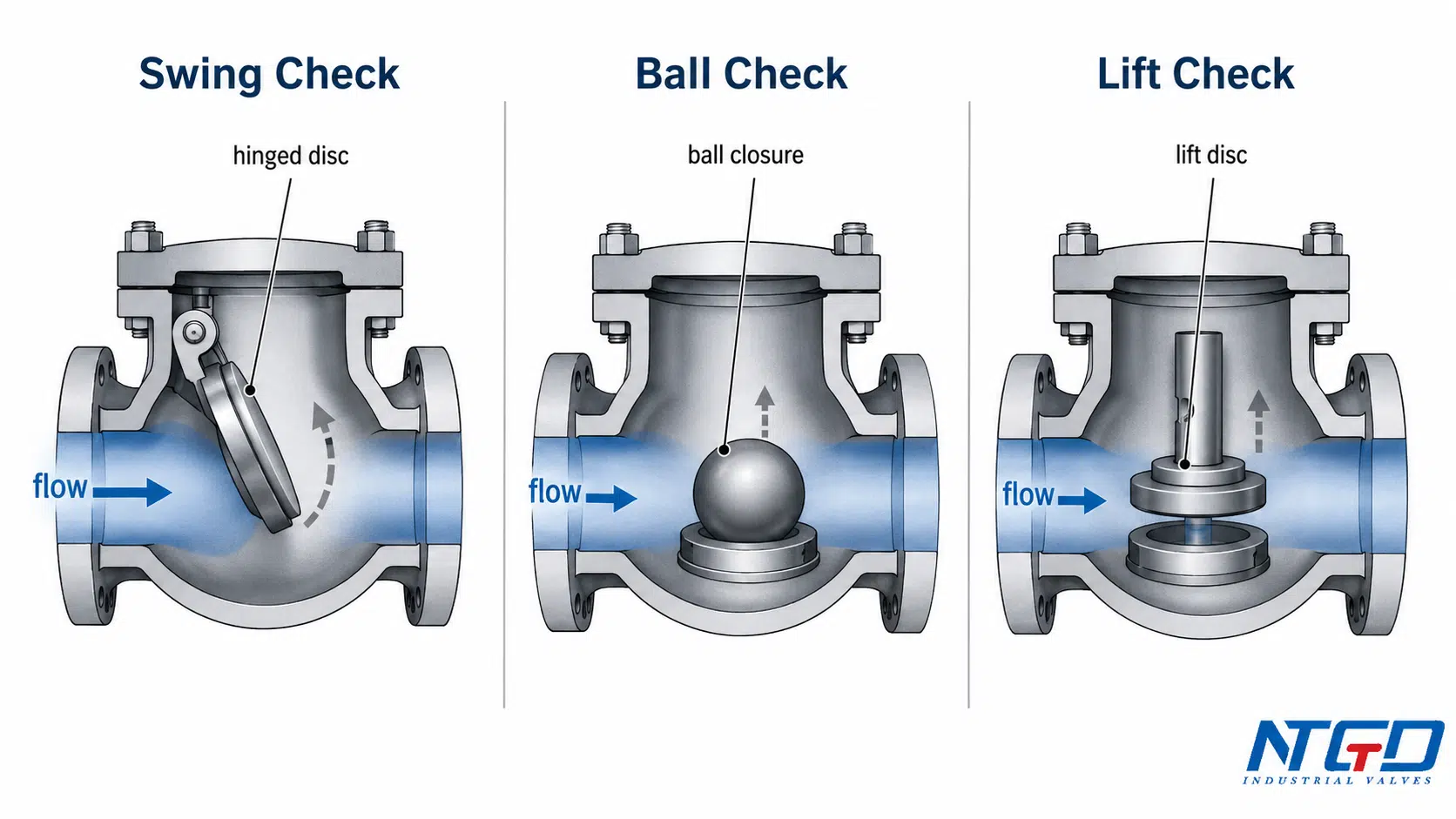
Different systems demand different valve designs. Each type uses a unique mechanism to achieve unidirectional flow.
Ball Check Valves
A ball check valve uses a spherical element to block reverse flow.
- Spring vs. gravity operation: In spring-loaded versions, a metal or rubber-seated ball rests against a conical seat, held shut by spring force. When inlet pressure overcomes the spring, the ball lifts, letting fluid flow around it. In non-spring models, gravity or reverse flow returns the ball to the seat.
- Axial and 90-degree flow paths: Most ball checks have axial flow paths where fluid enters one end and exits the other. Some specialized versions redirect flow at 90 degrees, useful in tight spaces.
- Common applications: hydraulic jacks, spray bottles, and HPLC (high-performance liquid chromatography) systems. For aggressive chemicals, ruby or sapphire balls ensure long life and tight sealing.
Avoid confusing these with ball valves, which use a rotating ball with a bore for manual on/off control and are not automatic.
Swing Check Valves
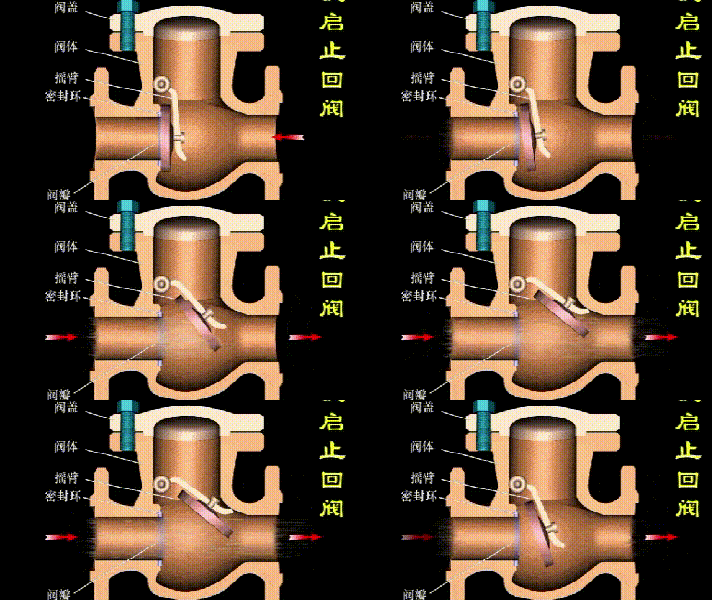
Swing check valves use a hinged disc that swings open with forward flow.
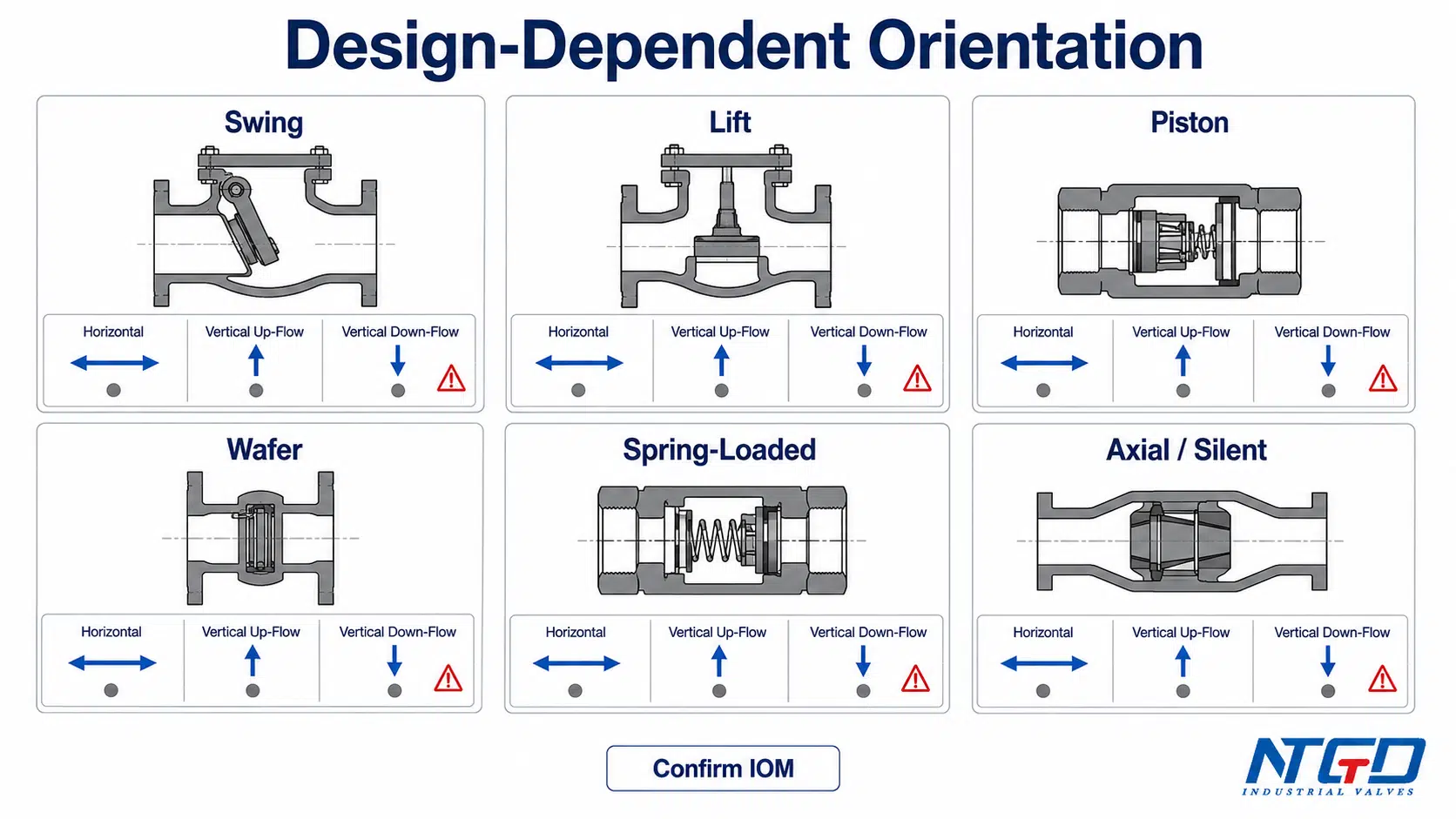
- Disc movement and mounting limits: Forward pressure lifts the disc off the seat like a door. When flow stops or reverses, gravity pulls it shut. Because they rely on gravity, standard swing checks must be installed in horizontal lines or vertical lines with upward flow.
- Water hammer risk: If flow reversal is rapid, the disc can slam shut, creating a destructive shockwave. This can damage pumps, pipes, and the valve itself.
- Tilting disc variant: Tilting disc check valves pivot on a central axis and close faster and smoother. They are less prone to vibration and often used in critical services like power plant cooling systems.
Lift Check Valves
Lift check valves guide a disc vertically off its seat.
- Guided closure mechanism: The disc moves along a stem or guide, ensuring precise reseating. Forward pressure lifts it, and when pressure drops, gravity or backpressure forces it down.
- Vertical installation requirement: Most lift checks must be mounted vertically with upward flow. Spring-assisted versions can work horizontally, but orientation still affects performance.
- Flow resistance: Due to their indirect flow path, they create more resistance than swing checks, similar to globe valves. This is why they are often paired with globe valves in steam systems.
Diaphragm and Duckbill Valves
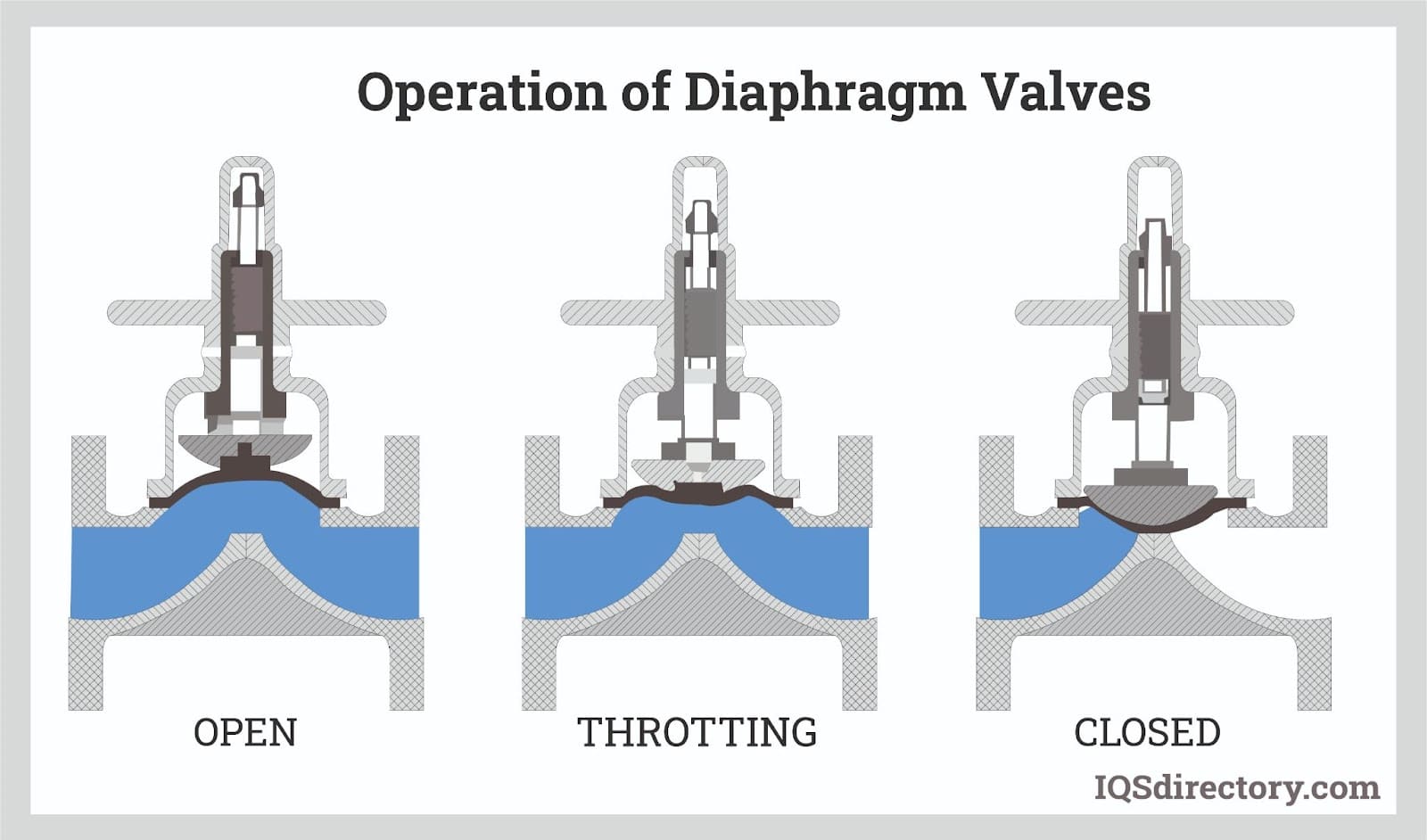
Flexible materials replace rigid parts in these low-pressure solutions.
- Diaphragm operation: A rubber diaphragm flexes open under forward pressure and snaps shut when pressure equalizes or reverses. Used in respirators and medical devices, they offer quiet, low-cracking operation.
- Duckbill seal design: The duckbill valve has a soft, tapered tube that opens under forward flow and pinches closed under backpressure. Its self-cleaning nature makes it ideal for wastewater and marine applications where debris is common.
Reed and Inline Spring Valves
These handle fast cycling and tight spaces.
- Reed valve speed and simplicity: A thin metal or polymer reed lifts off an orifice under pressure and snaps back instantly. With minimal moving mass, they respond rapidly, perfect for two-stroke engines and air compressors.
- In-line spring check valves: Compact and omni-directional, these valves combine a ball or poppet with a spring. Since they do not depend on gravity, they can be installed anywhere, vertical, horizontal, or even inverted.
Specialized Variants and Functions
Beyond standard designs, advanced configurations meet specific engineering needs.
Stop-Check Valves
A stop-check valve adds manual override to automatic operation.
- Override for maintenance: It functions like a standard check valve under normal conditions but includes a stem or actuator that lets operators force it closed. This is essential during maintenance when absolute isolation is needed, even with forward pressure present.
Flow Check Valves (Gravity Brakes)
Designed for heating systems, these prevent passive circulation.
- Preventing thermosiphoning: In hydronic heating, hot water can naturally rise (thermosiphon) when the pump is off, wasting energy. A flow check valve uses a heavy stopper that lifts with pump-driven flow and drops by gravity when flow stops.
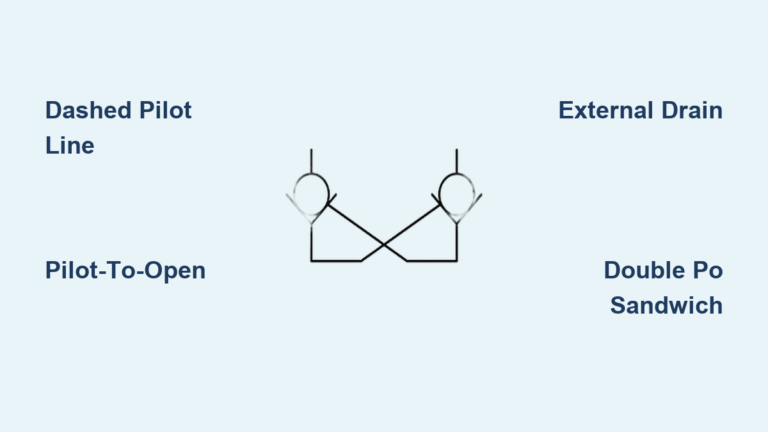
Pilot-Operated Check Valves
These allow controlled reverse flow under specific conditions.
- External signal control: Unlike standard check valves, pilot-operated types can be opened in the blocked direction using a hydraulic or pneumatic signal. High-pressure pilot fluid shifts an internal piston, overriding the check function.
Orifice Check Valves (One-Way Restrictors)
These limit reverse flow instead of blocking it completely.
- Controlled backflow: When reverse flow occurs, the closure element seats fully, but a small central orifice allows a metered amount of fluid through. This maintains system balance without full backflow.
Installation and Directionality Best Practices
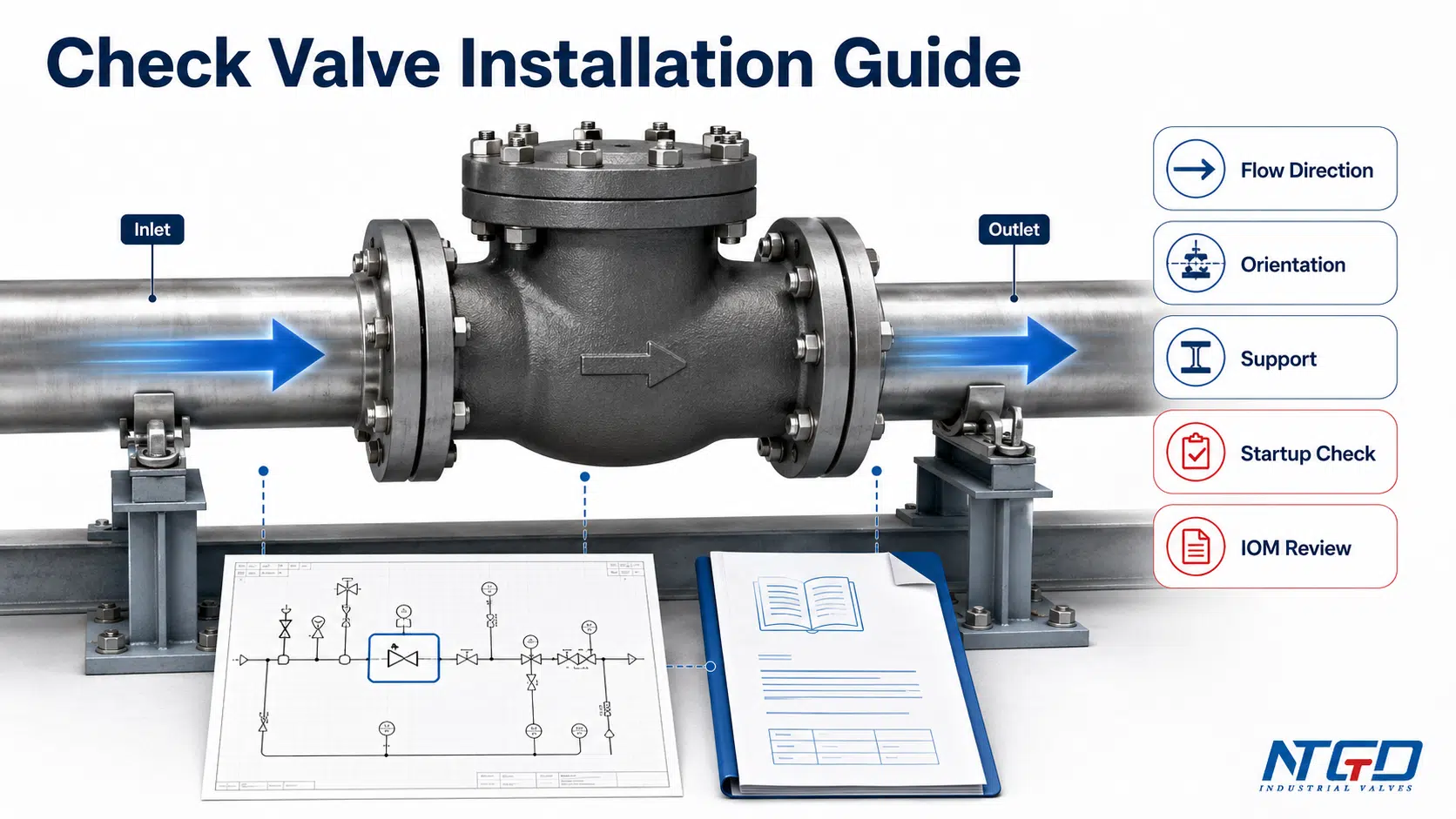
Proper setup ensures performance and longevity.
Flow Direction Is Critical
Every check valve has an arrow stamped on its body indicating correct flow direction. Installing it backward renders it useless. Reverse flow will not open it, and forward flow might not close it properly. Always verify the arrow points in the direction of intended flow before tightening connections.
Mounting Orientation Rules
Not all check valves work in any position:
- Swing checks: horizontal or vertical up-flow only
- Lift checks: typically vertical
- Spring-loaded in-line: any orientation
Gravity-dependent models will fail if improperly mounted. A swing check in a vertical pipe with downward flow will not close because the disc hangs open.
Pipe Spacing and Flow Stability
Install with adequate straight pipe runs:
- Upstream: at least 10 pipe diameters
- Downstream: at least 5 pipe diameters
This ensures smooth, non-turbulent flow into the valve, preventing flutter (rapid opening and closing) that causes wear and noise.
Common Failure Modes to Watch For
Even simple devices fail. Knowing the risks helps prevent disasters.
Debris Wedging and Seating Failure
Dirt, scale, or rust can wedge between the closure and seat.
- Ball checks are especially vulnerable. Particles trap the ball slightly off-seat, allowing continuous leakage.
- Swing checks may not close fully if debris jams the hinge.
In dirty systems, choose self-cleaning designs like duckbill or flow check valves.
Corrosion and Wear
Over time, corrosion eats away at seats and hinges.
- Stainless steel or plastic components resist degradation.
- Soft seats (rubber, PTFE) provide better sealing but wear faster.
Valves in chemical plants or seawater systems need material compatibility checks.
Water Hammer Damage
Abrupt closure causes pressure spikes that can exceed 10 times normal system pressure. This leads to pipe bursts, joint failures, and cracked valves. Use nonslam check valves (tilting disc, silent check) in high-inertia systems to dampen closure speed.
Key Selection Criteria for Your Application
Choosing the right valve depends on application demands.
Fluid Compatibility and Material Match
Match valve materials to the fluid:
- Water: brass, bronze, PVC
- Chemicals: PTFE-lined, CPVC, Hastelloy
- Steam: stainless steel, carbon steel
Ruby or sapphire seats handle extreme conditions in analytical instruments.
Pressure, Temperature, and Flow Rate
Ensure the valve meets maximum working pressure, temperature range, and required Cv (flow coefficient). A lift check in a high-flow steam line must handle both thermal expansion and pressure surges.
Cracking Pressure Needs
Low-pressure systems need low-cracking valves:
- Duckbill valves: as low as 0.5 PSI
- Reed valves: near-zero cracking
High-backpressure systems require higher cracking pressures to prevent premature opening.
Industry Applications Where Check Valves Are Essential
Check valves serve diverse roles worldwide.
Pump Protection and Priming
Installed on pump discharge lines, they prevent backflow that would drain the pump casing, cause dry running on restart, or make the pump spin backward. This is standard on centrifugal, piston, and diaphragm pumps.
Backflow Prevention in Plumbing
Municipal water systems use check valves to avoid contamination:
- Sprinkler systems: prevent fertilizers from siphoning back
- Boilers: stop treated water from returning to mains
- Double check valve assemblies (DCVA): two valves in series for redundancy
Aerospace and Hydraulics
In aircraft, check valves manage hydraulic actuation and attitude control. They must withstand extreme temperatures and vibration, often using lightweight alloys and fail-safe designs. NASA has modified versions to isolate Martian fluid samples.
Automotive and Fuel Systems
Cars use vent check valves in fuel tanks to let vapor escape as fuel expands, prevent water and dirt from entering, and maintain pressure balance. They are also used in turbochargers and EV battery cooling loops.
Maintenance and Reliability Practices
Even automatic valves need care.
Inspection and Testing Schedule
Despite simplicity, check valves fail. Industry data suggests a