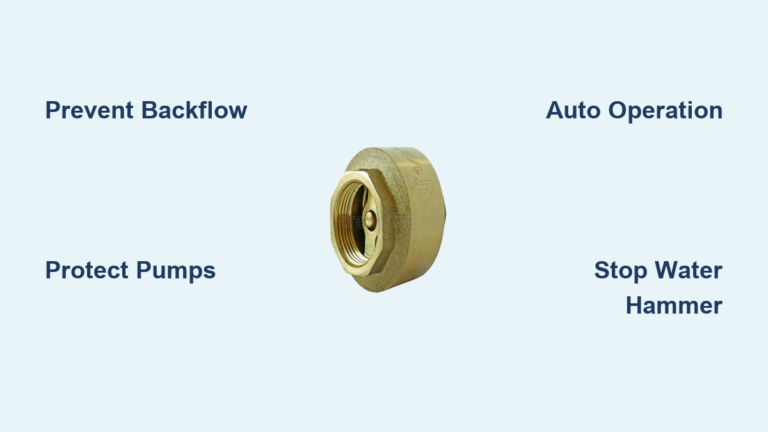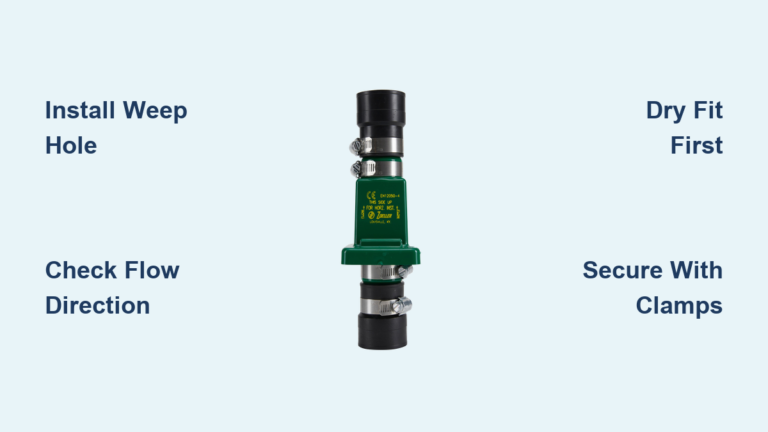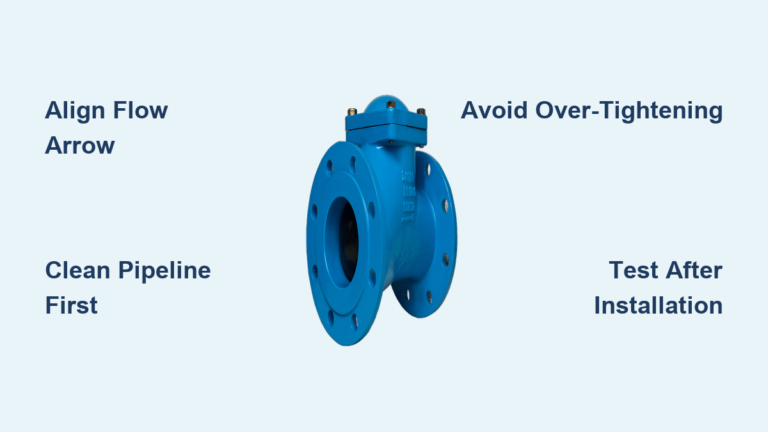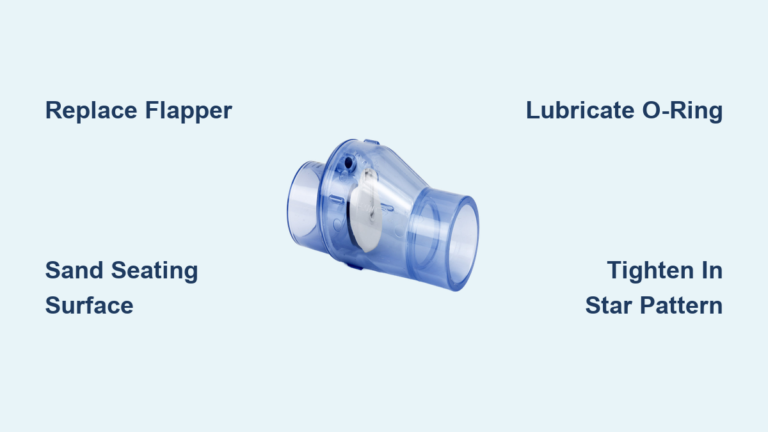
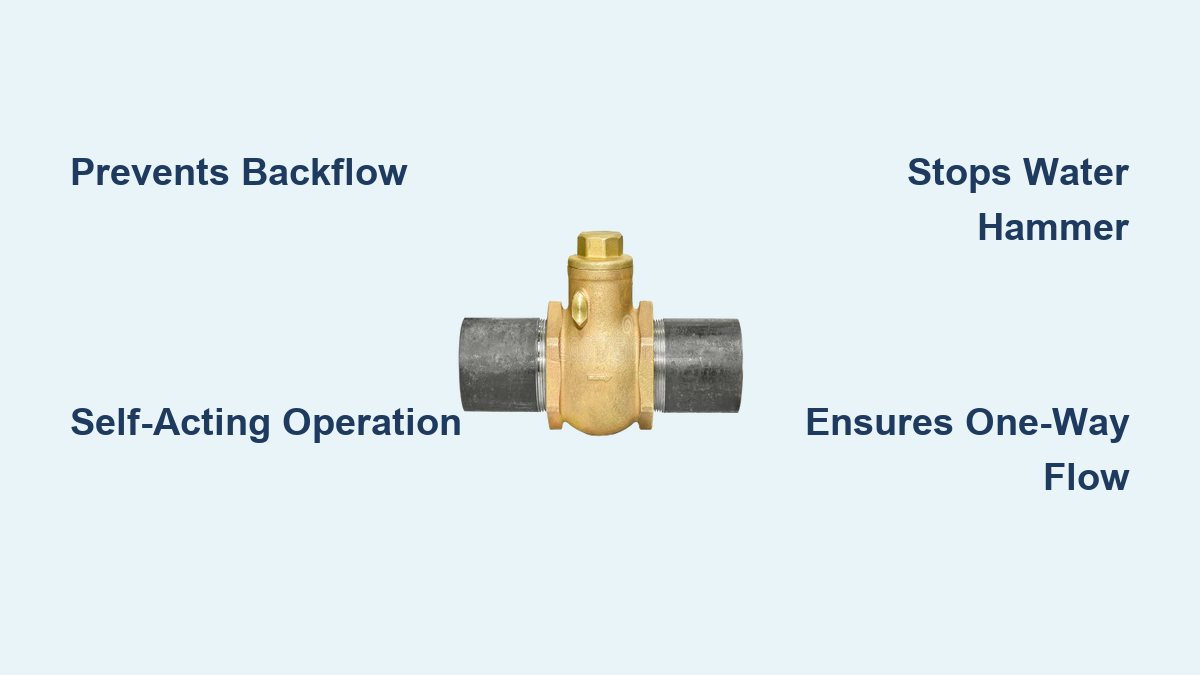
If your sump pump keeps cycling on and off, water backs up into your basement, or your sprinkler system risks contaminating your drinking supply, a failed check valve might be the cause. A check valve is a small mechanical device that allows fluid to flow in only one direction while automatically blocking reverse flow. It operates without handles, switches, or external controls, relying entirely on fluid pressure and internal mechanisms to keep flow moving forward.
Unlike manual valves that need human input, check valves respond instantly to pressure changes. When flow stops or reverses, internal components snap shut to protect pumps, pipes, and downstream equipment. In this guide, you’ll learn how check valves work, the different types available, where they’re used, and how to choose the right one for your system.
How a Check Valve Controls Flow Direction
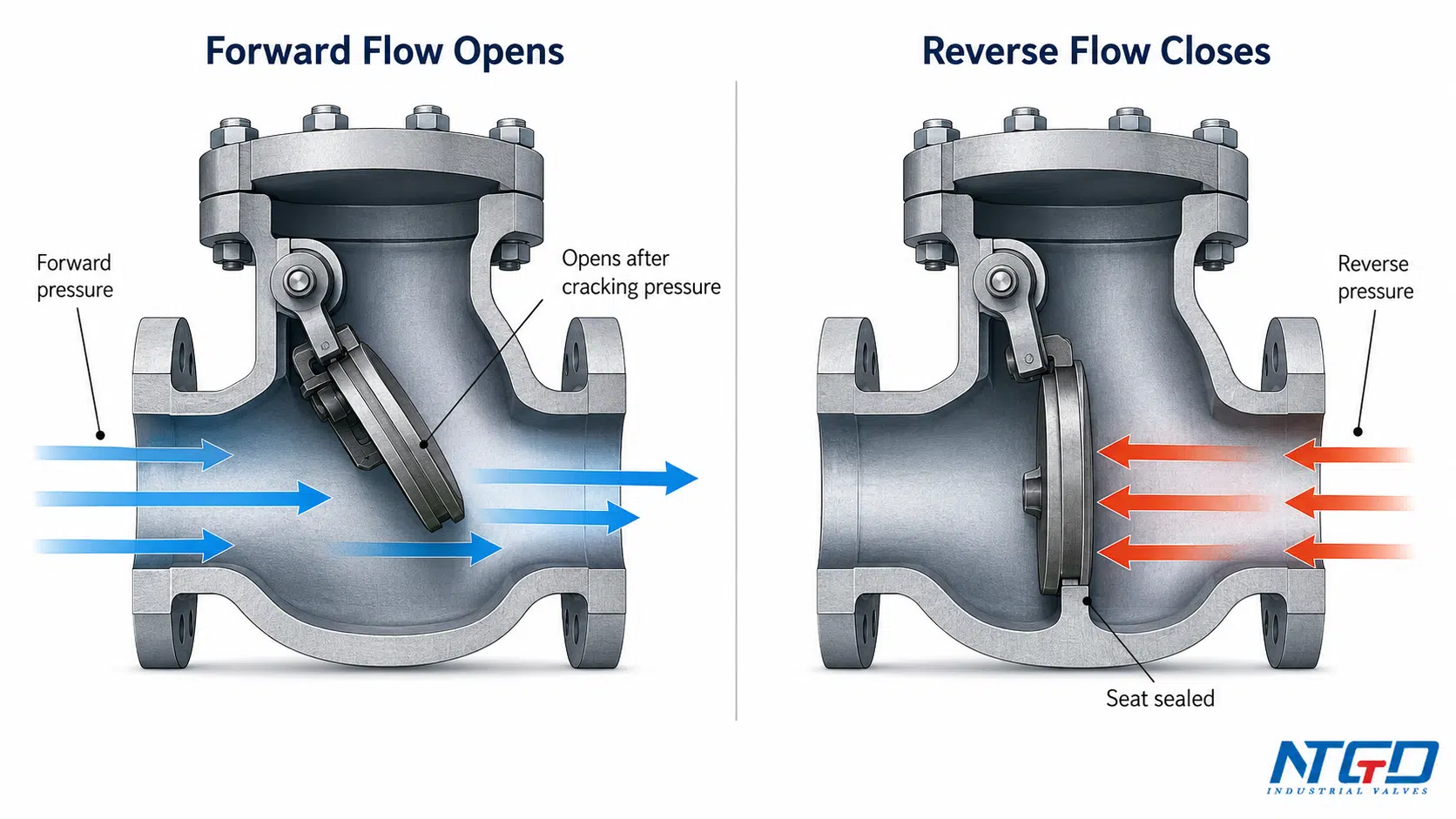
Check valves use pressure differences to operate automatically. There are no buttons or levers involved, just physics and internal mechanics.
Forward Pressure Opens the Valve
When fluid enters the inlet side under sufficient pressure, it pushes against an internal component like a disc, ball, or diaphragm. Once the cracking pressure, the minimum pressure difference between inlet and outlet, is reached, the valve opens. Flow proceeds in the free flow direction, which is always marked by an arrow on the valve body.
Reverse Flow Triggers Instant Closure
If flow stops or reverses, the internal component returns to its seat, sealing the passage. This happens due to back pressure, gravity, or spring force, depending on the valve type. In high-risk systems, even a fraction of a second delay can cause water hammer, a destructive pressure surge that can rupture pipes. Fast-closing designs like spring-loaded check valves prevent this dangerous phenomenon.
No Manual Control Needed
Because they are self-acting, check valves reduce complexity and maintenance. However, installation must be correct. Mount one backward, and it becomes a permanent blockage. Install a swing check in a vertical downflow line, and it won’t close, defeating its purpose entirely.
Main Types of Check Valves and Their Uses
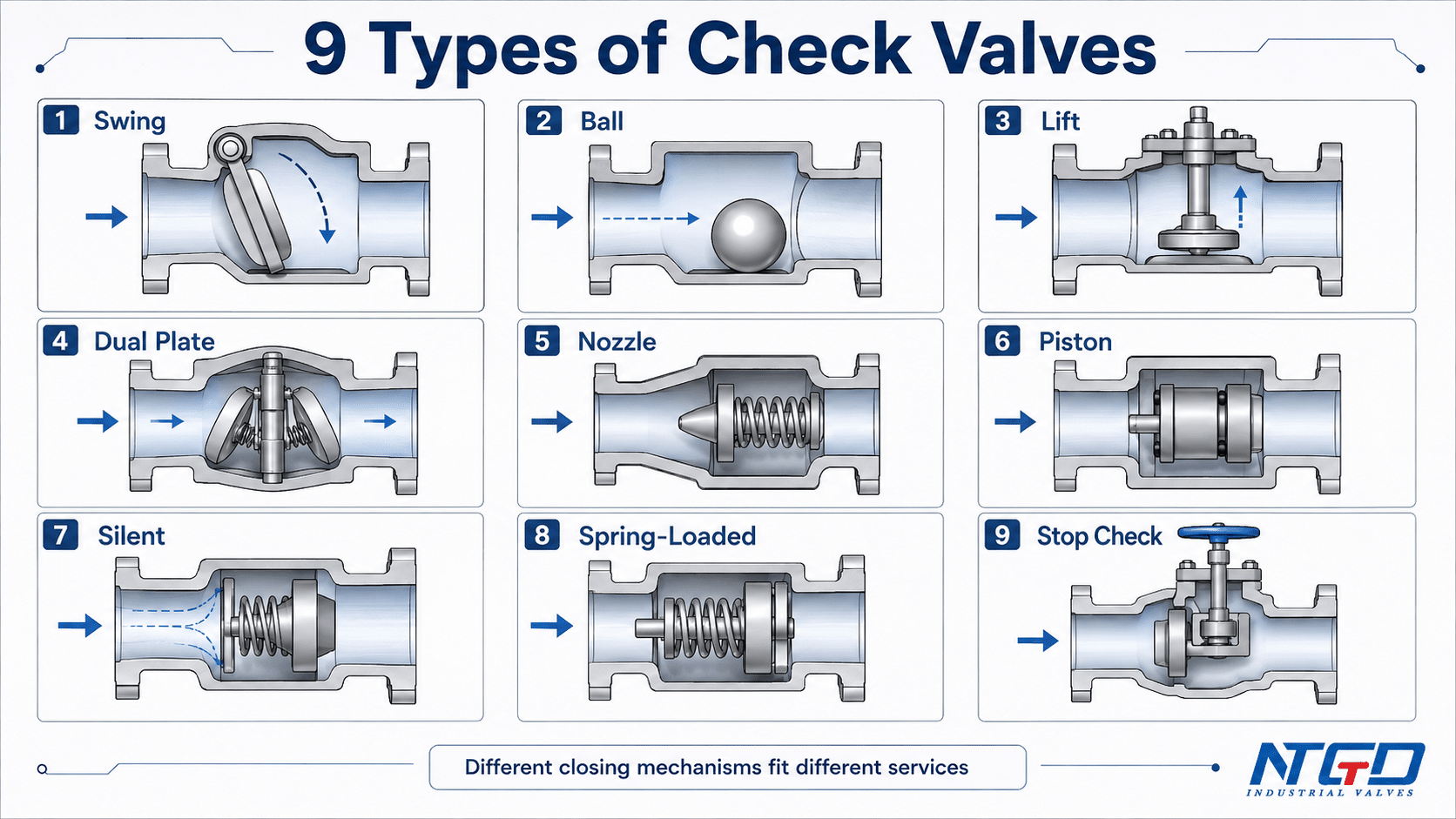
Each check valve type uses a different internal mechanism to allow forward flow and stop reverse flow. Choosing the right one depends on your system’s pressure, fluid type, orientation, and available space.
Swing Check Valves
Swing checks use a hinged disc that swings open with flow and closes when flow stops.
–