A sudden puddle at the base of your unit or a cold shower often signals a critical issue with your system. Homeowners facing water heater tank repair must quickly determine if the damage is fixable or if the entire unit needs replacement.
This guide helps you identify leak sources, recognize irreversible tank failure, and decide between a quick fix or a full upgrade. You will learn specific steps to diagnose problems safely and understand when professional help is necessary.
Detect Early Warning Signs of Tank Failure

Catching issues early can prevent catastrophic flooding or total system failure. Many homeowners wait until water covers the floor, but subtle symptoms appear long before a major leak occurs.
Listen for Rumbling Noises Inside the Tank
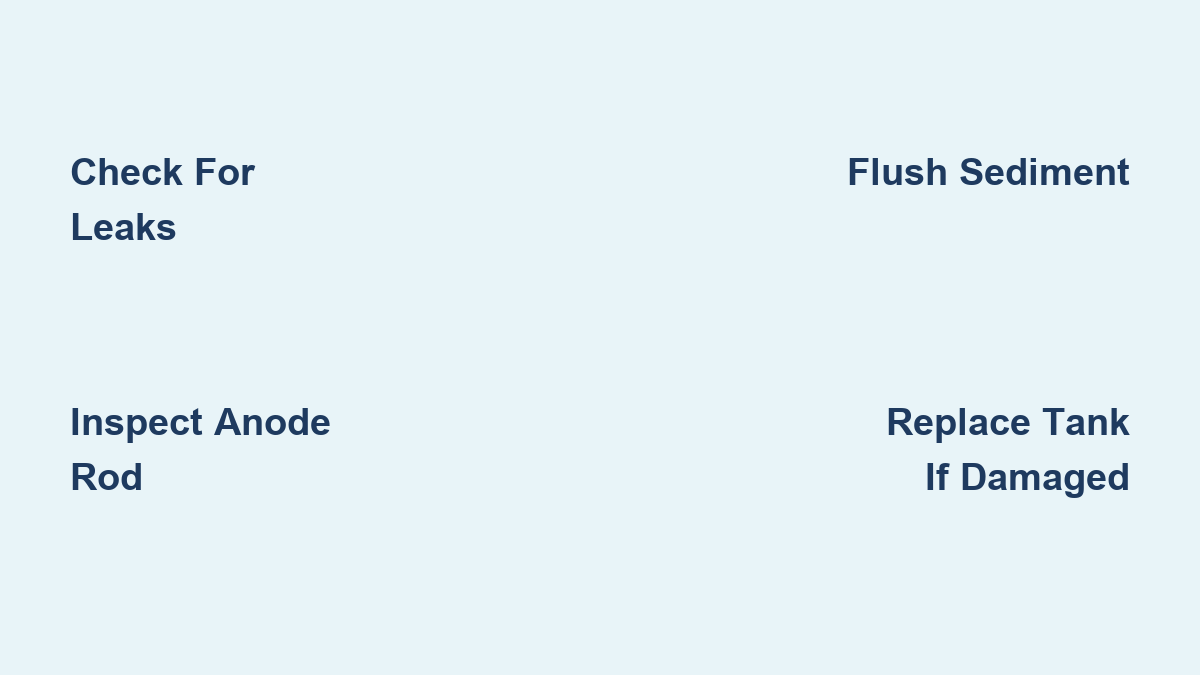
Popping or cracking sounds usually indicate significant sediment buildup at the bottom of the tank. Minerals in hard water settle and create a crust that traps heat, forcing the burner to work harder than designed. This overheating accelerates corrosion of the steel lining and reduces overall efficiency.
Pro Tip: Drain your water heater annually to flush out sediment. Homes with hard water may need this service twice a year to prevent damage.
Check for Rusty Hot Water Output
If your hot water runs brown while cold water remains clear, the interior lining of your tank is likely corroding. Most tanks use a glass lining and a sacrificial anode rod to prevent rust from forming on the steel walls. Once this protective rod wears out, corrosion begins eating through the metal.
Action Step: Replace the anode rod every three to five years to significantly extend the life of your tank.
Monitor Temperature Inconsistencies
Lukewarm water or fluctuating temperatures often point to a broken dip tube or sediment blocking heat transfer. The dip tube directs cold water to the bottom of the tank so it can be heated properly. If it breaks, cold water mixes at the top, reducing your available hot water supply.
Identify Leak Sources Before Panicking
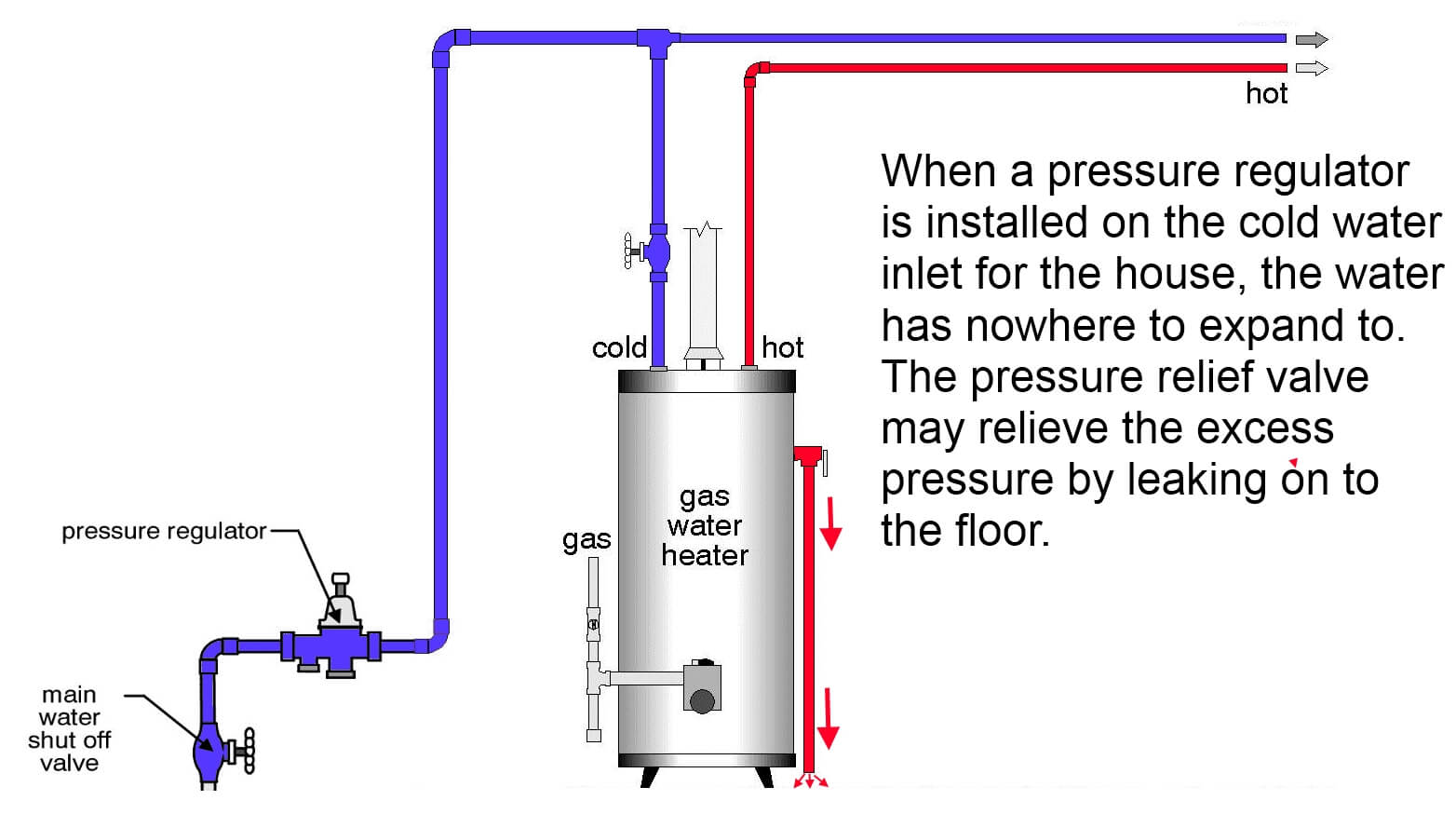
Not every leak means your tank is doomed. Many leaks originate from repairable parts located above or around the main tank body.
Test the Temperature and Pressure Relief Valve
The T&P relief valve is a safety device that releases water if internal pressure builds too high. A leaking valve may simply need replacement, though it can also signal excessive pressure from a failing thermostat.
How to check:
* Lift the lever gently to flush the valve.
* If the dripping stops, debris was likely the cause.
* If it continues dripping after releasing, replace the valve immediately.
⚠️ Warning: Never plug a leaking T&P valve. It is a critical safety component that prevents explosion risks.
Inspect the Drain Valve for Drips
A slow drip from the drain valve at the bottom of the tank is common and usually an easy fix. These valves wear out over time and can be swapped without draining the entire system.
Fix Steps:
1. Shut off the cold water supply to the unit.
2. Drain a few gallons to relieve internal pressure.
3. Replace the old valve with a new quarter-turn ball valve for better durability.
Examine Pipe Fittings and Connections
Leaks at the top of the unit often stem from loose or corroded fittings on water lines or gas supplies. Tightening these connections or applying fresh pipe tape can often stop the leak. Look for white, chalky residue around joints, as this indicates past or ongoing seepage.
Recognize Irreparable Water Heater Tank Damage
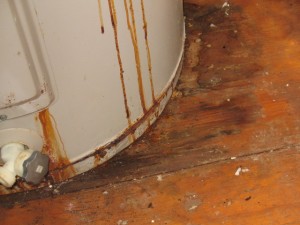
Once water pools at the base of the unit or you see bulges on the metal, the tank itself is compromised. Steel tanks cannot be reliably welded or patched in a home setting.
Signs the Tank Body Is Failing
Specific visual cues indicate that water heater tank repair is no longer an option. You should look for wet floors around the base with no visible source on top. Rust-colored stains on the tank shell or bulging metal near the bottom are also critical indicators.
Key indicators include:
* Wet floor around the base with no visible source on top
* Rust-colored stains on the tank shell
* Bulging or warped metal near the bottom
* Age over 10 years with recurring issues
💡 Fact: Most standard water heaters last 8 to 12 years. Beyond that timeframe, the risk of failure rises sharply.
Why Internal Corrosion Cannot Be Fixed
Even if a leak seems small, internal corrosion spreads rapidly once the glass lining cracks. The anode rod cannot protect areas where the lining has failed. Once water contacts bare steel, rust grows from the inside out, making external patches useless and dangerous.
No DIY Fix: Epoxy, sealants, or clamps may stop a drip temporarily, but pressure and heat will break the seal quickly. This creates a safety hazard and potential for sudden flooding.
Decide Between Repair and Replacement
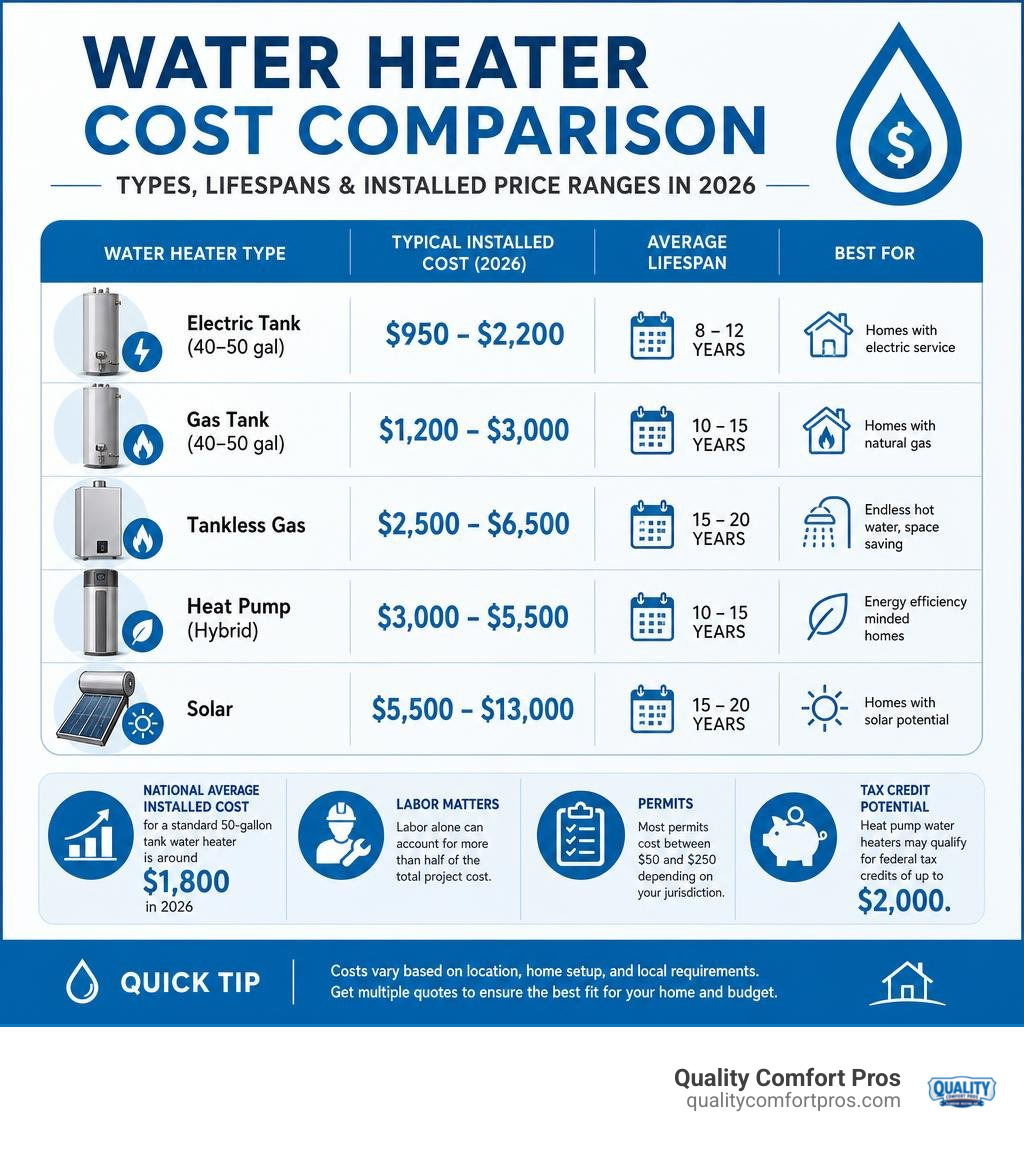
Not every water heater issue demands replacement, but tank involvement changes the math quickly. Use these criteria to make a cost-effective decision.
Situations Where Repair Makes Sense
You should consider repair if the leak source is external, such as a valve or fitting. Failed heating elements or thermostats in electric models are also common repair candidates. If your unit is under 8 years old with no history of leaks, a repair is often the best financial choice.
Repair if:
* Leak source is external (valve, fitting, pipe)
* Heating element or thermostat failed
* Pilot light or gas control valve needs replacement
* Unit is under 8 years old with no history of leaks
* Anode rod was recently replaced
🔧 Typical repair cost: $150 to $400
Situations Requiring Full Replacement
Replace your unit if the tank is leaking from the bottom or side. Visible rust inside or outside the tank indicates structural failure. If the unit is over 10 years old or requires multiple repairs in two years, replacement is more economical.
Replace if:
* Tank is leaking from the bottom or side
* Rust is visible inside or outside the tank
* Unit is over 10 years old
* Multiple repairs occurred in the past 2 years
* Sediment has reduced capacity significantly
💰 Replacement cost: $800 to $1,600 for standard tanks, $1,800 to $3,500 for tankless.
Rule of Thumb: If repair costs exceed 50% of a new unit’s price, replace it.
Execute Emergency Response Steps
If you discover active leaking or suspect tank failure, act fast to minimize water damage to your home.
Shut Off Power and Water Immediately
- Turn off power: Switch off the breaker for electric units or turn the gas control knob to “Off” for gas models.
- Close cold water inlet: Locate the shutoff valve on the pipe above the heater and turn it clockwise.
- Drain if safe: Attach a hose to the drain valve and open it to release water, but only if the leak is not from the bottom.
⚠️ Never open the T&P valve manually during a leak unless you are testing it, as this can worsen pressure issues.
Extend Life With Preventive Maintenance
Regular care slows down aging and prevents premature failure of your water heating system.
Flush the Tank Annually
Sediment buildup is the number one enemy of tank longevity. Flushing removes minerals that cause corrosion and noise.
Steps:
1. Shut off power and cold water supply.
2. Attach a garden hose to the drain valve.
3. Open a hot water tap in a nearby sink to prevent vacuum lock.
4. Open the drain valve and flush until water runs clear.
5. Close the valve, refill the tank, then restore power.
⏱️ Time: 30 to 60 minutes
Replace the Anode Rod Regularly
This inexpensive part can add years to your heater by sacrificing itself to protect the tank lining. Check it at three years and replace it if it is more than 50% worn.
Types available:
* Magnesium: Best for soft water areas
* Aluminum: Good for hard water conditions
* Zinc-aluminum: Reduces sulfur smell issues
🔧 Pro Tip: Use a ¾” socket wrench and apply penetrating oil if the rod is stuck due to corrosion.
Explore Upgrade Options After Tank Failure

Once a tank fails, you have an opportunity to upgrade to a more efficient system.
Standard Tank Replacement
Standard tanks offer familiar operation with capacities ranging from 40 to 80 gallons. They run on electric, natural gas, or propane and fit existing plumbing setups easily.
Key features:
* Capacity: 40 to 80 gallons
* Efficiency: 0.60 to 0.70 Energy Factor
* Cost: $800 to $1,600 installed
Tankless Water Heater Systems
Tankless units provide endless hot water on demand and take up much less space. They are highly efficient but may require upgrades to gas lines or electrical systems.
Key features:
* Endless hot water on demand
* Smaller footprint for tight spaces
* Efficiency: 0.82 to 0.94 Energy Factor
* Cost: $1,800 to $3,500 installed
💡 Note: Tankless units require proper gas line sizing and venting in some cases.
Access Local Repair Support in Attleboro
Pinette Plumbing handles water heater repairs across Greater Attleboro, including Bristol and Norfolk County. We service major brands like Bradford White, Rheem, AO Smith, and Navien with honest diagnostics.
For immediate help with no hot water, leaking tanks, or gas smells, call (774) 226-6062. If the tank is already failing, visit our water heater installation page to explore replacement options tailored to your home.
Frequently Asked Questions About Water Heater Tank Repair
What water heater problems can you repair?
We handle no-hot-water calls, pilot light problems, bad thermostats, failed heating elements, relief valve leaks, and noisy tanks. If the tank itself is leaking or badly corroded, we will explain why replacement is the better option.
When is a water heater leak urgent?
Active leaking around the base, a dripping relief valve, or water near electrical components should be handled quickly. Shut off power or gas if safe, use the cold-water shutoff, and call for service immediately.
Is it worth repairing an older water heater?
It depends on the failure type, tank age, and signs of corrosion. A simple part replacement is worthwhile, but major repairs on an 8–12 year old tank are often money better spent on a new model.
How do I know if my tank is corroded inside?
Rusty hot water, popping noises, and frequent sediment buildup indicate internal corrosion. If the anode rod is gone and rust appears in your water, the tank lining is likely failing.
Can I patch a leaking water heater tank?
No, steel tanks cannot be reliably patched or welded in a home setting. Internal corrosion spreads quickly, and external seals will fail under pressure, creating a flood risk.
Key Takeaways for Water Heater Tank Repair Decisions
Water heater tank repair is rarely possible once the tank body is compromised by leaks or corrosion. Focus on early detection through annual maintenance and knowing exactly when to upgrade your system.
A failing tank poses a serious flood risk to your home, so act fast if you see water at the base. Shut off your supplies immediately and contact a professional to restore hot water safely.