
If your engine is overheating or coolant is pooling beneath your vehicle, the water pump may be failing. Rather than paying hundreds for a new unit, rebuilding the pump yourself restores full functionality at a fraction of the cost. This guide covers every critical step, from disassembly and inspection to bearing installation, seal orientation, and final testing. Whether you work on a classic Chevrolet, a marine raw water pump, or a standard automotive system, these techniques apply to most pump designs.
You will learn how to safely disassemble the unit, identify worn components, press bearings without a shop press, install seals correctly, and verify clearances before reinstallation. Each section includes specific measurements, tool recommendations, and warnings against common mistakes that cause rebuild failures.
Essential Tools for Water Pump Rebuilds

Having the right tools prevents damage and ensures precision throughout the rebuild. While some steps are doable at home, certain operations require specialized equipment.
Standard Hand Tools Required
Gather these basics before starting your water pump rebuild:
• Circlip pliers (pinch-type) for removing internal retaining rings
• Socket set and wrenches for bolt removal
• Hammer with soft-faced drifts (brass, lead, or hardwood)
• Die grinder with abrasive disc for cleaning gasket surfaces
• Dremel tool with Scotch-Brite pad for polishing internal bores
• Digital calipers with depth gauge for measuring bearing placement
Specialized Equipment for Precision
Critical operations like pressing bearings and seals demand specific tools:
• Hydraulic press for even, perpendicular force
• Bearing installer set or seal drivers to prevent cocking during installation
• Toaster oven and freezer for thermal expansion method
• Homemade pressing jig made from hardwood with a hole sized to guide the shaft straight
Pro Tip: No press available? Use a bench vise with a hardwood jig to simulate pressing. Alignment must be perfect, as any tilt risks damaging seals or bearings.
Safe Disassembly of Your Water Pump
Rebuilding starts with careful disassembly. Rushing this phase risks damaging reusable parts or missing early failure signs that explain why the pump failed.
Remove Pump from Engine
Unbolt the water pump after disconnecting all hoses. Inspect the exterior for clues about failure mode:
• Oil weepage indicates oil seal failure
• Coolant leaks suggest water seal breach or hose stress (such as a one-inch hose on a seven-eighths barb)
Clean the exterior thoroughly before opening the pump to prevent debris from entering internal components.
Extract Pulley and Retaining Clip
Remove the pulley if equipped, then locate the C-clip inside the housing that retains the shaft. Use pinch-type circlip pliers to remove it, as needle-nose pliers slip easily and can damage the groove. Set the clip aside, as rebuild kits typically include a replacement.
Free the Shaft and Bearings
Extract the shaft assembly by placing the pump over a hole in your workbench so the shaft can pass through freely. Support the housing and use a hardwood block against the shaft end, tapping gently with a hammer. Never strike the shaft directly with metal.
Warning: If the shaft resists removal, soak it overnight with PB Blaster. If it still won’t budge after soaking, take it to a machine shop for $5–$10 rather than forcing it, which risks catastrophic damage.
Inspecting Components Before Rebuilding
Once disassembled, inspect every part closely. Rebuilds fail early when worn components are reused instead of replaced.
Check the Shaft Condition
Examine seal contact points on the shaft carefully:
• Look for scoring or pitting along the seal surfaces
• Even light grooves can destroy new seals within minutes of startup
• If scoring exists, the shaft must be replaced
Expert Note: There is no sense going to all this trouble and not doing it right. Reusing a scored shaft guarantees leak failure.
Evaluate Bearings and Seals
Test each bearing by rotating it manually:
• Roughness, play, or corrosion means replacement is needed
• Seals come in pairs: an oil seal blocks engine oil from entering coolant, while a water seal keeps raw water out of the oil system
• Look for cracks, dryness, or deformed seal lips
Inspect Impeller and Cam
Examine the impeller vanes for brittleness, cracking, or erosion. On marine pumps, check the cam for warping or wear. Only proceed with rebuilding if the housing is crack-free and corrosion is minimal.
Cleaning the Pump Housing Properly
A clean housing ensures proper sealing and prevents leaks from recurring.
Prepare Gasket Surfaces
Use a die grinder with abrasive disc or Dremel with Scotch-Brite pad to remove old gasket material. Avoid aggressive grinding that creates low spots or warpage. For ultra-flat surfaces, use wet sandpaper on a three-eighths inch glass plate with honing oil.
Clear the Weep Hole
Locate the weep (drain) hole at the bottom of the housing. Clear salt, debris, or old sealant with a small wire. Never plug this hole, as it allows early leak detection and prevents fluid from pooling near the bearings.
Critical Rule: Blocking the weep hole traps moisture and accelerates bearing failure.
Final Bore Finish
Polish the inner neck lightly, just enough to shine. Over-polishing removes material and alters seal fit.
Installing Bearings Correctly

Bearings must be pressed with precision. Two methods exist, though one is far more reliable.
Thermal Method: Heat and Cool
Heat the bearing in a toaster oven to 200°F while chilling the shaft in the freezer. Slide the bearing on while the temperature difference exists.
Reality Check: This method often fails. The temperature of the larger mass of the shaft quickly cooled the bearing race and it ceased sliding. Use this only if press tools are unavailable and fit is loose.
Press Fit: Recommended Method
Use a hydraulic press or bench vise with a jig. Construct a hardwood jig with a hole that guides the shaft straight. Align the bearing perfectly at 90° to the shaft.
Pressing Rules
Apply force to the inner race only when mounting bearings on the shaft. Use a pressing washer that contacts only the inner race, never the outer. Press from the engine side, not the impeller end, as pressing from the impeller side can scratch the seal surface.
Match Original Depth
Measure the old shaft with a caliper depth gauge from the impeller end to the inner bearing race. Mark the new shaft with electrical tape to replicate this depth. Compare old and new assemblies side by side before final pressing.
Sealing System Installation Steps
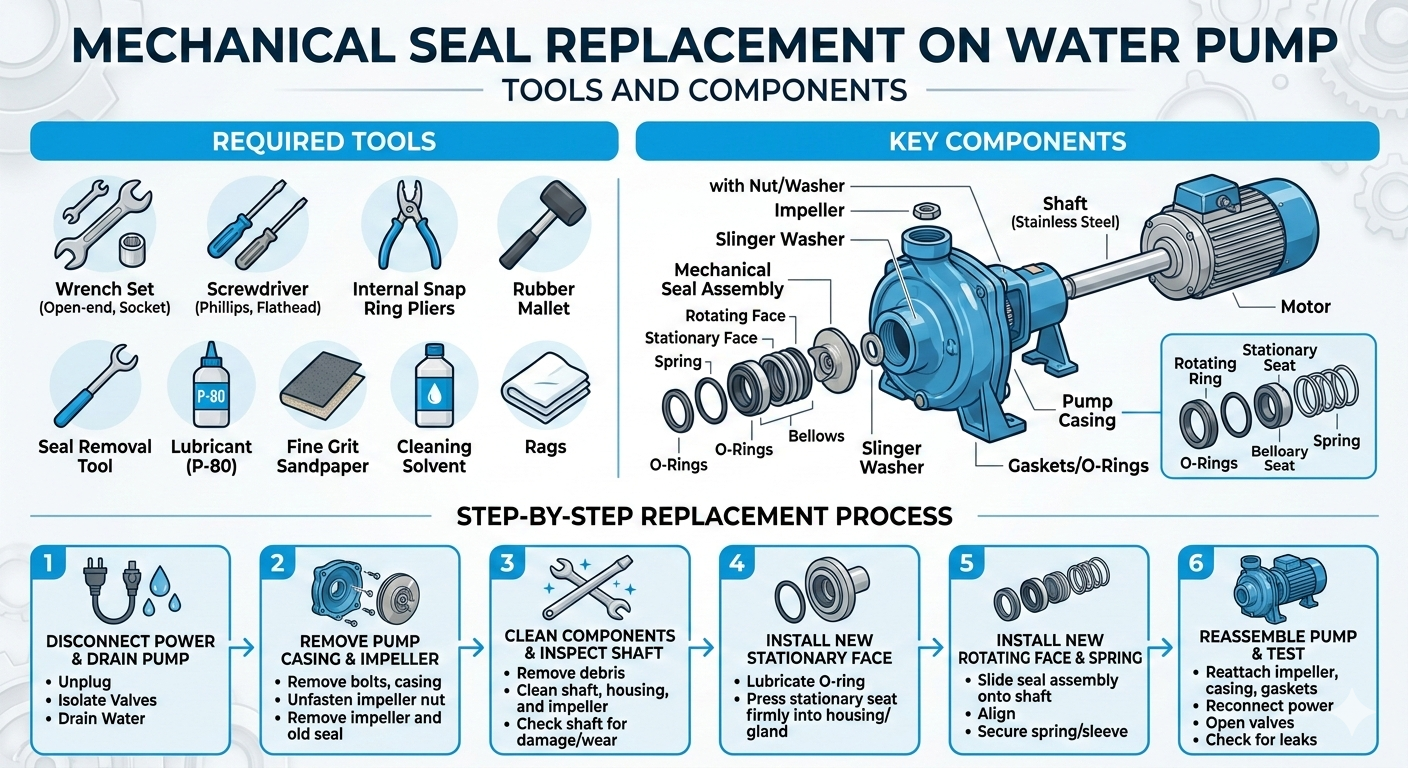
Seals are the heart of leak prevention. Orientation and seating are absolutely critical.
Identify the Three-Piece System
Most pumps use three components: an oil seal, a spacer with four feet, and a water seal. A weep hole sits between them to detect early failure.
Install Oil Seal First
Use a nylon washer and socket to press evenly. Press until slightly proud of the weep hole. Final depth is set when the water seal and spacer are added. Warning: Over-pressing can damage bearings or cause binding.
Orient the Spacer Correctly
The four feet face the oil seal. The flat side faces the water seal. The feet engage the oil seal, maintaining separation and allowing leak detection.
Key Point: It is very important that the four little feet on the spacer face the oil seal. Wrong orientation blocks the weep path and causes cross-contamination between oil and coolant.
Seat the Water Seal
Use a socket that fits just inside the metal cap. Press straight without tilting. Ensure the seal is fully seated and flush with the housing surface.
Lubricate Before Assembly
Apply motor oil to both seal lips using a finger dipped in oil to coat the underside. Never use petroleum grease, as it degrades rubber components.
Impeller Fit and Clearance Adjustment
The impeller must turn freely without touching the housing.
Lubricate Before Installation
Use glycerin (available at any drugstore) or impeller-specific lube. Coat vanes and bore evenly. Avoid petroleum-based lubes, as they destroy rubber.
Myth Busting: Contrary to myths about aligning vanes, it really does not matter. Vanes self-orient at startup.
Adjust Face Clearance on Corvette and Classic Chevy
Some new seals include a ceramic washer that makes the seal face thicker. This reduces clearance between the impeller and housing. Solution: Machine back the impeller face the amount specified by the manufacturer. This requires a lathe, so outsource if needed. This upgrade improves sealing and longevity.
Final Impeller Position
Press the impeller onto the shaft until it sits below the housing surface plate. Maintain 15–35 thou (0.015–0.035 inches) clearance on both sides. Use feeler gauges to verify no vane contacts the housing.
Gasket Application Techniques
Paper gaskets alone are not sufficient. Reinforce them with proper sealant for reliability.
Choose the Right Sealant
Use non-silicone, flexible sealants such as HondaBond 4, YamaBond, ThreeBond 1104, or Permatex The Right Stuff. Avoid silicone gasket makers, as they harden, crack, and can contaminate oil systems.
Apply Properly
Use a thin skim coat on both sides of the gasket. Do not over-apply. Reuse copper crush washers on cam screws, replacing them if flattened.
Expert Note: These cheap paper gaskets tend to fail without proper sealing. Sealant is non-negotiable.
Reassembly Order and Procedures
Follow a strict sequence to avoid misalignment and ensure proper function.
- Install the cam with a new copper washer
- Insert the new shaft assembly into the housing, tapping gently with a wood block if needed
- Ensure no binding occurs
- Press the oil seal, then the spacer, then the water seal in sequence
- Reinstall the C-clip using circlip pliers
- Slide on the pre-lubed impeller
- Mount the cover plate with gasket and sealant
- Reattach the pulley and hardware
Final Check: Nothing should rely on the C-clip for structural support.
Final Checks Before Engine Installation
Verify everything before reinstalling on the engine.
Test Shaft Rotation
Turn the shaft by hand. It should spin freely with no binding, grinding, or wobble. Check for axial play (in/out movement) and radial play (wobble side to side).
Confirm Clearances
Impeller clearance should be 15–35 thou on both sides. Verify seals are fully seated and undamaged. Ensure the weep hole remains unobstructed.
Pre-Lube for Dry Start Prevention
Lay the pump face-down and pour a small amount of oil into the bearing cavity. Let gravity feed oil to the seal interface. Drain excess before installation.
Pro Tip: All you need is a surface film of oil. This prevents seal burn-in at startup.
Troubleshooting Common Rebuild Issues

A well-rebuilt pump lasts 2,800+ engine hours, longer than OEM if done correctly.
Common Failures and Fixes
| Issue | Cause | Fix |
|---|---|---|
| Seal leaks after rebuild | Scored shaft, dry start | Replace shaft, pre-lube |
| Oil in coolant | Plugged weep hole, missing spacer | Clear hole, reinstall spacer |
| Impeller fails early | Petroleum grease used | Use glycerin only |
| Binding shaft | Misaligned bearing, cocked seal | Recheck press angle and depth |
| Noise or vibration | Impeller contact, pulley misalignment | Adjust clearance, check runout |
Critical Warnings Recap
Never reuse a scored shaft. Never press on the outer bearing race. Never plug the weep hole. Never use silicone gasket maker. Never manually align impeller vanes.
Cost Comparison: Rebuild vs Replace
Rebuilding is almost always cheaper than replacement.
| Item | Cost | Notes |
|---|---|---|
| New Westerbeke Pump | $480 | OEM, Johnson Pump made |
| Rebuild Kit | $130–$196 | Includes all parts except housing |
| Chevrolet Corvette Kit | ~$60 | Available from multiple suppliers |
| Bearing and Shaft | $100 | Includes instructions |
Bottom Line: Rebuilding is the cost-effective and obvious choice.
When Not to Rebuild
Avoid rebuilding if the housing is cracked or severely corroded, if no rebuild kit exists for your model, or if you lack calipers, a press, or mechanical skill. In these cases, replacement is safer.
Frequently Asked Questions About Rebuilding a Water Pump
Can I rebuild any water pump myself?
If the housing is sound and a rebuild kit is available, most mechanically inclined individuals can rebuild a water pump using basic tools, a bench vise, and calipers. Complex operations like pressing bearings benefit from a hydraulic press but can be done with a vise and jig.
How long does a rebuilt water pump last?
A properly rebuilt pump can exceed 2,800 engine hours, often outlasting factory units, especially when upgraded with ceramic-faced seals and proper installation techniques.
What causes water pump seal failure after rebuilding?
Seal failure typically results from a scored shaft, improper seal orientation, dry start without pre-lubrication, or pressing the bearing on the wrong race. Always inspect the shaft and lubricate seals before final assembly.
Is thermal expansion or press fit better for bearing installation?
Press fit is strongly recommended. Thermal expansion often fails because the shaft’s mass quickly cools the heated bearing, stopping it from sliding into place. Use a press or vise with a jig for reliable results.
Can I use any lubricant on the impeller?
Only use glycerin or impeller-specific lubricant. Petroleum-based products degrade rubber vanes and cause premature impeller failure. Glycerin is inexpensive and available at drugstores.
Key Takeaways for Rebuilding Your Water Pump
Rebuilding a water pump saves significant money compared to buying new while giving you control over component quality. Success depends on careful inspection (replace any scored shaft), proper bearing installation (press on inner race only at 90°), correct seal orientation (spacer feet face the oil seal), and pre-lubrication before startup. Follow each step precisely, never cut corners on shaft condition or seal lubrication, and your rebuilt pump will deliver years of trouble-free service.