Does your RV water taste strange or smell like rotten eggs after storage? Stagnant water quickly breeds bacteria and biofilm that standard city water cannot eliminate. You must sanitize your RV fresh water tank annually to ensure safe drinking and cooking water on the road.
This guide details the exact bleach ratios and steps to disinfect your entire plumbing system safely. You will learn how to bypass your water heater, circulate sanitizer through every faucet, and neutralize chlorine taste without damaging seals.
Prepare Your RV Water System Before Adding Chemicals

Proper preparation prevents damage to your water heater and ensures the sanitizer reaches every pipe. Skipping steps like bypassing the heater or removing filters can lead to corrosion or ineffective cleaning results.
Drain All Water from Tanks and Lines
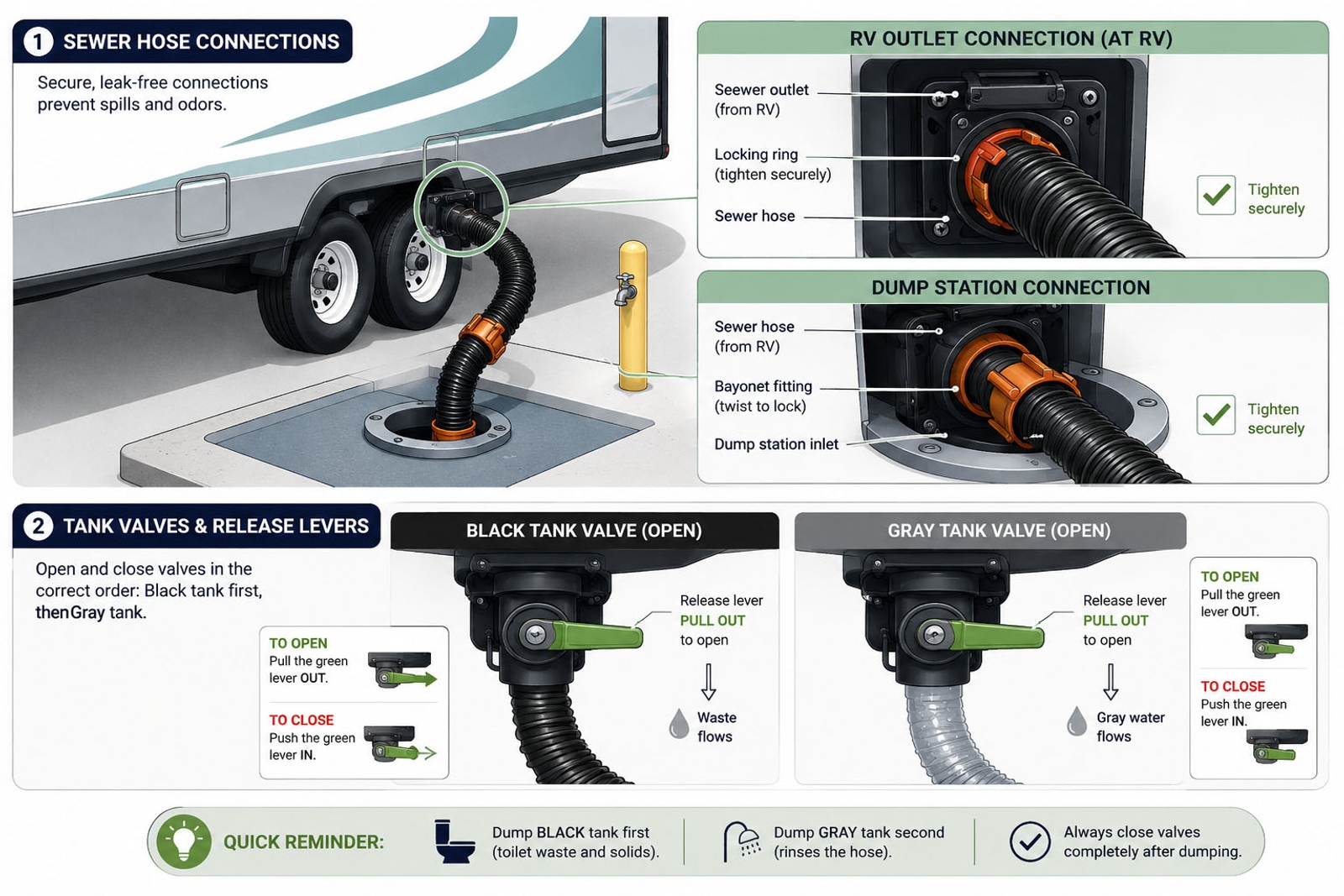
Start with a completely empty system to avoid diluting your sanitizing solution. Open the freshwater tank drain valve and let all water flow out into a sewer hookup or disposal area. Open both hot and cold faucets at every sink, shower, and the outdoor spigot to break any vacuum lock. Drain your water heater using the pressure relief valve and the base drain plug. Empty your gray and black water tanks now so they are ready to receive the bleach mixture later.
Bypass the Water Heater to Prevent Damage
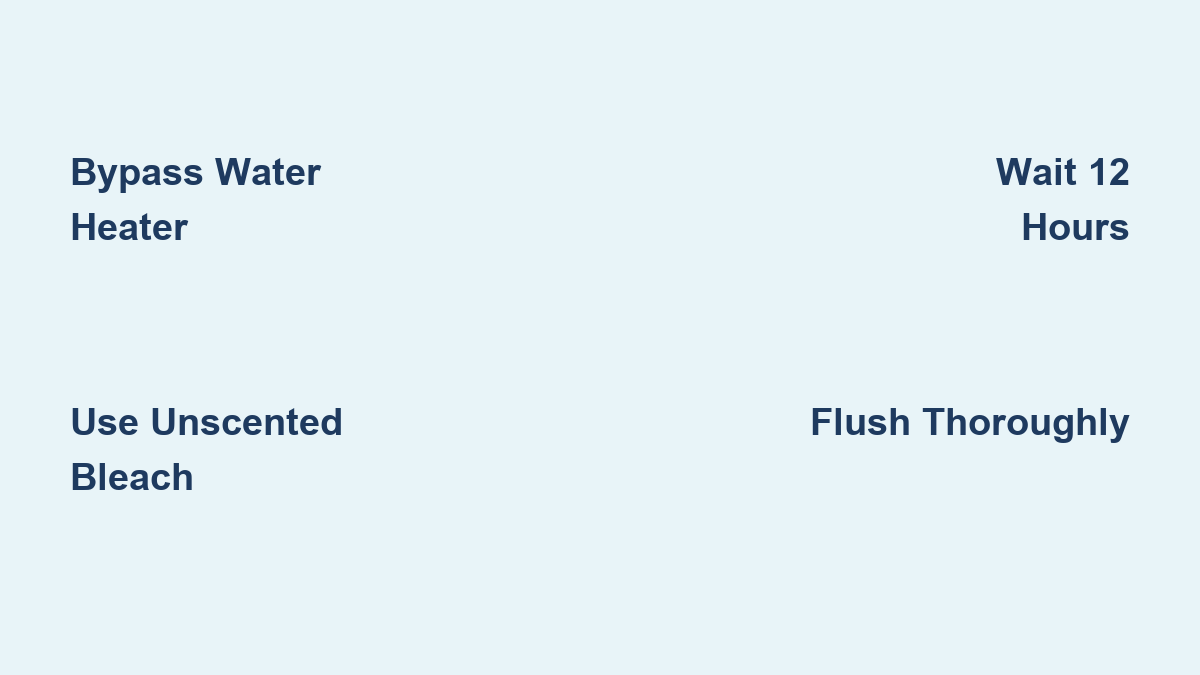
This step is critical because you must never introduce bleach directly into a live water heater. High chlorine concentrations can corrode the anode rod and heating element rapidly. Locate your bypass kit, often featuring red handles or a three-valve manifold near the heater. Turn the valves to the bypass position to isolate the heater from the rest of the plumbing. Confirm the bypass works by filling the tank slightly and checking that no water enters the heater through the relief valve.
Remove Carbon Filters and Bypass RO Systems
Carbon filters and reverse osmosis systems must be taken offline before you add any sanitizer. Chlorine destroys activated carbon media instantly and ruins the filter’s ability to clean water. Remove filter cartridges entirely or install bypass plugs in the housing. Close the inlet valve on reverse osmosis units or disconnect the feed line to protect the membrane. You will install fresh filters only after the final flush is complete.
Select the Correct Sanitizing Agent and Ratio

Choosing the right chemical determines how effective your cleaning will be and how long the rinsing process takes. Stick to proven methods that kill bacteria without leaving harmful residues behind.
Use Unscented Liquid Bleach for Best Results
Regular unscented household bleach containing 5% to 8.25% sodium hypochlorite is the gold standard for RV sanitation. Avoid scented, splash-less, gel, or powdered bleaches because additives leave film and bad tastes. Use ¼ cup of standard 5% bleach for every 15 gallons of tank capacity. If using concentrated bleach at 6% to 8.25%, reduce the amount to approximately 1.2 ounces per 15 gallons. This mixture achieves the target 50 ppm chlorine level needed for full disinfection.
Try Hydrogen Peroxide for No-Rinse Cleaning
Hydrogen peroxide offers a chlorine-free alternative that breaks down into water and oxygen. Use one liter of 3% hydrogen peroxide for a standard tank size. This method requires a dwell time of three to four hours but needs no extensive flushing. It is ideal for sensitive users or quick cleanups though it may not remove heavy biofilm as thoroughly as bleach.
Consider Purogene for Specialty Maintenance
Purogene is a marine-grade sanitizer designed specifically for RV and boat water systems. Mix ⅓ ounce of Purogene with ½ teaspoon of citric acid per gallon of water for deep cleaning. This option requires minimal rinsing and does not damage seals or leave an aftertaste. Frequent travelers often use a maintenance dose of one ounce per 30 gallons during regular fill-ups to avoid annual deep sanitizing.
Avoid Dish Soap and Vinegar as Primary Sanitizers
Dish soap like Dawn is not a sanitizer and leaves residues that create suds in your pump and faucets. Vinegar alone does not kill bacteria effectively enough for tank sanitation. Use vinegar only after bleach treatment to neutralize chlorine taste and odor.
Add Sanitizer and Circulate Through All Fixtures
You must introduce the sanitizer correctly to ensure it reaches the farthest corners of your plumbing. Proper circulation guarantees that every inch of pipe gets treated.
Fill Tank with Diluted Bleach Solution
Pouring bleach directly into an empty tank can damage seams, so use a mixing method for even dilution. The hose mixing method works best by pouring half the bleach into a dry city water hose before connecting to the supply. Fill the tank halfway, add the remaining bleach, and finish filling until water overflows at the vent. Alternatively, mix the bleach with one gallon of water in a bucket and pour it into the fill port before refilling the tank immediately.
Run Pump Until Bleach Smell Appears at Every Faucet
Switch your RV to dry camping mode to use the onboard water pump for circulation. Turn on the pump and open every single faucet including the kitchen, bathroom, shower, toilet, and outside spigot. Run both hot and cold lines until you smell bleach coming out of each one. Since the water heater is bypassed, the hot lines will pull from the cold supply, ensuring the solution travels through all pipes. Let the pump run for two extra minutes after the scent appears to saturate low points.
Allow Sanitizer Dwell Time to Kill Bacteria
Circulation primes the system, but the solution must sit undisturbed to kill microbes effectively. This dwell time is what breaks down biofilm and eliminates hidden bacteria.
Wait at Least 12 Hours Overnight
The U.S. Public Health Service states three hours is the minimum effective time, but 12 hours overnight is recommended. Do not exceed 24 hours as prolonged exposure can degrade rubber seals. Close all faucets tightly and let the solution sit without using any water. This duration gives chlorine time to penetrate biofilm in joints and low points. Never heat the water during this period as the heater must stay bypassed and cold.
Flush System Completely to Remove Residue
Incomplete rinsing leaves a chemical taste and can damage components over time. You must flush thoroughly until the water is clear and odor-free.
Drain and Refill Twice for Clean Water
Connect to a sewer outlet and open the freshwater tank drain along with low-point valves. Drain the system completely while keeping the hose above the sewer line to prevent backflow. Refill the tank with clean city water and run all faucets until the water flows clear. Drain the tank again. Most systems are clean after two full cycles, but repeat if any bleach smell lingers.
Neutralize Chlorine Taste with White Vinegar
Use white vinegar if you still taste chlorine after flushing. Pour one gallon of vinegar into the empty tank and fill it with water. Circulate this mixture through all faucets and let it sit for one to two hours. Flush the system one final time with fresh water. The vinegar reacts with residual chlorine to eliminate odor and improve taste fast.
Restore Water Heater and Reinstall Filters
Your system is now clean, so you must return everything to working order safely. Skipping restoration steps can lead to dry firing or leaks.
Unbypass Water Heater and Fill Before Heating
Re-engage the bypass valves to restore normal hot water flow. You must fill the heater before turning on the gas or electric heat to avoid destroying the element. Open the pressure relief valve on the heater and turn on the water pump. Wait until a steady stream sprays from the relief valve to confirm the tank is full of water. Close the valve and then turn on your heat source.
Install New Filters and Check for Leaks
Put in new filter cartridges since old ones may be contaminated or damaged by the bleach. Reconnect any reverse osmosis systems you disconnected earlier. Turn on the water and check all connections for leaks, especially at filter housings and under sinks. Flush hot water at each faucet until steady flow confirms all air is purged from the lines.
Troubleshoot Common Water Quality Issues

Even with careful work, some issues like sulfur smells or mold may persist if the system was neglected. Here is how to fix them.
Fix Rotten Egg Smell in Water
A sulfur odor usually means hydrogen sulfide gas from bacteria reacting with the anode rod. Extend the bleach dwell time to 12 to 24 hours for severe cases. Flush the water heater specifically with a flushing wand to remove sediment where bacteria hide. Replace a magnesium anode rod with an aluminum or aluminum-zinc rod to prevent recurrence.
Eliminate Mold and Musty Tastes
Visible mold or musty water indicates long-term stagnation that needs aggressive treatment. Use the full-strength bleach ratio and soak the system for over 12 hours. Flush the heater and lines thoroughly to remove all dead organic matter. Consider using Purogene for ongoing maintenance to keep the system fresh between trips.
Prevent Future Contamination
Keep your system clean by draining the tank completely when storing the RV. Leave faucets open to let lines dry out completely. Use an inline water filter on every fill-up to reduce new contaminants. Sanitize your drinking hose annually using the same bleach ratio. Add a maintenance dose of sanitizer like Purogene when refilling to inhibit growth.
Frequently Asked Questions About RV Water Sanitization
How often should I sanitize my RV fresh water tank?
You should sanitize your tank at least once a year, ideally at the start of camping season. Perform this task immediately after winterization or if the RV has sat unused for several months.
Can I use scented or splash-free bleach?
No, you must use regular unscented liquid bleach only. Scented or splash-free versions contain additives that leave residues and impart bad tastes to your drinking water.
Will bleach damage my plastic water tank?
No, RV tanks are made from food-grade polyethylene which resists diluted bleach. However, do not leave the solution in longer than 24 hours to avoid damaging rubber seals and gaskets.
Why do I need to bypass the water heater?
Bypassing prevents bleach from corroding the anode rod and heating element. It also stops toxic fumes from forming if bleach mixes with residual minerals or other cleaners in the heater.
How do I get rid of the bleach taste after sanitizing?
Flush the system with fresh water twice. If the taste persists, circulate one gallon of white vinegar through the system, let it sit, and flush one final time.
Key Takeaways for Sanitizing Your RV Fresh Water Tank
Sanitizing your RV fresh water tank is essential for health and requires specific steps to avoid damaging your plumbing. Always bypass the water heater, use the correct unscented bleach ratio, and allow at least 12 hours of dwell time for effective disinfection.
Flush the system thoroughly until no chlorine smell remains and reinstall fresh filters before use. Follow this annual routine to ensure safe, great-tasting water on every trip.