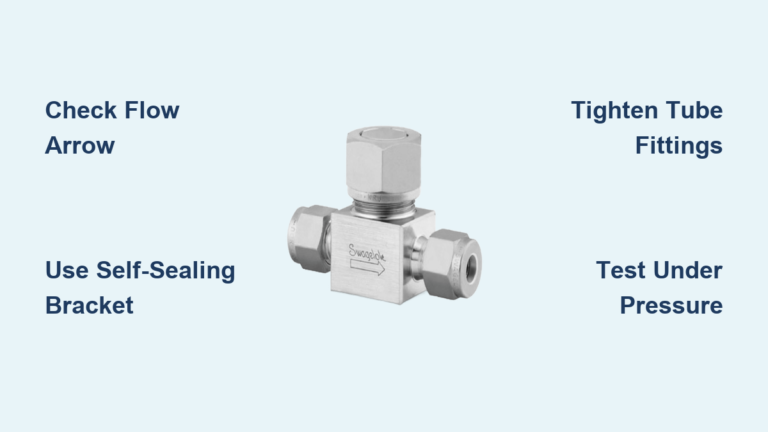

Fluid systems depend on reliable one-way flow to prevent damage, contamination, and costly downtime. The ball check valve delivers this protection automatically, using only fluid pressure to open and gravity or spring force to close. You see these compact devices in home sump pumps, municipal water stations, pharmaceutical processing lines, and chemical plants handling aggressive solvents.
This guide walks you through the complete picture of ball check valve operation, from the physics of cracking pressure to material selection, installation orientation, troubleshooting, and long-term maintenance. You will learn how to choose the right design for your system, avoid common installation mistakes, and keep these valves performing reliably for years.
How Forward Flow Pressure Opens the Valve
The Role of Cracking Pressure in Activation
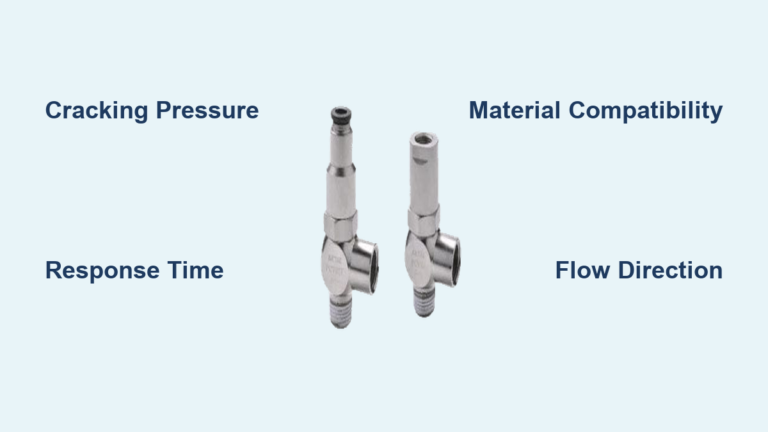
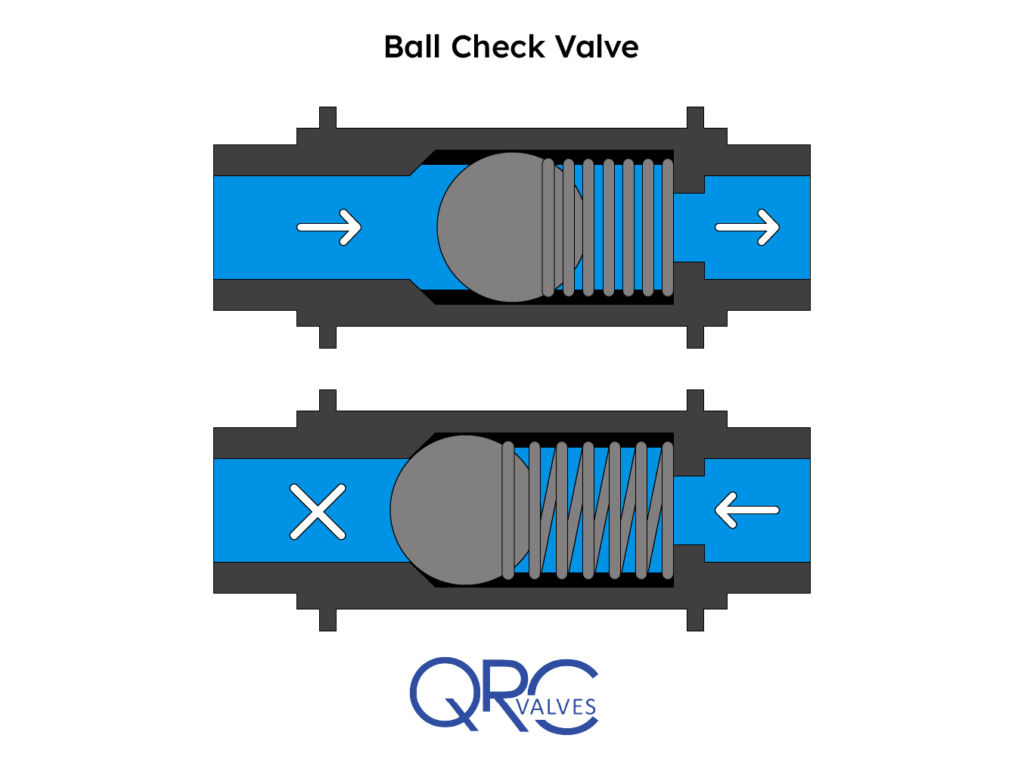
Ball check valve operation begins when upstream pressure rises high enough to lift the ball off its seat. This minimum threshold is called cracking pressure, and it represents the combined resistance of the ball’s weight plus any spring tension pushing the ball downward. Once the fluid overcomes this resistance, the ball rises into a guide cavity, creating an annular space around its surface.
Fluid then flows through this ring-shaped passage, bypassing the sphere and continuing downstream. The valve stays open as long as forward pressure remains above the cracking threshold. Typical cracking pressures range from 1 to 5 psi, though exact values depend on ball density and spring stiffness.
Factors That Influence the Opening Threshold
Several design variables determine how easily the valve opens. Lighter balls and softer springs lower the cracking pressure, making them ideal for low-pressure systems with weak pumps. Heavier balls and stiffer springs raise the threshold, which helps stabilize flow in high-pressure lines or systems prone to water hammer.
If your pump cannot generate enough pressure to meet the cracking threshold, the valve simply will not open. This is one of the most common causes of flow failure in new installations.
Confirming the Valve Has Opened
You cannot see the ball move during normal operation, but system indicators confirm activation. Steady downstream flow, stable pressure readings, and the absence of blockage noise all suggest the valve is open. In transparent or sight-glass models, a visible gap between the ball and seat provides direct confirmation.
If flow remains restricted despite pump operation, check for insufficient pump pressure, debris blocking the ball, or incorrect ball weight for your system.
Backflow Prevention and Sealing Mechanics
Automatic Closure When Pressure Drops
Ball check valve operation reverses the moment upstream pressure falls or backflow begins. The forces holding the ball open disappear, and gravity, downstream backpressure, and spring tension all push the ball back toward the seat. This passive response happens instantly, sealing the flow path before significant reverse movement occurs.
The closure requires no external control, making these valves highly reliable during pump failures or emergency shutdowns. This automatic protection is why you find ball check valves guarding sensitive equipment throughout process industries.
How the Conical Seat Creates a Tight Seal
The seat features a precisely machined conical taper that guides the ball into perfect alignment. As the ball returns, it seats against a beveled edge and compresses an elastomer lip made from materials like NBR, FKM, or HNBR. This soft lip forms the actual seal, while the metal seat body provides structural support.
The angled design compensates for minor misalignment and tolerates small debris without compromising the seal. This geometry is what allows ball check valves to perform reliably even in less-than-ideal field conditions.
Protecting Pumps and Preventing Contamination
Once seated, the ball blocks any backward movement of fluid or gas. This protects upstream pumps from reverse rotation damage, which can destroy impellers and seals. It also prevents contamination, such as dirty water re-entering a clean supply line or chemicals mixing with incompatible media.
In pharmaceutical and food processing, this seal maintains sterility and prevents cross-contamination between product batches. Any leakage downstream indicates wear, debris, or damage requiring immediate inspection.
Spring-Loaded vs. Gravity-Operated Designs
Advantages of Spring-Loaded Models
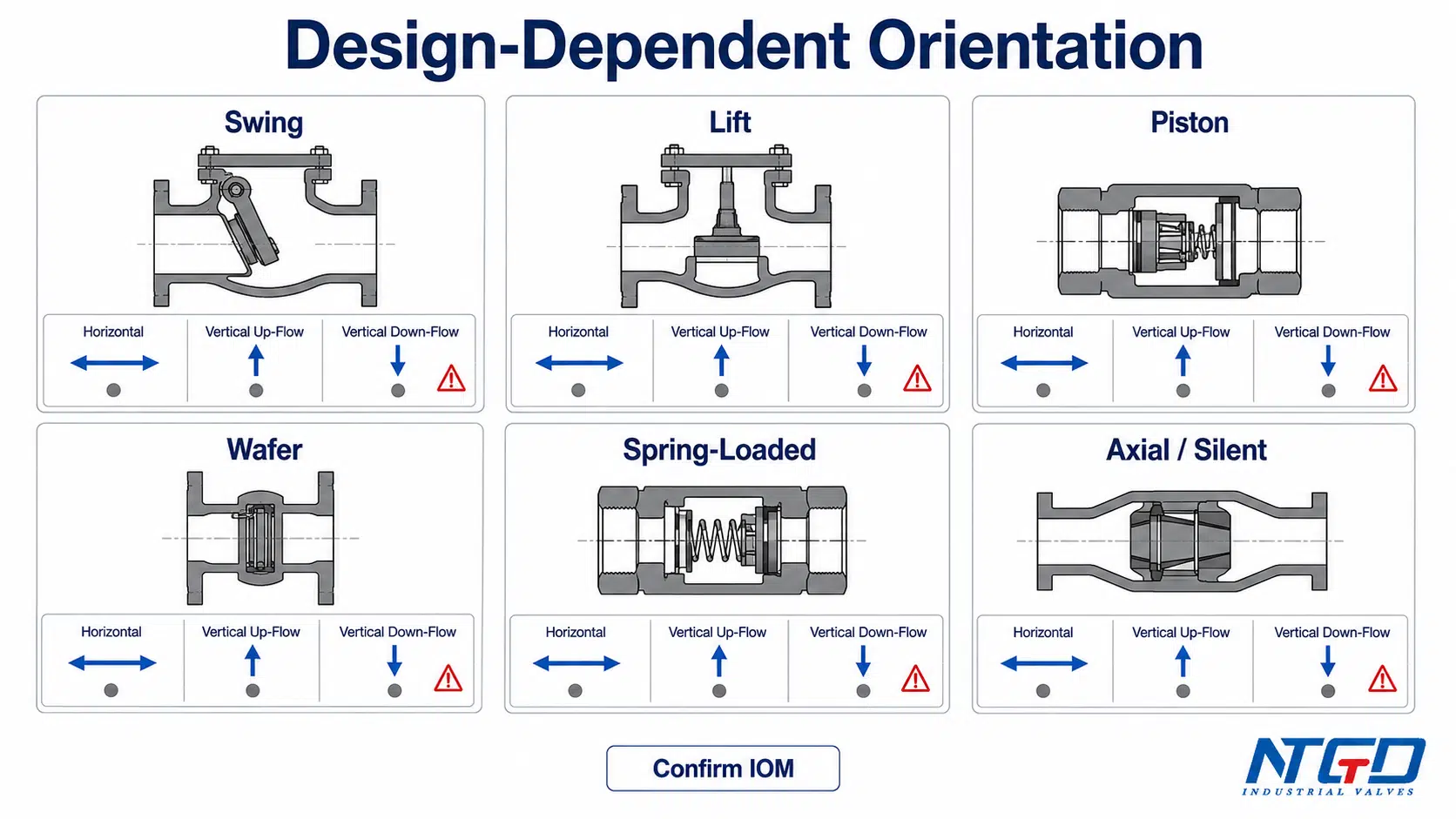
Spring-loaded ball check valves use a coiled spring to force the ball against the seat when pressure drops. This design allows installation in any orientation, including horizontal, vertical up, and vertical down positions. The spring, not gravity, ensures closure regardless of pipe layout.
These valves also respond faster than gravity models, reducing water hammer risk in systems with rapid flow changes. Their installation flexibility makes them ideal for compact spaces and dynamic systems where flow direction varies.
Limitations of Gravity-Operated Valves
Gravity-operated or free-floating models rely solely on the ball’s weight and backpressure to close. They must be installed vertically with upward flow so gravity pulls the ball straight down onto the seat when flow stops. Installing them horizontally or with downward flow prevents proper closure, leading to backflow and system failure.
While simpler and maintenance-free (no spring to fatigue), their use is limited to specific vertical applications like sump pumps and water heater lines.
Choosing the Right Type for Your System
Select a spring-loaded valve when installation flexibility matters or when your system experiences rapid cycling. Use gravity-operated valves in simple vertical setups with consistent flow direction. Consider maintenance requirements: spring-loaded models may need spring replacement over time, while gravity types typically last longer with minimal intervention.
Internal Components and Material Selection
Ball, Seat, and Housing Functions
The ball is the moving element that opens and closes the flow path. It must be dense enough to return reliably under gravity, often made of stainless steel, polyurethane, or a metal core with rubber lining. The seat provides the sealing surface, typically metal-backed with a soft elastomer lip for tight closure. The housing contains all parts and must withstand system pressure and media corrosiveness.
These three components work together to ensure reliable, leak-free operation across thousands of cycles.
Body Material Compatibility Guide
Choose body materials based on fluid type, temperature, and pressure requirements:
- Brass: General plumbing, HVAC, moderate pressures
- Stainless Steel (316/CF8M): Corrosive media, food, pharma, marine environments
- PVC/CPVC: Chemicals, potable water, low-pressure systems
- Ductile Iron (epoxy-coated): Large water and wastewater lines
- Carbon Steel: High-pressure industrial applications up to 5,000 PSI
Using incompatible materials leads to corrosion, leaks, and premature failure.
Seal and Ball Material Options
Seal materials determine longevity and chemical compatibility:
- NBR (Nitrile): Suitable for water, air, and oils up to 90°C
- FKM (Viton): Handles solvents, acids, and high temperatures up to 130°C
- Polyurethane Balls: Reduce noise and resist abrasion in slurry applications
Custom ball weights (such as 20% heavier) help control water hammer and vibration. Synthetic ruby or PTFE balls serve ultra-pure or aggressive chemical environments.
Flow Performance and Pressure Characteristics
Understanding Pressure Drop
Ball check valves create some flow resistance because the ball partially obstructs the path. Fluid must flow around the sphere, generating a small pressure drop. While generally low, this matters in high-efficiency systems where every psi counts.
Full-bore designs minimize this issue by streamlining the internal passage, reducing head loss, and preventing debris buildup at the valve base.
Full-Bore vs. Standard Designs
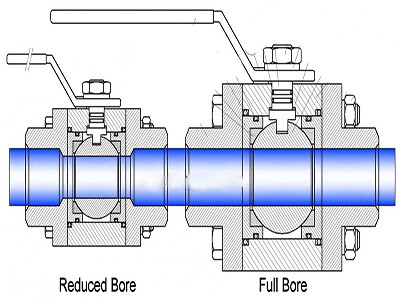
Standard ball check valves have a reduced flow area, which increases turbulence and pressure loss. Full-bore models feature a smooth, unobstructed interior that closely matches the pipe diameter. This design improves flow efficiency, reduces energy consumption, and enhances self-cleaning action.
Use full-bore versions in systems where flow capacity or cleanliness is critical, such as food processing or high-volume pumping stations.
Handling Viscous and Dirty Fluids
One of the ball check valve’s greatest strengths is its ability to handle slurries, wastewater, and viscous fluids. Unlike swing valves that can stick or chatter, the ball’s linear motion pushes through debris without jamming. The ball also rotates during operation, preventing material adhesion and creating a self-cleaning effect.
This makes ball check valves ideal for sewage systems, chemical slurries, and bioprocessing applications where contamination and clogging are constant concerns.
Installation Best Practices
Orientation and Flow Direction
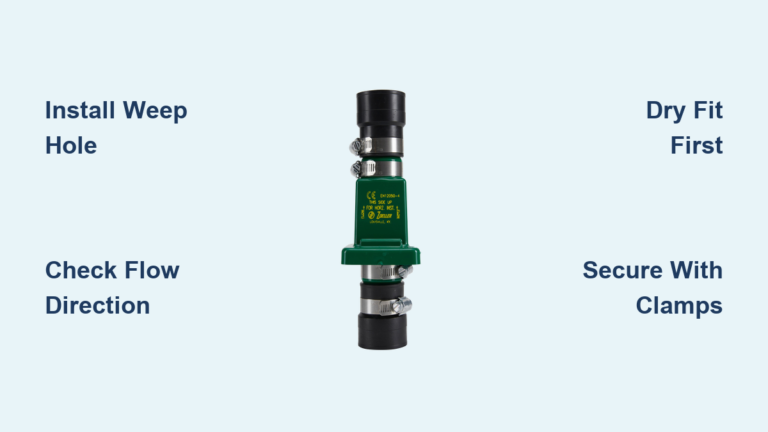
Always install the valve with the flow arrow pointing in the direction of travel. Reversing the valve blocks flow entirely and can cause immediate system damage. For spring-loaded models, orientation is flexible across horizontal, vertical up, and vertical down positions. For gravity-operated models, install vertically with upward flow only.
Incorrect orientation is the most common installation error and leads to immediate failure.
Connection Type Selection
Match your connection type to system specifications and maintenance needs:
- Threaded (BSP/NPT): Common in small plumbing up to 2 inches, easy to install and remove
- Flanged (ANSI/DIN/JIS): Used in large industrial systems from DN50 to DN600, allows easy access for service
- Socket/Butt Weld: For high-pressure steel lines, creates permanent leak-proof joints
Torque and Cleanliness Tips
When assembling threaded adapters in high-pressure models, torque to manufacturer specifications. Under-tightening causes leaks while over-tightening damages the seat or housing. Always clean the pipeline before installation, since large debris can trap the ball in the open position. Remove protective caps from inlet and outlet ports before installation to allow flow.
Troubleshooting Common Operational Issues
Valve Fails to Open
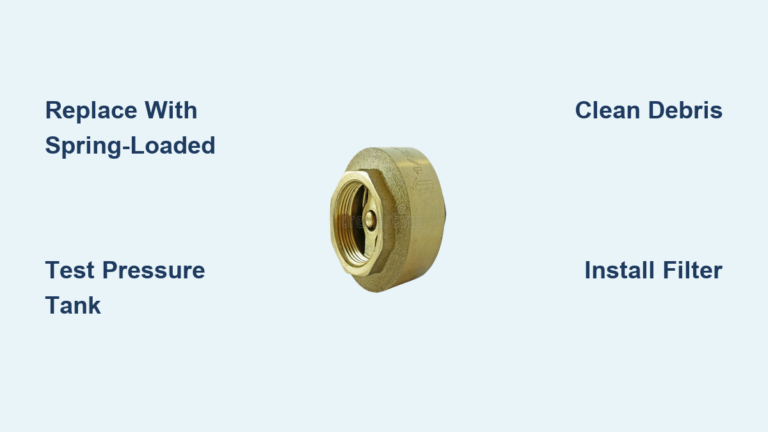
If no flow occurs despite pump operation, the valve may not be opening. Common causes include insufficient pump pressure to overcome cracking pressure, wrong ball weight or spring stiffness for the system, or debris blocking the ball movement.
Fix: Verify pump output against required cracking pressure, clean the valve internals, or replace with a lighter ball or softer spring.
Water Hammer and Excessive Noise
Loud banging when the pump stops indicates water hammer. This happens when the ball slams shut too quickly, sending pressure shockwaves through the piping. The solution involves using a 20% heavier ball or a polyurethane ball to slow closure. Spring adjustment can also dampen impact. Avoid overly stiff springs in high-flow systems.
Leakage and Incomplete Sealing
Leakage downstream suggests poor sealing. Check for debris on the seat, a worn or damaged elastomer lip, or a dented or corroded ball. Disassemble the valve, clean all components, and inspect carefully. Replace the ball or seat ring if damaged, and ensure proper reassembly without twisting the seat.
Maintenance and Repair Procedures
Inspection and Cleaning Steps
Even self-cleaning valves need periodic checks, especially in dirty service applications:
- Shut off system pressure and isolate the valve
- Remove the adapter or end cap
- Extract the ball and seat ring
- Clean all parts with appropriate solvent
- Inspect for wear, pitting, or deformation
Reassemble only when components are dry and undamaged.
Replacing Worn Components
Most high-quality ball check valves are repairable rather than disposable. Common wear parts include the ball (replace if pitted, corroded, or deformed), the seat ring lip (replace if cracked or compressed), and the spring (check for fatigue or loss of tension). Replacing these components restores full function without replacing the entire valve body.
When to Repair vs. Replace
Repair is cost-effective and sustainable for metal-bodied valves. Replace the entire valve only when the housing is cracked, corroded, or damaged beyond repair. Plastic valves are often replaced entirely due to lower repairability. Keep spare balls and seats on hand for quick fixes during scheduled maintenance windows.
Industry Applications and Use Cases
Water and Wastewater Systems
Ball check valves are standard at pump outlets in water and sewage stations. They prevent reverse rotation, protect pumps from damage, and stop contaminated water from re-entering supply lines. PVC, brass, and stainless steel serve clean water applications, while epoxy-coated ductile iron handles large wastewater mains from DN50 to DN600.
Chemical and Industrial Processing
In chemical plants, these valves handle solvents, oils, and aggressive media. FKM seals and stainless steel bodies resist corrosion and high temperatures up to 130°C. They appear in injection molding, dosing systems, and transfer lines where backflow could cause safety hazards or product contamination.
Food, Pharma, and Sterile Environments
The self-cleaning action and smooth surfaces make ball check valves ideal for hygienic applications. In dairy, beverage, and bioprocessing lines, sanitary stainless steel models meet strict cleanliness standards. The rotating ball prevents biofilm buildup, ensuring sterility and compliance with FDA and 3-A standards.
Ball Check Valves Compared to Other Designs
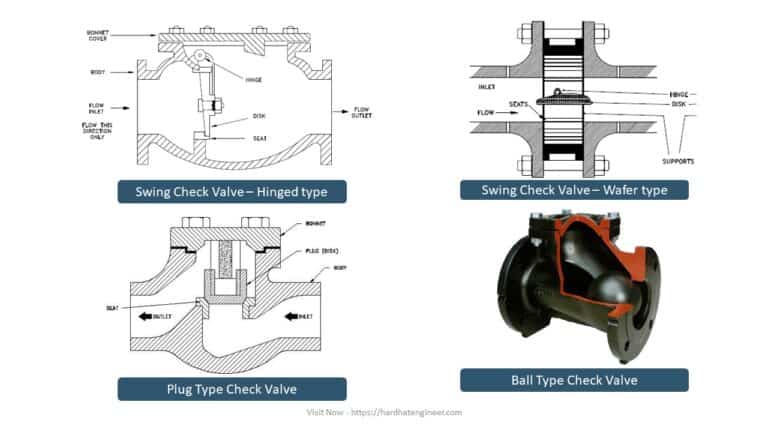
Ball Check vs. Swing Check Valves
| Feature | Ball Check | Swing Check |
|---|---|---|
| Flow Obstruction | Moderate (ball in path) | Low (full port options) |
| Debris Handling | Excellent (self-cleaning) | Poor (flapper can stick) |
| Water Hammer | Controllable via ball weight | High risk from swinging disc |
| Installation Space | Compact | Requires swing clearance |
| Orientation Flexibility | High with spring | Limited (not for downflow) |
Ball checks win in dirty or dynamic systems, while swing checks suit high-flow, clean applications.
Ball Check vs. Regular Ball Valve
Despite similar names, these valves serve fundamentally different purposes. A ball check valve is automatic, unidirectional, and self-actuated by pressure. A regular ball valve is manual, bidirectional, and operated by a lever or actuator. The regular ball valve has a hollow ball with a bore that rotates 90 degrees to open or close. The check valve has a solid ball that moves vertically. Never substitute one for the other.
Ball Check vs. Other Check Valve Types
Lift check valves use a disc instead of a ball, making them less effective with debris. Wafer check valves are thin and low-cost but not robust for slurries. Diaphragm checks serve very low pressure or sterile systems. Ball check valves offer the best balance of durability, self-cleaning ability, and reliability in demanding environments.
Frequently Asked Questions About Ball Check Valve Operation
What is cracking pressure in a ball check valve?
Cracking pressure is the minimum upstream pressure required to lift the ball off its seat and initiate flow. Typical values range from 1 to 5 psi, depending on ball weight and spring stiffness. If your pump cannot exceed this threshold, the valve will not open.
Can a ball check valve be installed horizontally?
Spring-loaded ball check valves can be installed in any orientation, including horizontal, vertical up, and vertical down positions. Gravity-operated models must be installed vertically with upward flow only, since they rely on gravity to return the ball to the seat.
How do you stop water hammer in a ball check valve?
Water hammer occurs when the ball slams shut too quickly. Use a 20% heavier ball or a polyurethane ball to slow closure. Adjusting spring tension can also dampen impact. These changes reduce shockwaves and protect your piping system.
What causes a ball check valve to leak?
Leakage typically results from debris on the seat, a worn elastomer lip, or a damaged ball. Disassemble the valve, clean all components, and inspect for wear. Replace the ball or seat ring if damage is evident.
What materials work best for chemical service?
Stainless steel (316/CF8M) bodies with FKM (Viton) seals handle most aggressive chemicals and temperatures up to 130°C. For ultra-pure applications, PTFE or synthetic ruby balls provide maximum corrosion resistance.
How often should ball check valves be inspected?
Inspection frequency depends on service conditions. Clean systems may need annual checks, while dirty or corrosive services require quarterly or monthly inspections. Always inspect springs in spring-loaded models for fatigue.
Key Takeaways for Understanding Ball Check Valve Operation
Ball check valve operation relies on three core principles: pressure-driven opening at the cracking threshold, automatic closure through gravity or spring force, and a conical seat that creates reliable sealing. Understanding these mechanics helps you select the right valve type, install it correctly, and maintain it for long service life.
Match your valve design to your installation orientation, choose materials compatible with your fluid media, and address water hammer through ball weight adjustments. Regular inspection and timely component replacement keep these valves performing reliably across thousands of cycles.
Next step: Audit your current ball check valve installations for proper orientation, material compatibility, and maintenance history. Replace any valves showing signs of leakage, chatter, or incomplete sealing before they cause system damage.