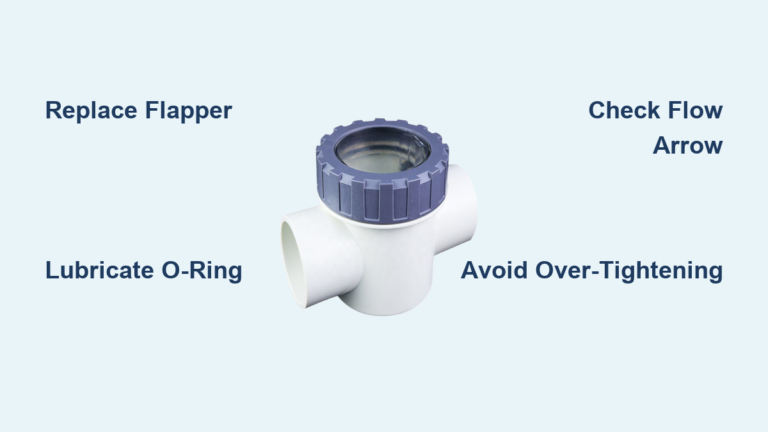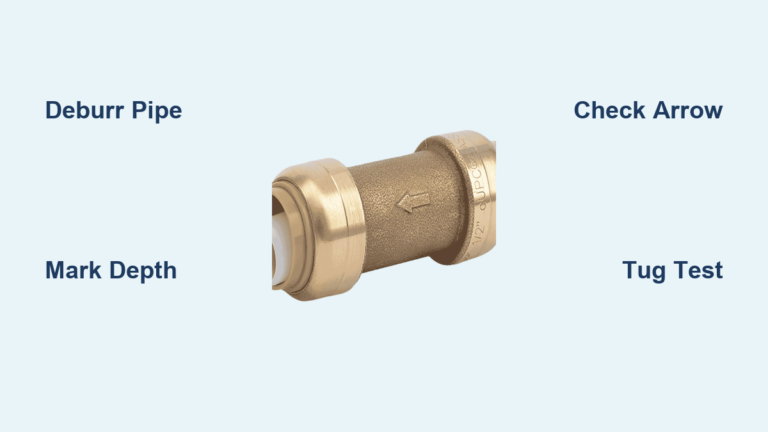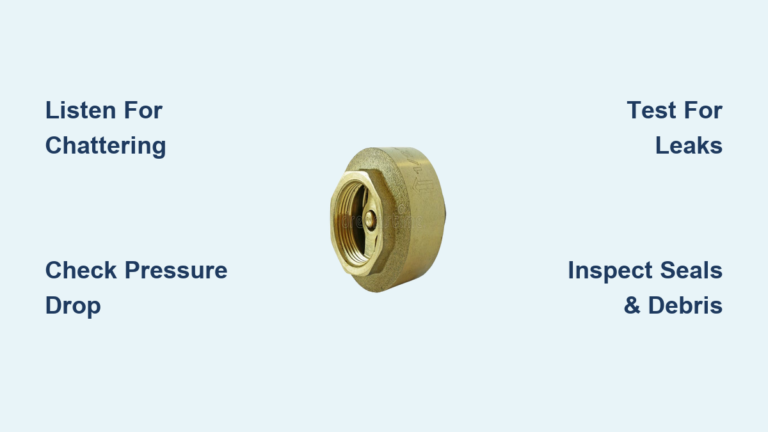
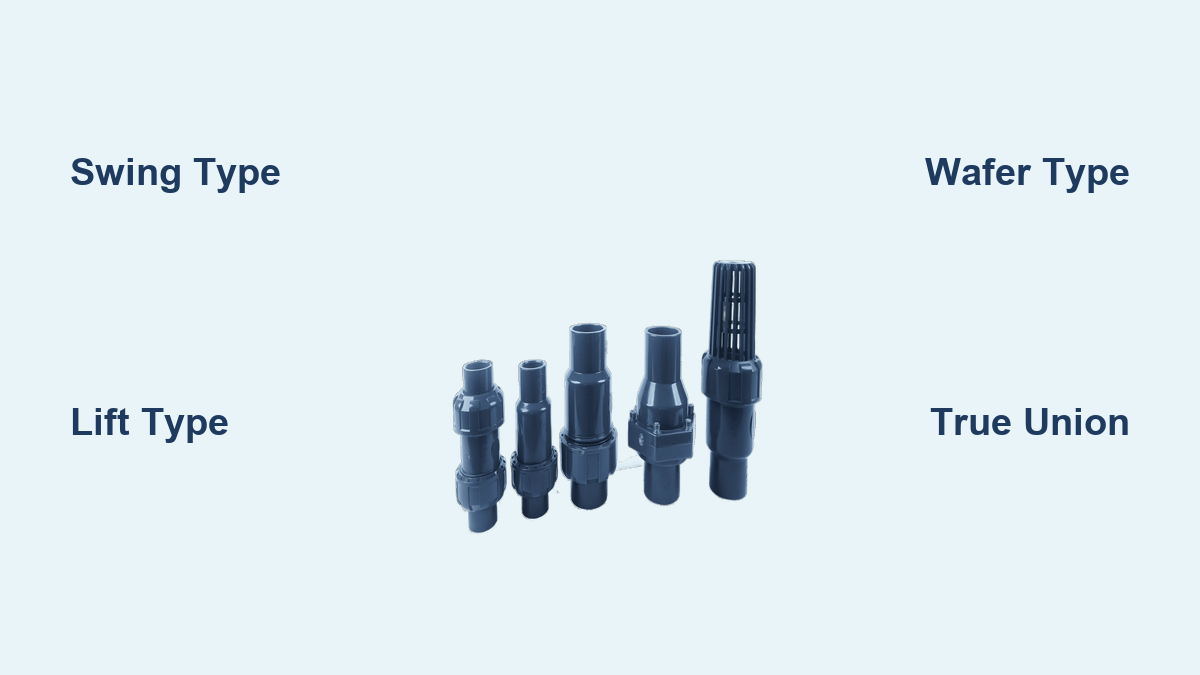
If you’re dealing with a plumbing or industrial system where backflow could cause damage, contamination, or inefficiency, a PVC check valve is likely part of your solution. These non-return valves (NRVs) automatically stop reverse flow using pressure differentials, with no manual control needed. With multiple PVC check valve types available, selecting the right one depends on your system’s pressure, space, media, and maintenance needs.
PVC is a go-to material for these valves because it resists corrosion, handles a wide range of chemicals, and costs less than metal alternatives. Whether you’re setting up an irrigation line, a water treatment plant, or a chemical transfer system, understanding the differences between swing, lift, wafer, stop, and compact or union check valves ensures optimal performance and longevity. This guide breaks down each PVC check valve type, how it works, where it excels, and how to choose the best fit.
Swing Check Valves Explained
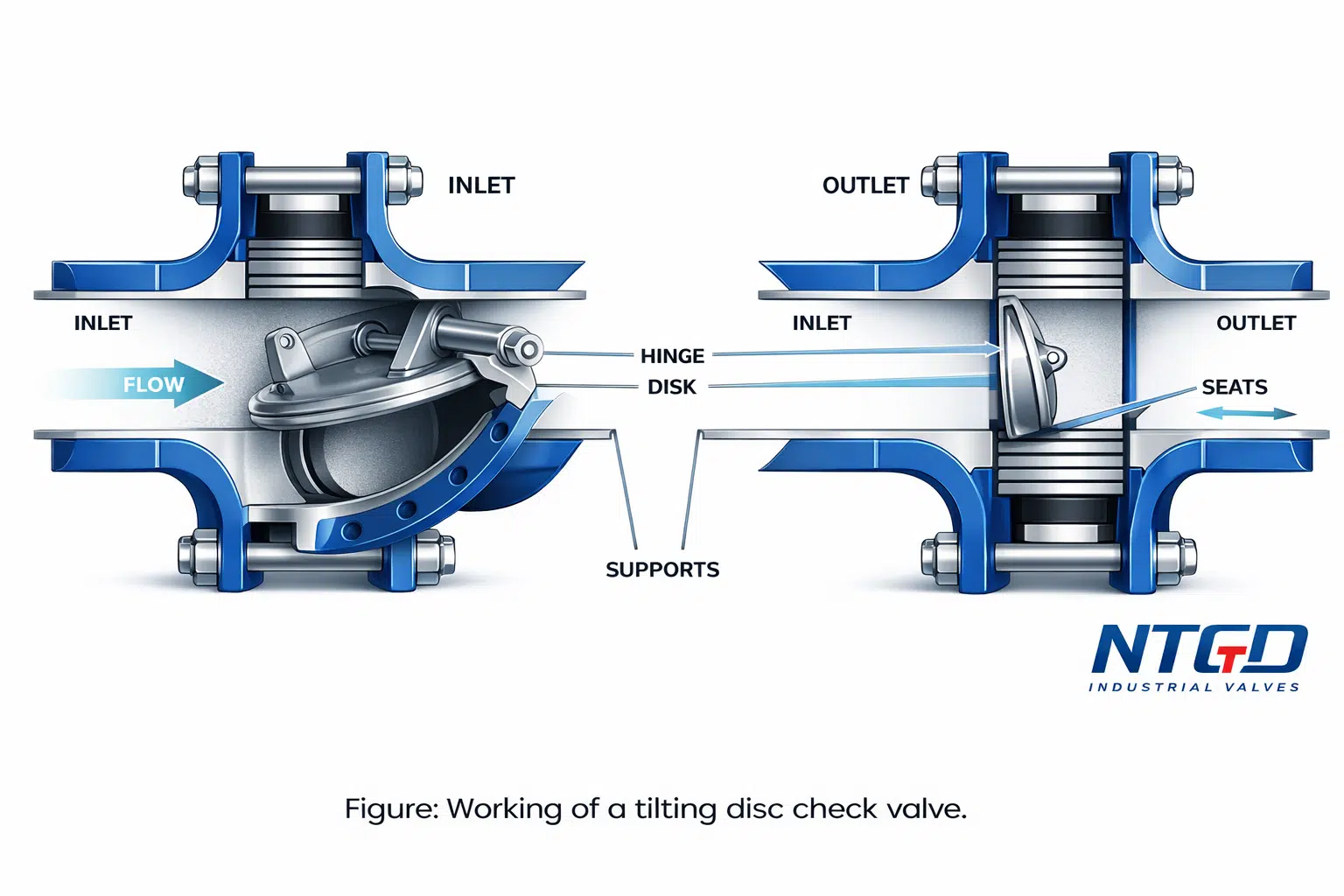
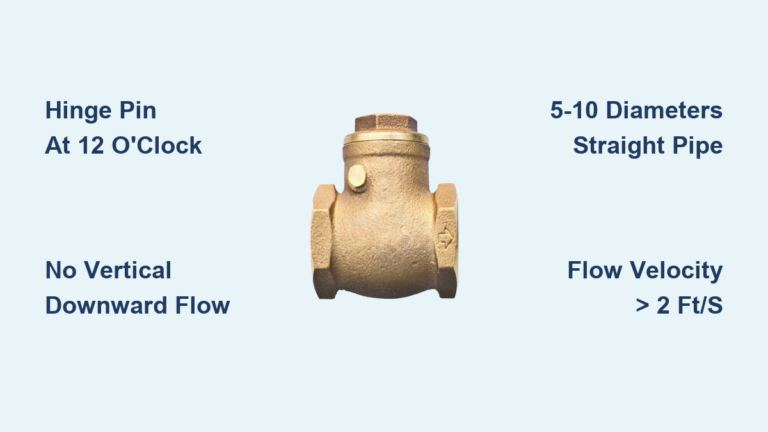
Swing check valves are the most widely used type for backflow prevention in directional flow systems. They work with a hinged disc that swings open with forward flow and closes when flow stops or reverses. Their simple, reliable design makes them ideal for general-purpose applications.
Top-Hinged vs Tilting Disc Designs
Top-Hinged Swing Check
This standard design has a disc mounted at the top of the valve body. As fluid flows forward, the disc swings open like a door. When flow stops, gravity and reverse pressure close it.
- Best for horizontal installations
- Handles liquids, gases, and slurries
- Common in sewage and irrigation systems
- Available in 1/2 inch to 6 inch sizes
Tilting Disc Swing Check
An advanced version with a dome-shaped, often spring-loaded disc that tilts open.
- Opens at lower flow rates
- Closes faster, reducing water hammer
- Allows flow over and under the disc for smoother operation
- Ideal for systems needing quick response
Where Swing Checks Work Best
Swing check valves are the default choice for pumping systems where backflow could damage equipment. They’re commonly used in sewage lines to prevent flooding, fire suppression systems, water treatment plants, and pond or fountain circulation.
Avoid vertical upward flow installations unless the model is specifically rated for it. Always align the flow arrow on the valve body with your system’s direction.
Lift Check Valve Types
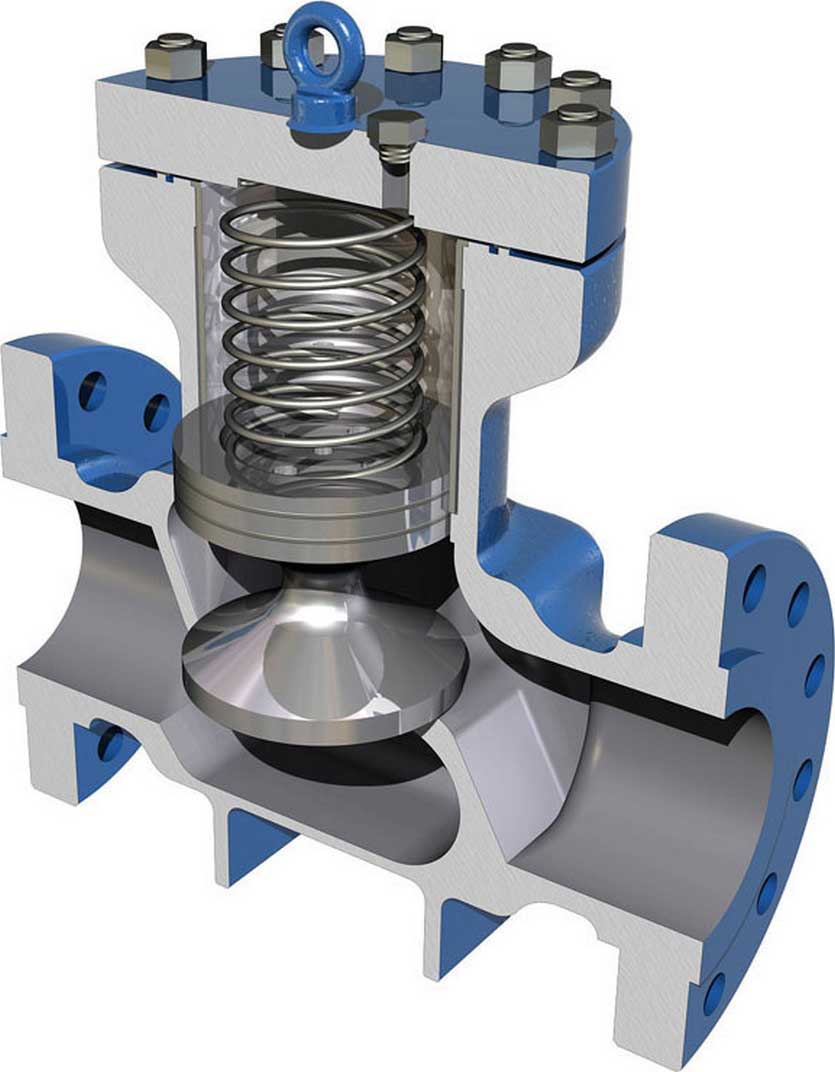
Lift check valves use a piston or ball that moves vertically to control flow. Unlike swing valves, they rely on linear motion, offering tighter seals and better leak prevention. This makes them ideal when zero backflow is critical.
Piston Lift Check Operation
This type uses a guided piston that lifts when forward pressure exceeds a threshold. A spring often keeps it closed when pressure drops.
- Superior sealing due to precise piston-to-seat fit
- Resists leakage even under high differential pressure
- Suitable for both liquids and gases
- Commonly found in food, beverage, and oil and gas industries
Spring fatigue can be an issue over time, so inspect periodically for slow closing or failure to seal.
Ball Lift Check Design
A ball sits in a chamber and lifts when flow pushes it upward. When flow stops, gravity pulls the ball back to seal the opening.
- Simple, gravity-driven mechanism
- Available in gray, clear PVC, and CPVC
- Compact styles save space
- True union versions allow easy maintenance
Ball lift checks are popular in residential systems and marine applications due to their reliability in saltwater environments.
Why Choose a Lift Check?
If your system demands maximum leak prevention, especially with clean fluids or gases, a lift check valve outperforms swing types. They’re preferred in sanitary applications, high-integrity chemical lines, and systems where even minor backflow is unacceptable.
Note: Install vertically with upward flow unless spring-assisted. Horizontal installation may impair gravity-based closure.
Wafer Check Valve Features
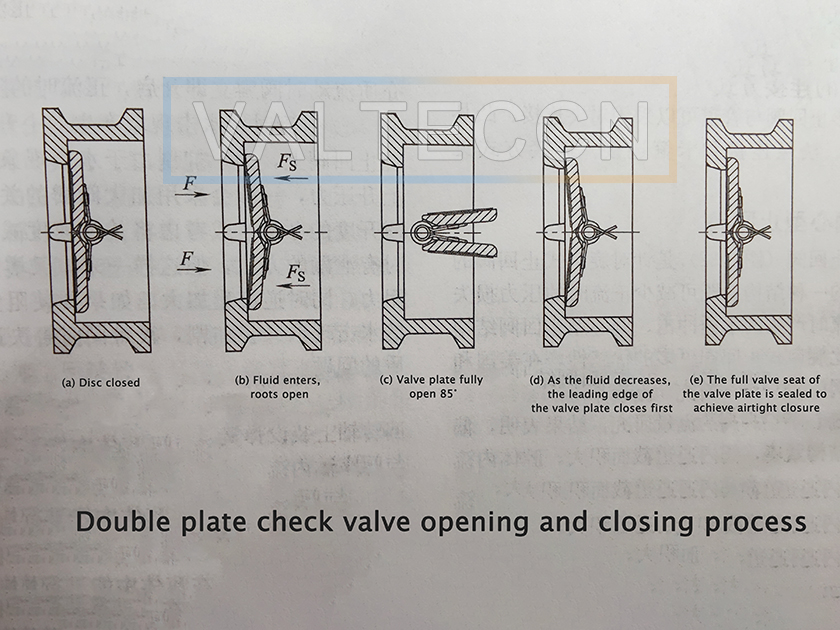
Also known as dual plate or butterfly check valves, wafer check valves are designed for flanged systems where space and weight matter. Their slim profile fits between two flanges, making them perfect for large-diameter pipelines.
How Dual Plate Design Works
The valve contains a disc split into two semi-circular plates connected by a hinge. Forward pressure pushes the plates apart, allowing flow. When flow reverses, the plates fold together and seal shut.
- Activated purely by fluid pressure, with no external parts
- Very fast closure reduces water hammer
- Low pressure drop when fully open
- Lightweight and cost-effective for large pipes
Available in sizes from 1 inch to 12 inches, with 2 inch to 8 inch being most common.
Ideal Applications for Wafer Check Valves
Wafer check valves shine in HVAC systems, water treatment plants, chemical processing lines, and industrial gas and liquid pipelines. Because they install between flanges, proper bolt torque is critical to prevent leaks. Always follow manufacturer specifications during installation.
Space and Cost Advantages
For large-diameter systems, wafer valves offer significant savings in weight and cost compared to bulkier swing checks. Their compact design also simplifies retrofitting into tight spaces.
Stop Check Valve Functionality
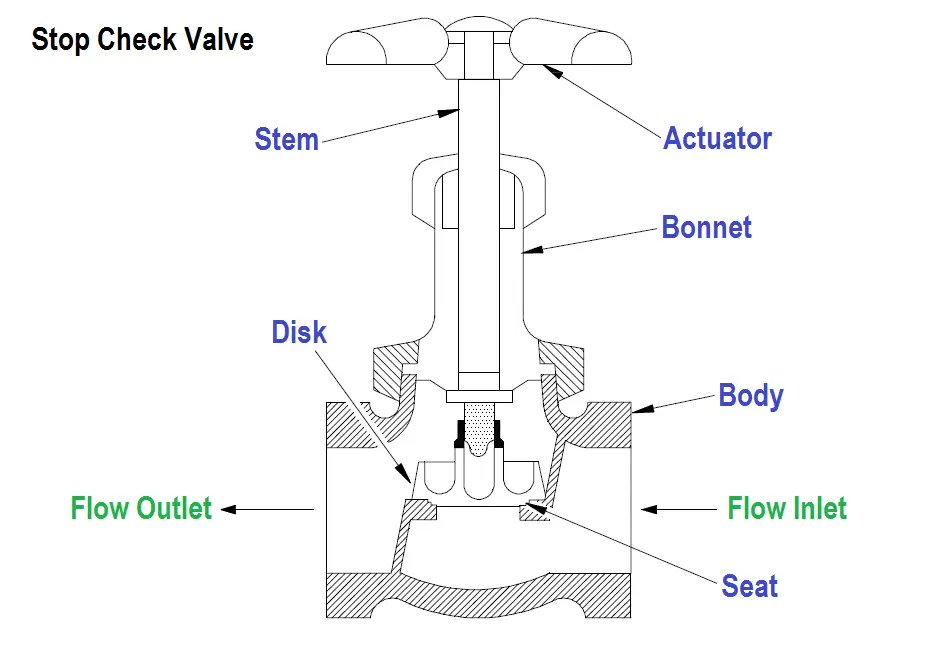
Stop check valves combine automatic backflow prevention with manual override control, making them unique among PVC check valve types. They function like standard checks but can be forcibly closed by an operator.
Automatic and Manual Modes
- Automatic Mode: Operates like a regular check valve, closing when pressure drops to prevent backflow.
- Manual Override: External stem or handle allows forced closure regardless of pressure or flow direction.
This dual functionality is crucial in high-risk systems where emergency shutoff is necessary.
Critical Use Cases for Stop Check Valves
Stop check valves are essential in boiler feedwater systems, power generation plants, petroleum processing, and any high-pressure application requiring safety isolation. While less common in residential settings, they’re a safety staple in industrial environments.
Compact and True Union Designs

These specialized PVC check valve types address installation and maintenance challenges in constrained or high-service environments.
Compact Check Valve Benefits
Designed for tight spaces, compact check valves offer full functionality in a reduced footprint.
- Typically ball or piston lift style
- Sizes from 1/4 inch to 4 inches
- Used in machinery, plumbing walls, and tight mechanical rooms
- Ideal when standard valves won’t fit
Despite their size, they maintain strong flow control and leak resistance.
True Union for Easy Maintenance
True union check valves feature removable union nuts on both ends. This allows complete valve removal without cutting or disturbing the pipeline.
- Enables quick cleaning, inspection, or replacement
- Common in swimming pools, water treatment, and temporary lines
- Sizes range from 1/2 inch to 4 inches
- Reduces downtime during maintenance
True union ball check valves are especially popular for seasonal systems like pool plumbing, where winterization requires disassembly.
PVC Material and Pressure Ratings
The performance of any PVC check valve depends on its material composition and pressure rating. Choosing the right variant ensures compatibility with your system’s operating conditions.
PVC vs CPVC vs Clear PVC
- Standard PVC (Gray or Clear): Resists corrosion and handles water, mild chemicals, and irrigation. Clear versions allow visual flow confirmation.
- CPVC (Chlorinated PVC): Withstands higher temperatures (up to 200°F vs 140°F for PVC). Used in hot water and aggressive chemical systems.
- Industrial Grade PVC: Enhanced formulations for harsh chemical environments like chlorination or acid transfer.
Always match material to your fluid type and temperature.
Pressure and Size Guidelines
Most standard PVC check valves are rated for 125 PSI, suitable for low to medium-pressure systems. Higher pressures may require CPVC or metal-reinforced designs. Size selection depends on pipe diameter and flow rate.
| Valve Type | Size Range (Inches) |
|---|---|
| Swing Check | 1/2 to 6 |
| Lift Check | 1/2 to 6 |
| Wafer Check | 1 to 12 |
| Compact Check | 1/4 to 4 |
| True Union | 1/2 to 4 |
Larger wafer valves (2 to 8 inches) are common in industrial settings due to their efficiency and cost.
How to Choose the Right PVC Check Valve
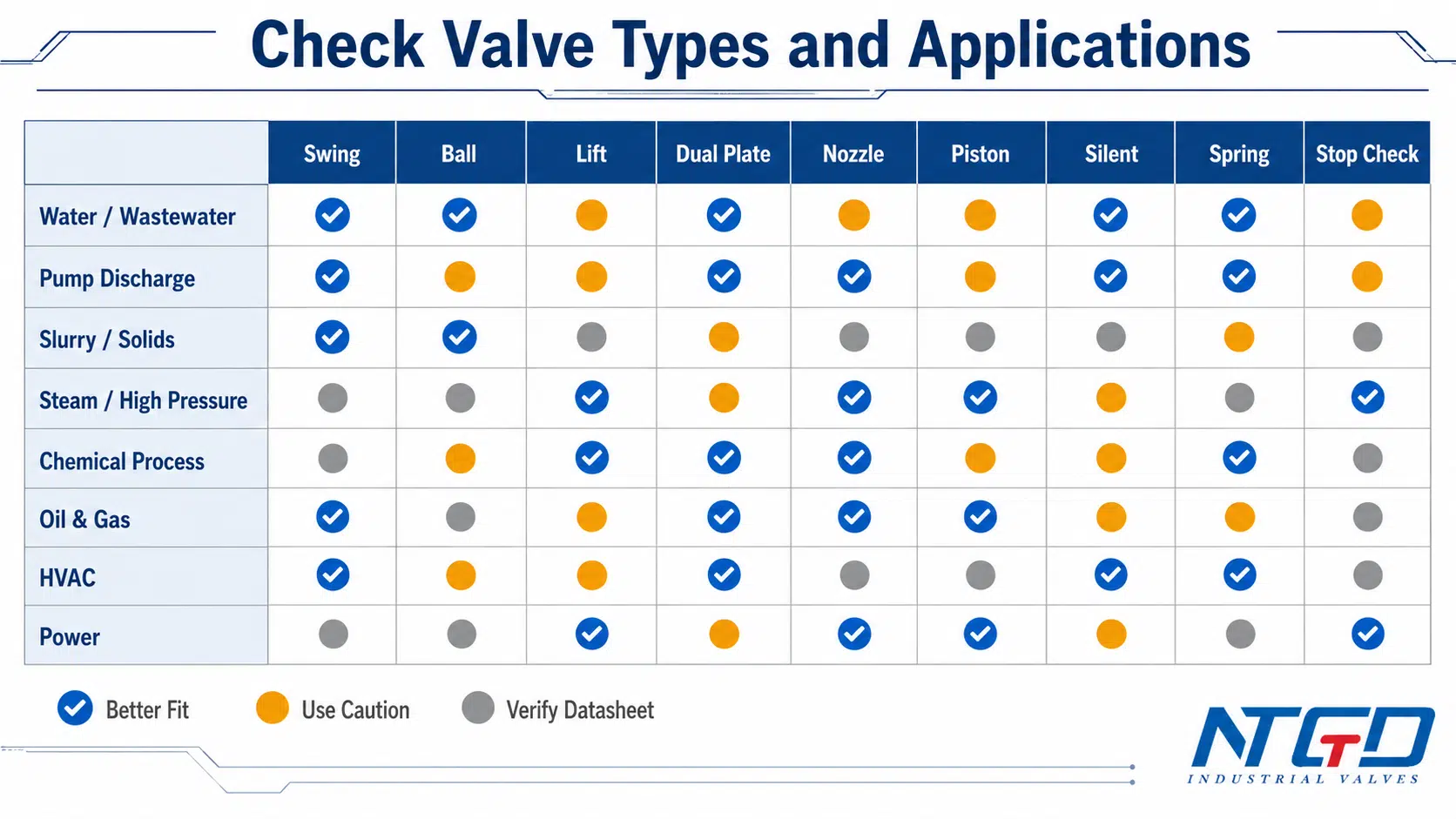
Selecting the best PVC check valve requires matching the valve type to your system’s specific needs. Use this decision guide to make the right choice.
Match Valve to Application
| System Requirement | Recommended Valve |
|---|---|
| Pump backflow prevention | Swing Check (Top-Hinged or Tilting Disc) |
| Limited space | Compact or Wafer Check |
| Frequent cleaning | True Union Check |
| Zero leakage required | Lift Check (Piston or Ball) |
| Low-pressure or gas lines | Wafer ( |