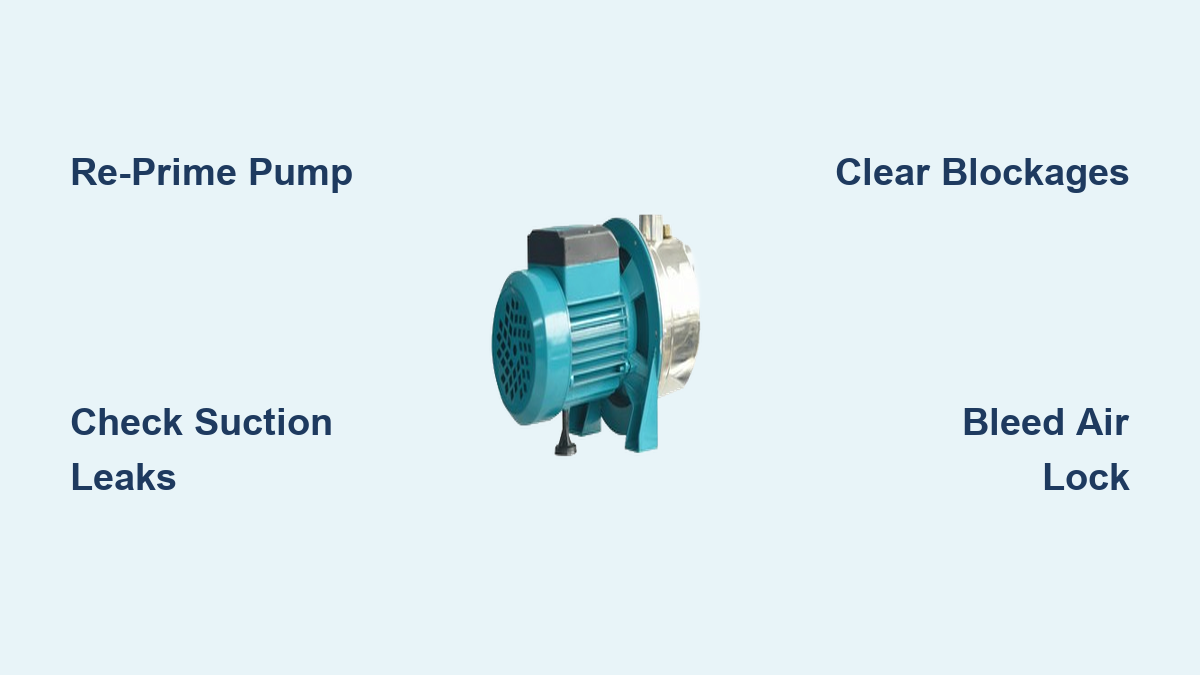
Your water pump is running, humming, and drawing power, but no water comes out. This frustrating issue affects homes, RVs, farms, and industrial systems alike. When a water pump runs but doesn’t pump water, the motor works, but something prevents fluid movement. Left unchecked, this condition can destroy seals, overheat motors, and lead to costly replacements.
The root causes usually fall into specific categories: loss of prime, suction line leaks, blockages, excessive lift, impeller problems, airlocks, valve misconfigurations, electrical faults, or low water levels. Most of these problems are diagnosable and fixable with the right approach. This guide walks you through identifying why your pump isn’t delivering water, applying proven fixes, and preventing future failures.
Re-Prime a Centrifugal or Jet Pump

Loss of prime is the most common reason a non-submersible pump runs without delivering water. A centrifugal or jet pump must be filled with water to create suction. Without prime, the impeller spins in air, which it cannot move effectively.
Signs of Lost Prime
The pump runs but produces no water flow. You may hear gurgling or pulsing sounds. The discharge line stays dry, and you find yourself re-priming frequently.
How to Re-Prime the Pump
Turn off the pump and disconnect power. Locate the priming port, usually a plug on top of the pump housing. Remove the plug and slowly pour clean water into the opening until it overflows. Replace and tighten the plug. Restart the pump and wait 30 to 60 seconds for water to flow.
Use a funnel or jug to avoid spills. For deep suction lines, you may need 3 to 5 gallons depending on pipe length and diameter. If the pump loses prime again shortly after, there is likely an air leak on the suction side that needs fixing.
Inspect Suction Line for Leaks and Damage
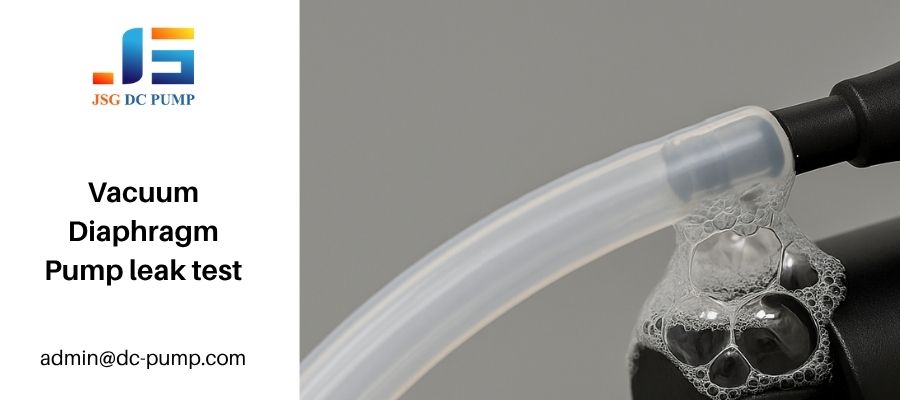
Even a small air leak can break suction and prevent your pump from pulling water. Air enters under vacuum, creating an invisible but crippling problem.
Common Leak Points
Cracked or split suction hoses allow air ingress. Loose clamps at connections let air in. Worn gaskets or seals fail to maintain vacuum. Damaged pump casing compromises the seal. A poorly sealed foot valve permits water to drain back.
How to Test for Leaks
Mix soapy water in a spray bottle. Spray all joints, clamps, and hose sections on the suction side while the pump is running. Watch for bubbles, which reveal where air is entering the system.
Fixing Suction Leaks
Replace cracked or rigid hoses, especially those damaged by sun exposure. Tighten all clamps securely. Use spiral-reinforced, non-collapsible suction hose instead of standard garden hose, which collapses under vacuum. Replace worn gaskets and seals with OEM parts.
Clear Blockages in Intake or Filter
Debris like leaves, twigs, sand, or mineral buildup can block water flow before it reaches the pump.
Where Clogs Form
Intake screens at the end of the drop pipe collect debris. Foot valves stick closed. Suction hose filters clog. Impeller vanes inside the pump jam with foreign material.
How to Clear a Blockage
Shut off the pump. Disconnect the suction line. Remove and inspect the intake screen and foot valve. Flush the drop pipe from the top using a garden hose. Disassemble the pump if needed to clean impeller vanes.
Stainless steel impellers resist wear better than plastic, ideal for sandy or gritty water. Install a pre-filter or sediment separator if debris is a recurring issue.
Test for Excessive Suction Lift
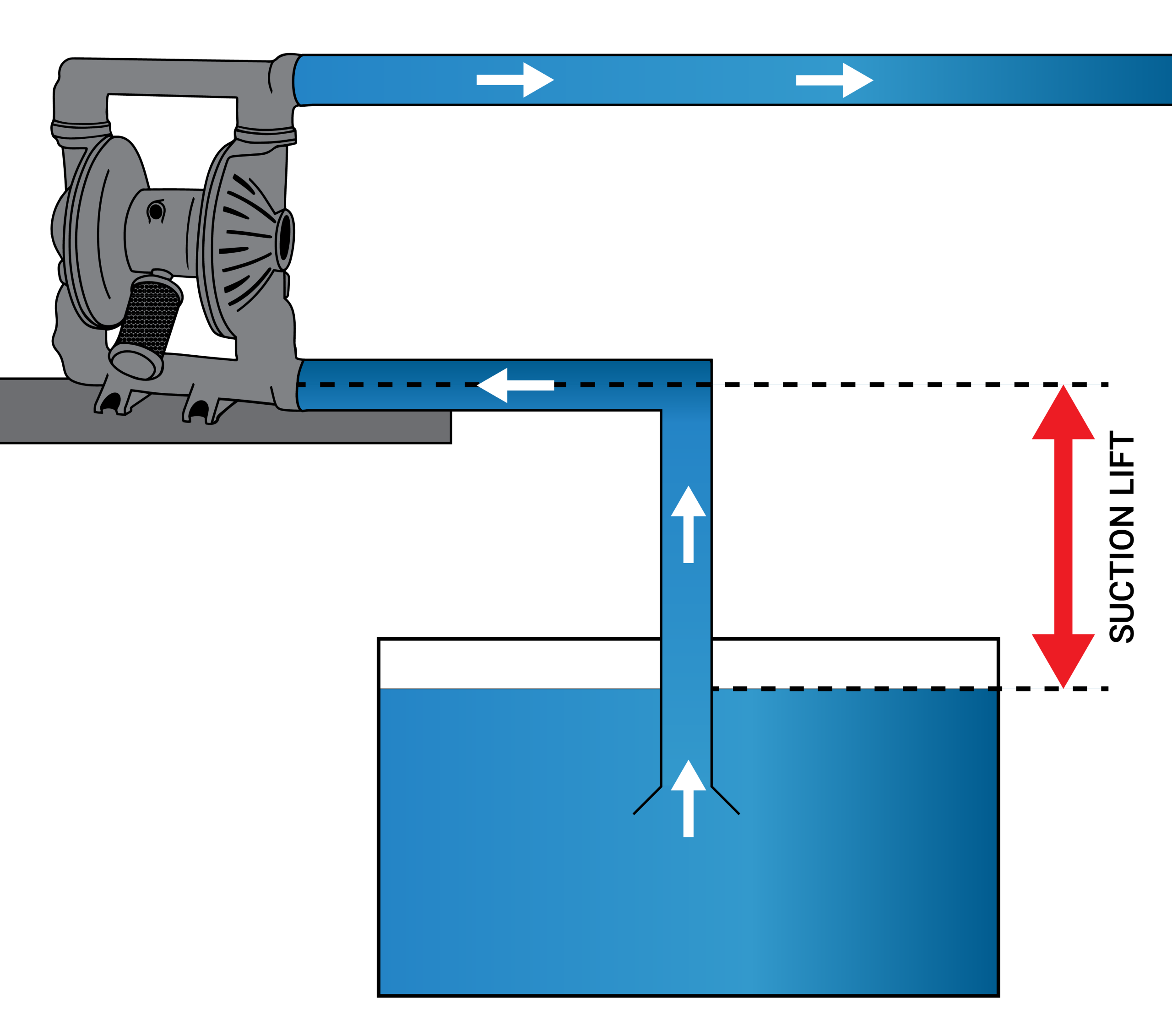
If your pump sits too far above the water source, it simply cannot lift water high enough.
Physical Limits of Suction Lift
Maximum theoretical lift is 34 feet at sea level. Practical limit is 20 to 25 feet for most pumps. The Oleo-Mac WP 300, for example, has a maximum of 23 feet.
Symptoms of Too Much Lift
The pump runs but no water arrives. Repeated priming fails. You hear cavitation noise, including bubbling and popping.
Solutions
Move the pump closer to the water source. Lower the intake deeper into the well. Switch to a submersible pump that pushes water instead of pulling it.
Diagnose Impeller Problems

The impeller is the heart of the pump. If damaged, broken, or blocked, water will not move even if the motor spins.
Common Impeller Failures
Obstruction from gravel, plastic, or sand jams the vanes. Wear or erosion from sand, grit, or cavitation damages surfaces. Detachment occurs when the hub separates from the motor shaft. Reverse rotation in 240V systems with reversed wiring causes no flow.
How to Check the Impeller
Disconnect power and remove the pump casing. Visually inspect the impeller for cracks, missing vanes, or debris. Spin it by hand; it should rotate freely with no wobble. Perform an amp draw test. Normal draw means the pump is under load. Low draw means the motor is spinning air or the impeller is broken.
Break the output connection and briefly run the pump. If water sprays out, the pump works and your blockage is downstream.
Bleed Air from the System
Trapped air pockets called airlocks can block water flow even in a primed system.
How Air Gets Trapped
Air enters after maintenance or dry running. High points in piping trap air. Improper startup procedure leaves air inside.
Methods to Purge Air
Open and close the freshwater tank drain valve several times while the pump runs. This creates pressure pulses that dislodge air bubbles. Crack loose the discharge fitting while the pump is running. Let water spray out until steady flow begins, then tighten. Open all faucets, both hot and cold, until water flows smoothly. This closes off air pockets and allows the system to pressurize.
Verify Valve Positions and System Setup
A single closed or misconfigured valve can stop water flow even with a perfect pump.
Common Valve Errors
Winterization valves set to winterize mode block flow. Water heater bypass not engaged causes the pump to circulate through heater lines. Shore water valve still open creates conflicts. Main shutoff valve closed prevents any flow. Shower saver valve in circulate position traps water.
How to Check Valves
Trace the entire water path from source to outlets. Ensure all valves are fully open. Confirm faucets are turned off before testing pressurization.
If the water heater is empty, the pump may run for minutes filling it before pressure builds. Flip the water heater to bypass and see if the pump stops. If it does, your heater was the issue.
Inspect Pressure Switch and Tank
A faulty pressure switch or waterlogged tank can cause the pump to run endlessly without building pressure.
Pressure Switch Problems
Stuck on position means the pump runs nonstop. Blocked nipple tube prevents the switch from sensing pressure. Misadjusted cut-in and cut-out settings cause erratic operation.
How to Fix the Pressure Switch
Shut off power. Remove the small tube connecting the switch to the pump. Clear blockage with a wire or small screwdriver. Replace the switch if the diaphragm is damaged.
Pressure can climb to 110 to 120 psi, risking hose or pipe failure. Most hoses are rated for only 60 to 80 psi.
Waterlogged Pressure Tank
No air cushion causes rapid cycling or constant running. The tank feels heavy and sounds solid when tapped.
How to Test and Fix
Locate the Schrader valve, like a tire valve. Drain the tank completely. Check air pressure; it should be 2 psi below cut-in pressure, such as 28 psi for a 30/50 switch. Recharge with a compressor. Replace the tank if the bladder is ruptured.
A waterlogged tank strains the pump and increases energy use.
Rule Out Electrical Issues
Even if the motor runs, wrong wiring or voltage issues can prevent proper pumping.
Common Electrical Faults
Reversed polarity in 240V systems makes the motor spin backward, creating no flow. Loose or corroded connections reduce power delivery. Tripped breaker, even a partial trip, allows the motor to hum but not start properly. Failed control box in submersible systems stops proper operation.
How to Diagnose
Check voltage at pump terminals. Use a multimeter to test pressure switch continuity. Listen for relay clicks in the control box. Verify wiring matches pump specifications, 120V versus 240V.
If the pump runs in reverse, shut it off immediately. Reverse rotation damages internal components.
Check Water Level and Well Condition
If the water table drops below the pump intake, it will draw air instead of water.
Signs of Low Water
The pump runs but no water flows. Flow is intermittent. Pressure gradually declines.
How to Check
Measure static water level with a wetted tape or electronic sounder. Compare to the pump depth.
Solutions
Lower the pump deeper in the well. Install a pump with higher lift capacity. Drill a deeper well. Conserve water to allow recharge.
Consult a professional well service for inspection, especially if contamination or casing damage is suspected.
Submersible Pump Specific Issues
Even though submersible pumps operate underwater, they can still fail to deliver water.
Why Submersibles Fail
Air trapped in the housing during installation collects at the top near the impeller. Failed foot valve allows air slug into the system. Mechanical failure includes bearing wear, seal leak, or cable damage.
How to Fix Trapped Air
Pull the pump and tilt it underwater before reinserting. Follow the manufacturer’s procedure, as some include video guides.
When the pump is deep at 100 feet or more, pulling it requires special tools like a pipe hitch and rope. Labor is intensive, so replacement is often more cost-effective than repair.
Prevent Future Pump Failures
Prevention is far cheaper than repair. Follow these best practices to keep your pump running reliably.
Maintenance Schedule
Check pressure gauge and cycling frequency monthly. Inspect electrical connections and control box quarterly. Annually test tank air charge, clean intake screen, inspect for leaks, and verify foot valve function.
Install Dry-Run Protection
Smart or solar pumps often include automatic shutdown when no water is detected. The controller recognizes abnormally low power draw and shuts down the motor before damage occurs.
Monitor and Prepare
Add a flow meter or pressure sensor for early warnings. Keep spare parts on hand, including clamps, check valves, and seals. Have a backup pump, such as a 12V sump pump, for emergencies.
When to Call a Professional
Some issues require expert help.
Call a Well Specialist If
You cannot find an air leak. The pump is deep and needs pulling. Well casing is cracked or contaminated. Electrical issues persist. Water is discolored or foul-smelling.
Final Thoughts on Fixing Your Water Pump
A running pump that is not pumping water is a silent threat. It wastes energy, risks catastrophic damage, and leaves you without water. By following this guide, you can diagnose the cause quickly, apply a reliable fix, and protect your system from future failure.
Most problems fall into recognizable categories: loss of prime, air leaks, blockages, valve misconfigurations, or electrical faults. Whether it is a simple re-prime, a leaky hose, or a failed pressure switch, most issues are within reach of a determined DIYer. Always turn off power before working on any pump, and do not hesitate to call a professional when the problem exceeds your skill level or tools.
Frequently Asked Questions About Water Pump Running But Not Pumping Water
Why does my pump run but not deliver any water?
The most common cause is loss of prime in non-submersible pumps. The impeller spins in air instead of water, which cannot be moved effectively. Air leaks, suction line blockages, or a failed foot valve can also cause this issue.
How do I know if my pump lost its prime?
Signs include the pump running with no water flow, gurgling or pulsing sounds, frequent need to re-prime, and a dry discharge line. If the pump loses prime repeatedly, there is likely an air leak on the suction side.
Can a clogged intake filter cause this problem?
Yes. Debris like leaves, twigs, sand, or mineral buildup can block the intake screen, foot valve, or impeller vanes. Clean the intake screen and check for obstructions in the suction line.
What is an airlock and how do I fix it?
An airlock is trapped air in the system that blocks water flow. Fix it by opening and closing the freshwater tank drain valve repeatedly, cracking the discharge fitting to bleed air, or opening all faucets until water flows smoothly.
Could electrical problems prevent pumping even if the motor runs?
Yes. Reversed polarity in 240V systems causes the motor to run backward. Loose connections, tripped breakers, or a failed pressure switch can also prevent proper pumping action despite motor operation.
When should I call a professional for pump issues?
Call a professional if you cannot locate an air leak, the pump is deep and requires pulling, well casing is damaged or contaminated, electrical issues persist after basic troubleshooting, or water quality changes.