Clear water does not mean clean water, as invisible toxins often lurk beneath the surface of your aquarium. You need to know how often to do water changes in fish tank setups to prevent stress and disease in your fish.
This guide reveals the exact weekly schedule you need based on your specific tank size and fish population. Learn to test water parameters and adjust your routine so your aquatic pets thrive long term.
The Weekly 25-30 Percent Water Change Standard

Most aquariums require a consistent weekly routine to remove dissolved organic compounds and nitrates. This standard approach prevents toxin buildup while maintaining a stable environment for your fish.
Why This Volume and Frequency Work Best
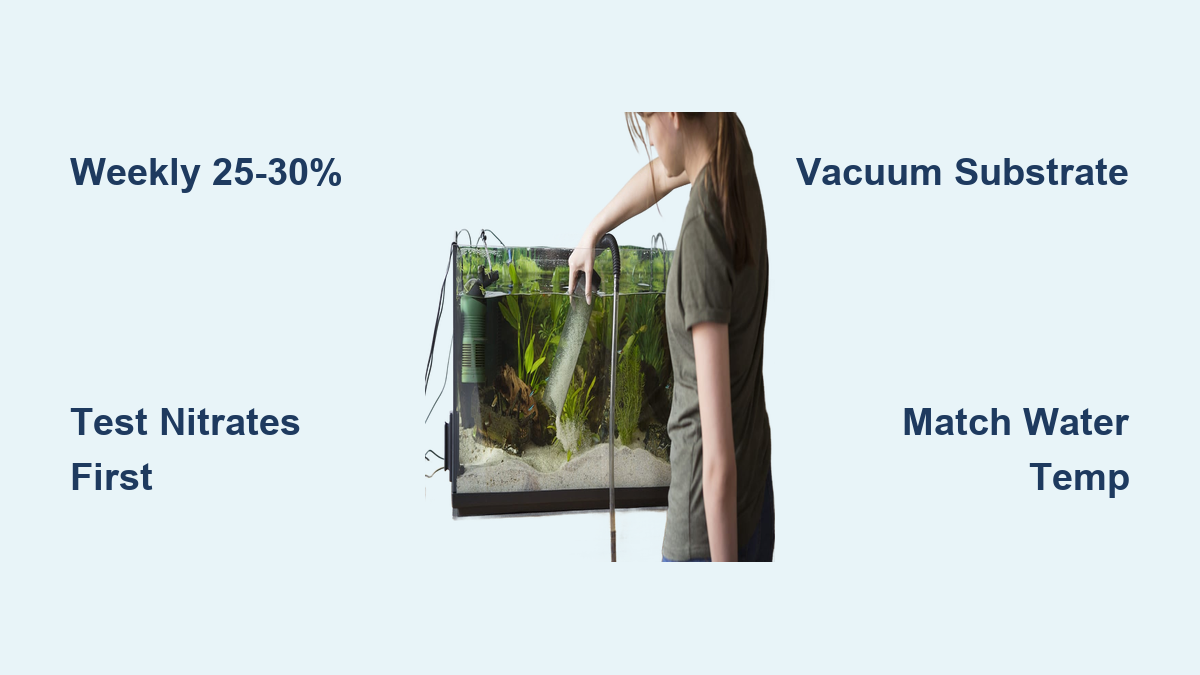
Removing 25 to 30 percent of your tank water every seven days is the gold standard for general maintenance. This specific volume dilutes harmful nitrates effectively without shocking your fish or disrupting beneficial bacteria. Larger monthly changes often cause dangerous swings in pH and hardness that stress aquatic life. A weekly rhythm ensures you never let waste accumulate to critical levels.
When to Follow This Exact Schedule
You should stick to this weekly plan if your tank meets these common criteria:
* Moderately stocked with standard fish loads
* Equipped with hang-on-back or canister filtration
* Lacking a heavy density of live plants
* Using tap water with stable chemical parameters
Test your nitrate levels one day before your scheduled change. If results stay below 20 parts per million (ppm), you might extend the interval slightly. However, if nitrates exceed 40 ppm, you must increase the frequency or volume immediately.
Adjusting Frequency Based on Tank Size and Stocking
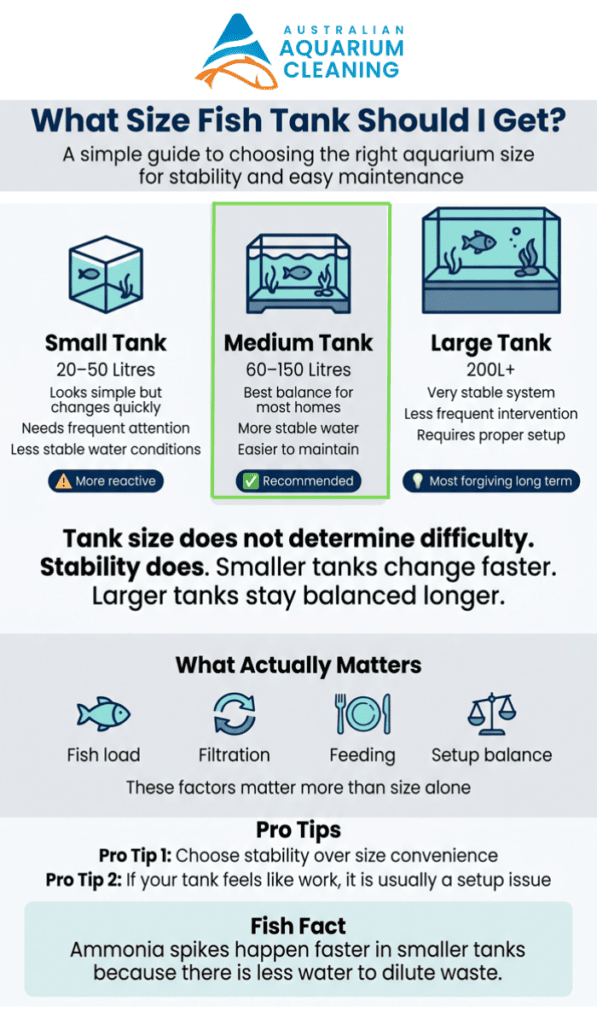
Tank volume acts as a buffer against pollution, meaning smaller tanks need more frequent attention than larger ones. Your specific stocking density directly dictates how fast toxins accumulate in the water column.
Small Tanks Under 20 Gallons
Miniature aquariums are chemical time bombs because toxins concentrate rapidly in small volumes. You must change water more often to keep parameters safe for your fish.
* Change water weekly or even twice weekly for very small setups.
* Remove at least 25 percent of the volume each time.
* Use a gravel vacuum to remove debris from the substrate during every change.
Test water every few days because a 5-gallon betta tank can become toxic within 48 hours if neglected.
Large Established Tanks Over 30 Gallons
Larger systems offer greater stability due to their high water volume and mature bacterial colonies. These tanks can often go longer between maintenance sessions if testing confirms stability.
* Extend changes to every 2 to 4 weeks if nitrates remain under 40 ppm.
* Remove 20 to 25 percent of the water during each session.
* Never exceed one month without a change even if water looks clear.
Always verify parameters with a test kit before skipping a scheduled maintenance week.
High-Bioload Tanks Require More Frequent Changes
Fish like goldfish, cichlids, and plecos produce massive amounts of waste that overwhelm standard filtration systems. You must increase your maintenance frequency to handle this heavy bioload effectively.
Signs Your Tank Needs Immediate Attention
Watch for these visual cues that indicate your current schedule is insufficient for your fish load:
* Cloudy water or unpleasant odors
* Rapid algae blooms on glass or decorations
* Fish gasping at the surface or showing lethargy
* Nitrate readings rising above 40 ppm within a week
If you observe these signs, your current routine is not removing waste fast enough to keep fish healthy.
Aggressive Maintenance Protocol for Messy Fish
Heavy waste producers demand a strict and frequent water change regimen to survive.
* Perform changes every 3 to 5 days for very messy tanks.
* Remove 30 to 50 percent of the water volume each time.
* Vacuum the substrate deeply to remove trapped waste.
A 55-gallon cichlid tank may require changing 15 to 20 gallons twice a week to keep nitrates below 30 ppm. Skipping even one session risks a dangerous ammonia spike.
Water Change Schedules for Planted Aquariums
Live plants act as natural filters by absorbing nitrates and carbon dioxide from the water column. While they reduce the need for frequent changes, they do not eliminate the requirement entirely.
Low-Bioload Planted Setups
Heavily planted tanks with very few fish can maintain excellent water quality for extended periods. Some setups with floating plants and moss may only need a 20 to 30 percent change every two months. However, plants consume essential minerals like calcium and magnesium over time.
Replenishing Minerals in Planted Tanks
Even if nitrate levels remain low, you must change water to restore depleted minerals.
* Change water when GH or KH hardness drops below optimal levels.
* Look for yellowing plant leaves or holes as signs of deficiency.
* Perform a 20 percent change every three weeks to prevent mineral lockout.
Use remineralized RO water or treated tap water to ensure your plants receive necessary trace elements.
Special Protocols for Sensitive Species and Fry
Delicate fish species and developing fry require pristine water conditions that exceed standard maintenance routines. Consistency is critical for these vulnerable populations to survive and grow.
Caring for Discus and Wild-Caught Fish
Species like discus and dwarf cichlids struggle with fluctuating water quality and demand strict adherence to low nitrate levels.
* Change water twice weekly or every 3 to 4 days.
* Remove 20 to 30 percent of the volume each time.
* Keep nitrate levels consistently below 10 ppm.
Small, regular changes maintain the stability these sensitive fish need better than large, infrequent overhauls.
Water Changes for Breeding and Fry Tanks
Baby fish are extremely vulnerable to poor water quality and uneaten food decay. Their tanks lack mature bacterial colonies and require frequent intervention.
* Change 10 to 20 percent of the water every 2 to 3 days.
* Use a thin siphon tube to avoid sucking up tiny fry.
* Match new water temperature within 1 degree Fahrenheit of the tank water.
Fry tanks fill with waste quickly, so small, frequent changes support strong development and survival rates.
Emergency Water Changes for Spikes and Illness
Do not wait for your regular schedule if your fish show signs of distress or test results indicate danger. Immediate action is necessary to save lives during water quality crises.
Handling Nitrate Spikes Over 50 ppm
High nitrate levels weaken immune systems and can cause sudden death in fish. You must act fast to dilute these toxins.
1. Test the water to confirm nitate levels exceed 50 ppm.
2. Perform an immediate 50 percent water change.
3. Vacuum the substrate thoroughly to remove decaying matter.
4. Re-test in 24 hours and repeat if necessary.
Protocol After Fish Death or Disease
Dead fish decay rapidly and release ammonia while disease pathogens linger in the water column.
* Remove any dead fish immediately to stop decomposition.
* Execute a 50 percent water change to remove toxins.
* Rinse filter media in old tank water only to preserve beneficial bacteria.
* Monitor surviving fish closely for further signs of illness.
This protocol reduces reinfection risk and removes harmful byproducts from the ecosystem.
Testing Methods to Determine Your Schedule
Guessing leads to fish loss, so you must use testing to turn maintenance into a science. Your test results provide the data needed to decide how often to do water changes in fish tank environments.
Essential Tools for Accurate Testing
Liquid test kits offer the highest accuracy for measuring ammonia, nitrite, and nitrate levels. Test strips work well for quick weekly checks, while GH and KH kits are vital for planted or soft-water tanks. Test at least once a week, especially in new or high-bioload systems.
Decision Matrix for Nitrate Levels
Use this guide to determine your next action based on test results:
* Below 20 ppm: Safe to maintain your current schedule.
* 20 to 40 ppm: Acceptable for hardy fish but requires close monitoring.
* Above 40 ppm: Perform a 30 percent water change immediately.
* Above 50 ppm: Execute a 50 percent water change right away.
Always test for ammonia and nitrite as well, as any detectable amount indicates a cycle failure.
Step-by-Step Guide to Safe Water Changes
Executing the process correctly ensures you do not shock your fish or damage your biological filter. Follow these steps for every maintenance session.
Preparing and Adding New Water
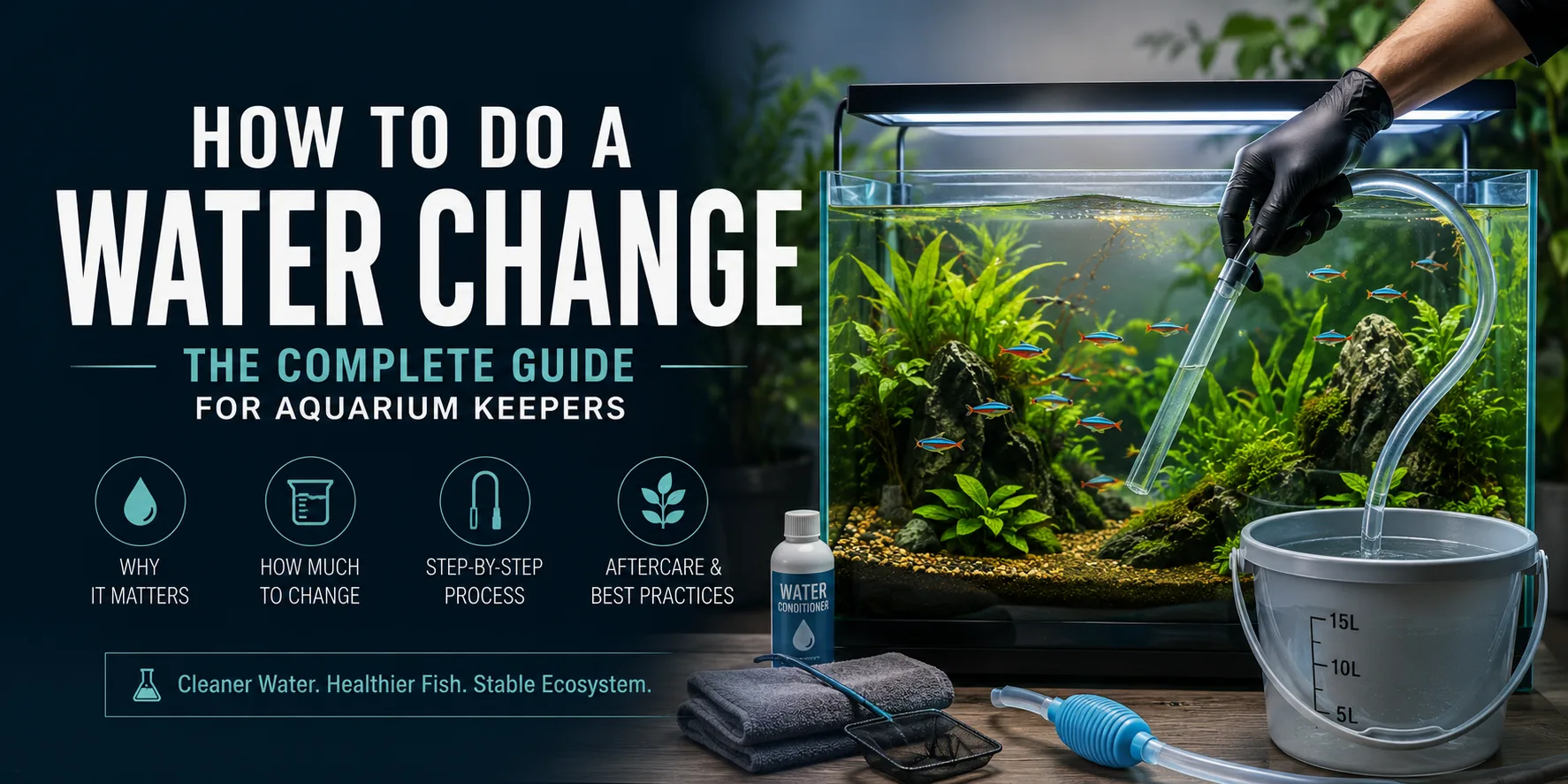
- Fill a clean bucket with tap water and add a water conditioner.
- Check the temperature to ensure it matches the tank within 1 to 2 degrees.
- Pour the new water onto a plate or saucer inside the tank to diffuse flow.
- Fill the tank slowly to avoid disturbing the substrate or fish.
Never dump untreated water directly into the aquarium as chlorine kills fish instantly.
Removing Old Water and Cleaning Substrate
- Insert a gravel vacuum into the substrate to start a siphon.
- Move the vacuum slowly across the gravel to lift debris and waste.
- Drain exactly 25 to 30 percent of the total tank volume.
- Avoid uprooting plants or stressing fish during the process.
Cleaning the substrate prevents sludge accumulation that fuels future nitrate spikes.
Common Mistakes That Harm Aquarium Health
Even experienced hobbyists make errors that compromise water quality and fish health. Avoiding these pitfalls ensures your maintenance efforts yield positive results.
Skipping Substrate Vacuuming
Changing water without cleaning the gravel leaves decaying sludge trapped in the substrate. This waste continues to release nitrates and fuels algae growth. Always vacuum the substrate during every water change to remove organic buildup effectively.
Using Untreated Tap Water
Chlorine and chloramines in tap water destroy gill tissue and kill beneficial bacteria. Always use a water conditioner, even if your tap water smells fine. One lapse in treatment can crash your entire nitrogen cycle and endanger fish.
Overcleaning Filter Media
Rinsing filter media in tap water kills the beneficial bacteria living on it. Instead, rinse media gently in the water you just removed from the tank. Never clean the filter and perform a large water change simultaneously to avoid system instability.
Final Thoughts on How Often to Do Water Changes in Fish Tank
Determining how often to do water changes in fish tank setups requires balancing a standard schedule with your specific tank conditions. Start with a baseline of weekly 25 to 30 percent changes and adjust based on nitrate testing and fish behavior.
Consistency matters more than perfection, so regular small changes are better than rare massive overhauls. Test your water weekly, observe your fish daily, and modify your routine to keep your aquatic ecosystem thriving.
Frequently Asked Questions About Water Change Frequency
Can I change all the water in my fish tank at once?
No, you should never replace 100 percent of the water as it shocks fish and destroys beneficial bacteria. Limit routine changes to 25 to 30 percent, reserving 50 percent changes only for severe emergencies like ammonia spikes.
How do I know if I am changing water too often?
If your fish show signs of stress like clamped fins or hiding immediately after changes, you may be changing water too frequently or aggressively. Ensure you match water temperature and chemistry closely to minimize shock.
Do planted tanks really need water changes?
Yes, plants consume nitrates but deplete essential minerals like calcium and magnesium over time. Water changes replenish these vital elements to prevent stunted plant growth and fish health issues.
What happens if I skip a weekly water change?
Skipping changes allows nitrates and dissolved organic compounds to accumulate, stressing fish and inviting disease. While fish might survive short-term, long-term neglect shortens lifespans and causes chronic health problems.
How much water should I change if nitrates are high?
If nitrates exceed 50 ppm, perform an immediate 50 percent water change to dilute toxins quickly. Follow up with more frequent changes and reduced feeding until levels stabilize below 20 ppm.
Key Takeaways for Maintaining Fish Tank Water Quality
Successful aquarium keeping relies on understanding that how often to do water changes in fish tank systems varies by setup. Most tanks thrive on a weekly 25 to 30 percent schedule, but high-bioload and small tanks need more frequent attention.
Regular testing and observation are your best tools for customizing a routine that keeps nitrates low and minerals replenished. Start testing your water today and adjust your schedule to ensure your fish live long, vibrant lives.