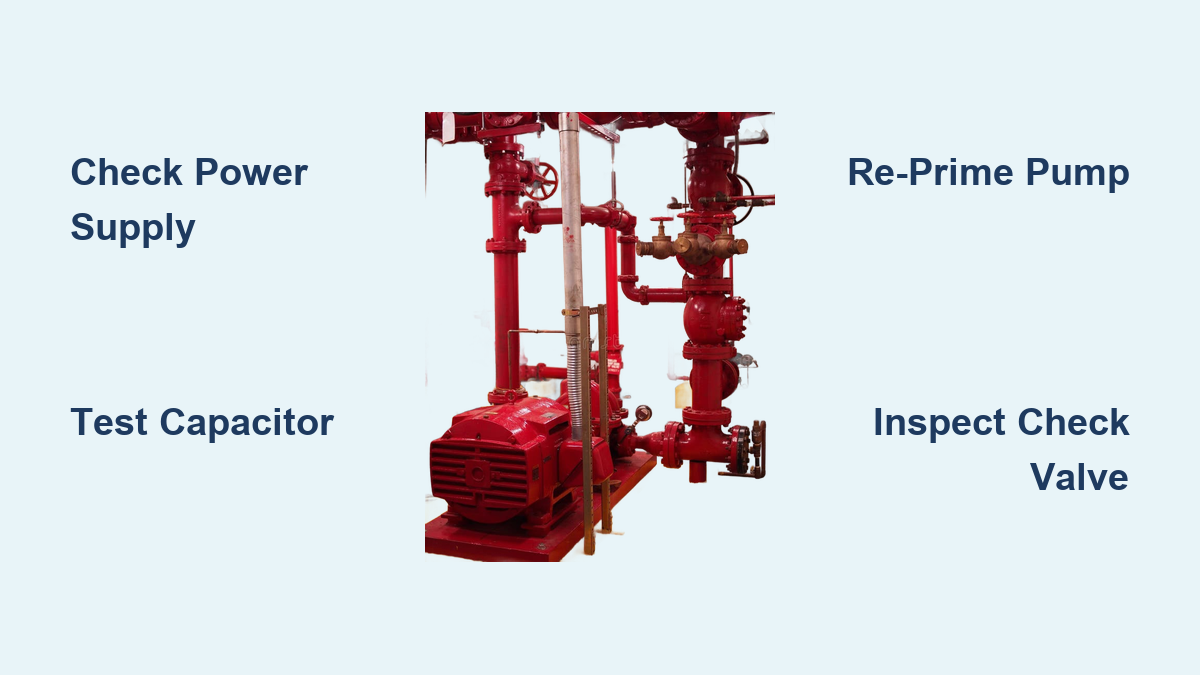
You turn on your irrigation system, hear the pump kick in, but no water flows to the sprinklers. A sprinkler pump not pumping water is one of the most common and frustrating issues for homeowners and landscapers. While the problem may seem complex, the root cause usually falls into one of several predictable categories: electrical failure, loss of prime, mechanical damage, or system design flaws.
This guide walks you through exactly what to check, in the right order, to diagnose and fix the issue fast. Whether your pump hums but won’t start, runs with no output, or doesn’t turn on at all, you’ll learn how to identify the culprit and restore water flow, often in under an hour.
Confirm Power and Electrical Supply
Before diving into mechanical checks, verify the pump is receiving power. Over 40% of no-water issues stem from simple electrical faults.
Check Breaker and Disconnect Switch
Go to your electrical panel and confirm the circuit breaker is in the ON position. If tripped, reset it once and monitor for repeated tripping. Locate the disconnect switch near the pump, often in a weatherproof box on the wall, and ensure it is turned on. A disconnected or off switch is a frequent oversight after maintenance or storms.
Never force a breaker that trips repeatedly. This indicates a short circuit or motor failure.
Listen for Relay Click
Activate your irrigation timer or controller. Stand near the pump or relay box and listen for a distinct click when the system initiates. No click indicates the relay or timer may be faulty. Click heard means power is reaching the control side, so proceed to voltage testing.
Relay failure is common in older systems. Replace with a standard 24V AC relay available at hardware stores if defective.
Test Voltage at Pump Terminals
Use a multimeter to check for power at the pump’s electrical terminals when the relay activates. Set multimeter to AC voltage and place probes on the pump’s line terminals. Expected readings are 230V for 240V systems common for 2 HP pumps, or approximately 115V for 120V models.
| Reading | Likely Issue |
|---|---|
| 230V | Power is reaching pump. Check motor, capacitor, or hydraulic system |
| Under 200V or 0V | Faulty relay, wiring break, or timer issue |
If voltage is present but the pump does not run, the problem lies downstream, likely in the motor or capacitor.
Diagnose Motor and Capacitor Failure
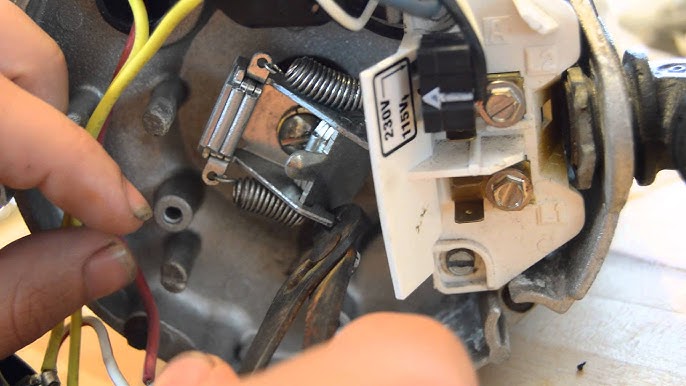
Even with proper power, the motor may fail to start due to a bad capacitor or internal damage.
Listen for Motor Hum
A humming sound but no rotation is a classic sign of a failed start capacitor. The motor receives power but cannot generate enough torque to spin. No hum, no movement, and sparking at terminals suggests a dead motor or shorted windings.
A humming motor that won’t start is often fixable with a $15 capacitor replacement.
Locate and Inspect the Capacitor
On older pumps, the capacitor is behind a rear access plate. Remove the cover and visually inspect for bulging top, leaking oil residue, or burn marks and swelling. Any of these signs means the capacitor is bad and should be replaced immediately.
Replace the Capacitor Safely
Match specifications exactly by checking the label for microfarads and voltage rating. Discharge the old capacitor using an insulated screwdriver across the terminals to avoid shock. Install the new unit and reassemble.
Many newer pumps, especially 2 HP models, come with integrated capacitors with no external component to fail. Consider upgrading when replacing.
If the motor still won’t start after capacitor replacement, the motor itself is likely burned out. Replacement is usually more cost-effective than rewinding.
Re-Prime a Dry Pump
A pump can run perfectly but deliver no water if it has lost its prime, which is the water seal inside the volute casing needed to create suction.
Why Pumps Lose Prime
Pumps lose prime when located above the water source with suction lift, due to air leak in the suction line, failed check valve allowing water to drain back, or running dry during operation.
Running a centrifugal pump dry for more than a few minutes can destroy the impeller and mechanical seal.
Manual Re-Priming Steps
- Shut off power to the pump.
- Locate the fill port, a threaded plug on the top or side of the pump housing.
- Unscrew the plug and pour clean water directly into the opening until it overflows.
- Replace and tighten the plug securely.
- Turn on the pump. It should now draw and deliver water.
One homeowner restored flow by filling the casing and then back-priming through the outdoor spigot. Attach a garden hose to the discharge and let water flow backward into the pump for 1-2 minutes.
Test and Replace the Check Valve

A failing check valve is a silent killer. It allows water to drain back into the source when the pump stops, breaking the prime.
How to Test the Check Valve
- Cut the pipe just above the check valve on the suction line.
- Insert a short vertical pipe stub, 6-8 inches.
- Fill it with water using a garden hose.
- Wait 5 minutes. Water level drops means the check valve is leaking and needs replacement. Water stays means the valve is functional.
Use PVC cement to glue a temporary test stub. Replace the check valve with a new one rated for your system’s depth and flow.
Install the check valve within 25 feet of the water source and below the pump to maintain prime. Use a swing-type or spring-assisted valve for reliability.
Inspect Suction Line for Air Leaks
Air entering the suction side prevents the pump from building pressure and maintaining prime.
Eliminate Air Locks
Avoid inverted P-traps, which are U-shaped pipe sections that trap air and block flow. Ensure continuous upward slope from water source to pump. Minimize elbows and fittings because each joint is a potential leak point.
Seal All Connections Properly
Replace old inlet male adapters because they degrade over time. Use Teflon tape plus pipe dope on all threaded joints. For PVC, use proper primer and cement. Hold joints steady for 10 seconds and allow 5-10 minutes to cure before pressurizing.
Even a pinhole air leak can prevent priming. Inspect all joints, especially those below ground or in wet areas.
Clear Intake Strainer Blockages
No amount of priming helps if the water source is blocked.
Common Intake Obstructions
Common blockages include weeds, algae, or plastic bags, sediment, silt, or sand, frogs, fish, or debris, and low water levels in pond or well.
How to Inspect and Clean
- Shut off the pump.
- Pull the intake line from the water source.
- Remove the strainer, usually a mesh cage at the end.
- Rinse thoroughly with a hose.
- Reinstall below water surface, ideally 2-3 feet deep.
Install a trash rack or pre-screen in ponds or lakes. For dirty water, consider a self-cleaning intake or submersible pump.
Evaluate Water Supply and Quality
Even a perfect pump fails if the source is inadequate or corrosive.
Verify Water Level
Ponds and creeks drop in summer, so ensure intake stays submerged. Wells can experience drawdown, so monitor static and pumping levels. Use a float switch to shut off the pump if water drops too low.
Test for Damaging Water Conditions
High silt or sand wears impellers and seals fast. Low pH acidic water corrodes metal parts. Chlorine or sulfides degrade rubber seals.
Get a water quality test before installing or replacing a pump. Choose materials accordingly, such as stainless steel or ceramic seals for harsh conditions.
Replace a Failed Pump
When repair is not viable, replacement is the fastest path to working irrigation.
Step-by-Step Replacement
- Turn off power and disconnect wiring.
- Isolate plumbing by cutting suction and discharge lines if needed.
- Remove old pump and inspect for debris or corrosion.
- Install new pump matching HP, voltage, and flow rate. Prefer models with integrated capacitor.
- Plumb connections using proper adapters, such as 2 inch to 1.5 inch. Cement PVC joints and allow 5-10 minutes to cure.
- Reconnect wires per manufacturer diagram.
- Re-prime before startup.
A 2 HP replacement with integrated capacitor restored full pressure, 40 psi across all zones.
Prevent Future Failures
Avoid repeat repairs with simple seasonal maintenance.
Annual Inspection Checklist
Check check valve function, suction line integrity, steel straps and clamps, intake strainer cleanliness, and electrical connections tight and corrosion-free.
Pre-Season Prep
Prime the pump before first use. Test one zone at a time to verify flow and pressure. Check for leaks during operation.
Install a pressure gauge on the discharge line. Forty psi is typical. A drop over time signals wear or leaks.
Frequently Asked Questions About Sprinkler Pump Not Pumping Water
Why does my sprinkler pump run but not deliver any water?
The most common cause is loss of prime. The pump motor runs but cannot create suction because air has entered the volute casing. Re-prime by filling the pump casing through the fill port, or back-prime through the discharge hose bibb.
How do I know if my sprinkler pump capacitor is bad?
Listen for a humming sound when the pump should start. If you hear hum but no rotation, the start capacitor has failed. Visually inspect for bulging, leaking, or burn marks on the capacitor.
Can a bad check valve cause no water flow?
Yes. A failing check valve allows water to drain back into the source when the pump shuts off. This breaks the prime and prevents the pump from drawing water on the next cycle. Test by filling a pipe stub above the valve and watching for water level drop.
What voltage should my sprinkler pump receive?
Most residential 2 HP pumps run on 230V AC. Smaller or dual-voltage models may operate on approximately 115V. Use a multimeter to verify voltage at the pump terminals when the system activates.
How often should I prime my sprinkler pump?
Prime the pump before each growing season and any time the system has been drained or the pump has run dry. Suction-lift systems lose prime more frequently than submersible or floating pump designs.
When should I replace my sprinkler pump instead of repairing it?
Replace the pump if the motor is burned out, the mechanical seal is leaking, or the pump is over 10-12 years old with multiple failures. Newer models with sealed designs and integrated capacitors offer greater reliability.
Key Takeaways for Fixing a Sprinkler Pump Not Pumping Water
A sprinkler pump not pumping water is rarely a mystery. By following the diagnostic sequence of power, relay, capacitor, motor, and hydraulics, you will find the cause quickly. Most fixes take under an hour, and the most common culprits are lost prime, failed capacitor, or faulty check valve.
Always verify electrical supply first. Check the breaker, disconnect switch, and relay operation before touching mechanical components. A simple voltage test at the pump terminals tells you whether to investigate the motor and capacitor or focus on hydraulic issues.
When replacement is needed, choose modern pumps with sealed designs and integrated capacitors. These units eliminate common failure points and provide years of trouble-free service. Stay proactive with seasonal maintenance, and your irrigation system will keep your landscape thriving.