If your water pump won’t stop running, you risk serious damage and expensive repairs. Most standard residential pumps should only run intermittently, typically 1 to 2 hours per day total. While some pumps can handle 6–8 hours under heavy demand, running continuously for 24 hours almost always signals a system problem. In this guide, you’ll learn exactly how long different pump types can run safely, what causes continuous operation, and how to fix issues before they destroy your system.
Understanding Pump Types and Their Limits
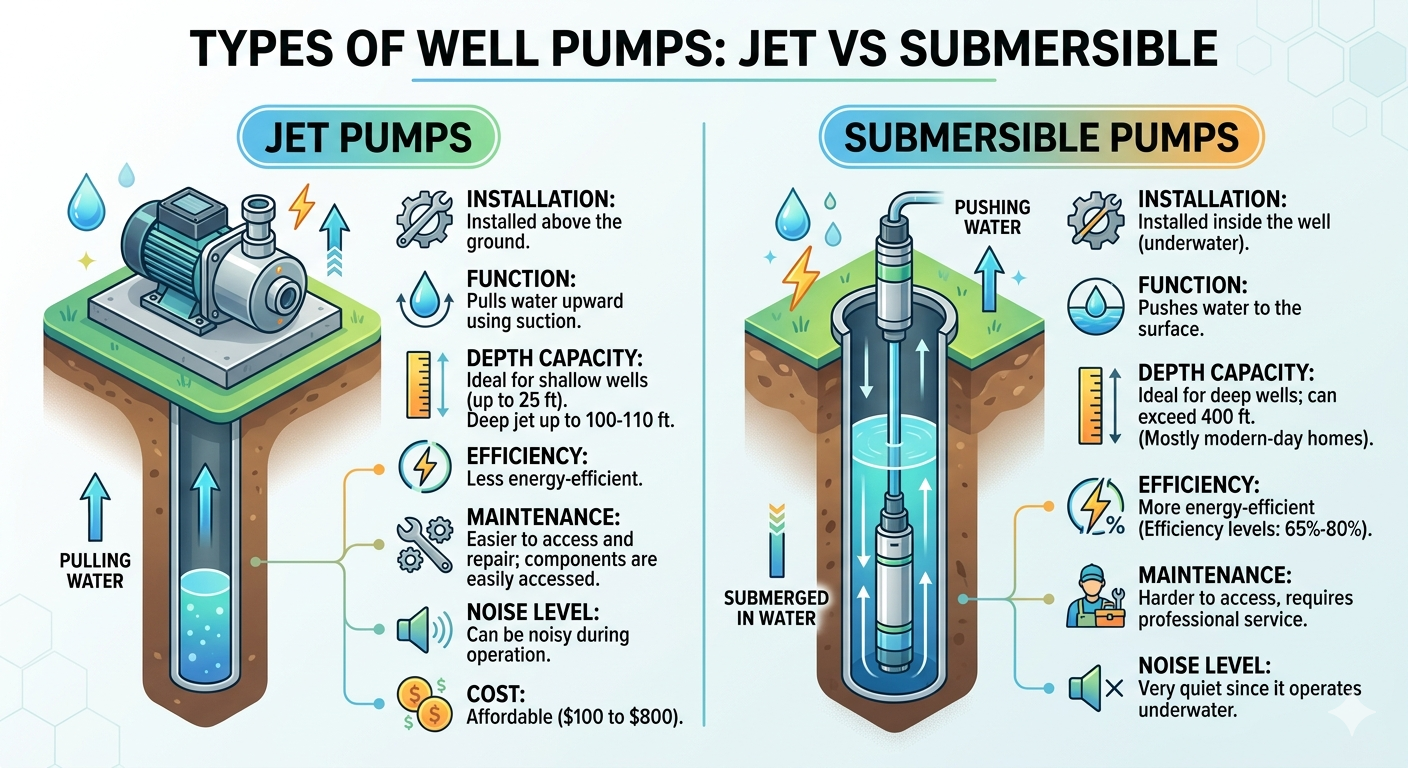
Standard residential pumps come in several varieties, each with different runtime capabilities. Knowing your pump type is the first step to understanding its limits.
Jet Pumps: Short Bursts Only
Jet pumps sit above ground and rely on suction to draw water. These pumps have no external cooling source, making them prone to overheating.
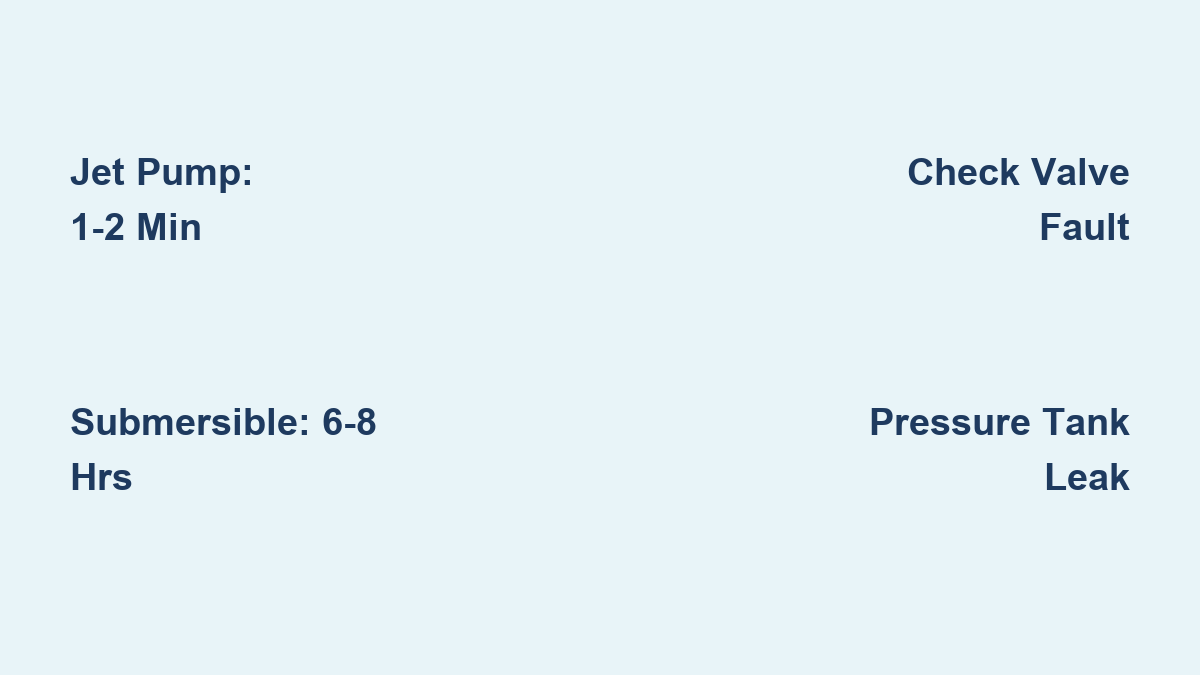
• Maximum continuous run time: 1–2 minutes
• Cooling method: Air-cooled, requires rest periods
• Risk: Loses prime quickly, overheats without water contact
• Best use: Short cycles with adequate cooling time between runs
Warning: Running a jet pump continuously for more than 2 minutes risks irreversible damage within hours.
Standard Submersible Pumps: 6–8 Hours Maximum
Submersible pumps sit underwater in your well, which provides natural cooling. However, most residential models aren’t designed for 24/7 operation.
• Maximum continuous run time: 6–8 hours per day
• Cooling method: Water surrounding the motor
• Required rest: Downtime between cycles for motor cooling
• Not continuous-duty unless specifically labeled
Continuous-Duty Submersible Pumps: Built for 24/7
Some high-end submersible pumps are rated for continuous operation, but they require specific conditions to run safely.
• Can run 24/7 if rated for continuous duty
• Requirements: Full submersion, stable voltage, clean water, proper installation depth
• Key feature: Thermal overload protection that shuts down the motor if it overheats
• Check the label: If it doesn’t say “continuous-duty,” assume it’s not rated for 24/7 operation
Pro Tip: Look for the duty rating on your pump’s nameplate. “Continuous-duty” means it’s built for around-the-clock operation.
VSD Pumps: Designed for Constant Low-Speed Running
Variable Speed Drive pumps adjust their motor speed based on water demand, making continuous operation at low speeds normal and efficient.
• Continuous operation: Normal at 20–50% capacity
• Energy savings: Up to 80% less power than fixed-speed pumps
• Normal behavior: Humming all day at low speed to maintain constant pressure
• Danger sign: Running full blast with no water use indicates a system fault
Key Insight: It’s normal for a VSD pump to run continuously at low speed. It’s dangerous if it’s running at full speed with no water demand.
Quick Reference: Maximum Run Times by Pump Type
| Pump Type | Max Continuous Run Time | Safe or Risky |
|---|---|---|
| Jet Pump | 1–2 minutes | Risky beyond this |
| Standard Submersible | 6–8 hours per day | Limited use only |
| Continuous-Duty Submersible | 24/7 | Safe if rated and installed correctly |
| VSD Pump | Continuous at low speed | Normal and efficient |
| Solar BLDC Pump | 10–12 hours (sunlight) | Designed for long runs |
Why Your Pump Runs Constantly (And How to Fix It)
A pump that won’t shut off when no water is being used is trying to maintain pressure but failing. Several common issues cause this problem.
1. Plumbing Leak
A running toilet, dripping faucet, or cracked pipe keeps pressure low, causing the pump to run constantly.
• Test method: Turn off all water sources and monitor the pressure gauge
• If pressure drops: You have a leak somewhere in the system
• Common culprits: Toilet flapper, under-sink connections, outdoor faucet seals
2. Faulty Pressure Switch
The pressure switch should cut power when pressure reaches the high set point (typically 60 PSI). If it’s stuck or misadjusted, the pump stays on.
• Fix: Replace or recalibrate the pressure switch
• Cost: $75–200 for professional replacement
• Warning: This is one of the most common causes of continuous pump operation
3. Waterlogged Pressure Tank
Pressure tanks need an air cushion to absorb pressure fluctuations. If waterlogged, pressure drops instantly when any water is used, triggering the pump to cycle constantly.
• Sign: Pressure gauge spikes and drops rapidly during use
• Fix: Recharge the tank with air or replace the tank entirely
• Cost: $800–1,500 for replacement
4. Failed Check Valve
A check valve prevents water from flowing back into the well after the pump shuts off. If it fails, water drains back, and the pump must re-pressurize constantly.
• Fix: Install or replace the check valve
• Location: Usually on the discharge pipe near the pump
5. Low Water Level or Loss of Prime
The pump can’t build pressure if there’s not enough water or air in the system.
• Critical for jet pumps: They lose prime in seconds without water
• Submersible pumps: Need at least 1 meter of water above the intake
• Fix: Check water level, re-prime the system, or lower the pump
Immediate Action: If your pump won’t shut off, turn it off manually and diagnose the problem before restarting.
Risks of Running Your Pump Too Long

Continuous operation beyond your pump’s design limits leads to serious consequences.
Motor Overheating and Burnout
Heat damages motor insulation, causing shorts and complete failure.
• Standard pumps: Overheat after extended runs without rest
• Submersible pumps: Can fail in 15–30 seconds when running dry
• Protection: Thermal overload switches help but aren’t foolproof
Component Wear and Damage
Constant operation accelerates wear on bearings, seals, and impellers.
• Sand or grit: Can reduce efficiency by 20% or more
• Short-cycling: More damaging than continuous running due to repeated start-up stress
• Result: Premature failure and costly repairs
Skyrocketing Energy Bills
A constantly running pump draws significant power.
• Continuous operation: Can triple or quadruple your electricity costs
• Hidden leaks: Often cause unexplained spikes in your utility bills
• VSD advantage: Uses significantly less energy during extended operation
Warning Signs Your Pump Is in Trouble
Don’t wait for complete failure. Watch for these indicators:
• Pump runs 24/7 with no water being used
• Pressure drops suddenly when water is turned on
• Air sputters from taps when you first turn on water
• Grinding, humming, or clicking noises
• Unexplained increase in your electric bill
• Sand or grit in your water
Diagnostic Tip: Monitor your pressure gauge. If it drops after the pump shuts down, you have a leak or a failed check valve.
Best Practices for Safe Pump Operation
Match Pump Size to Your Demand
An oversized pump causes short-cycling. An undersized pump runs constantly trying to meet demand.
• Size for peak GPM: Calculate your household’s maximum water needs
• Consider total dynamic head: Factor in pipe length, elevation, and friction loss
Use a Properly Sized Pressure Tank
A good pressure tank reduces cycling and extends pump life.
• Minimum size: 20–40 gallons for most residential homes
• Larger tanks: Allow longer, less frequent runs
• Regular checks: Test tank charge annually
Install Dry-Run Protection
This device shuts off the pump if water levels drop too low.
• Essential for submersible pumps: Prevents catastrophic motor failure
• Recommended for jet pumps: Avoids overheating from loss of prime
• Cost: $50–150 for basic models
Follow Recommended Cycle Times
Proper cycling protects your pump from thermal stress.
| Cycle Type | Duration | Purpose |
|---|---|---|
| Minimum On-Time | 1–2 minutes | Prevents short-cycling damage |
| Minimum Off-Time | 1–2 minutes | Allows motor cooling |
| Ideal Cycle | 2 min on, 2 min off | Balances demand and rest |
| Max Starts per Hour | 10–20 | Prevents thermal stress |
Pro Tip: Longer, fewer cycles equal longer pump life. Short-cycling is more damaging than continuous running.
How to Prevent Continuous Pump Operation
Follow these steps to keep your pump running efficiently:
- Test for leaks monthly: Monitor pressure with all water sources off
- Check pressure tank annually: Ensure proper air charge
- Inspect pressure switch: Look for signs of wear or corrosion
- Clean filters and intakes: Remove debris that restricts flow
- Schedule professional maintenance: Annual inspections catch problems early
- Upgrade to VSD if demand is high: Saves energy and extends life
Cost of Ignoring Pump Problems
Small issues become expensive fast when left untreated.
| Problem | Repair Cost |
|---|---|
| Pressure Switch Replacement | $75–200 |
| Leak Repair | $150–600 |
| Pressure Tank Replacement | $800–1,500 |
| Submersible Pump Replacement | $1,000–2,500+ |
| Full System Overhaul | $3,000+ |
Savings: Preventive maintenance cuts repair costs by 50% and extends pump life by 5–10 years.
Frequently Asked Questions About Water Pump Continuous Operation
How long can a standard well pump run continuously?
Standard residential well pumps are not designed for continuous operation. Most can safely run 6–8 hours under heavy demand, but running beyond 24 hours without interruption indicates a system problem. Jet pumps should not exceed 1–2 minutes of continuous operation.
Can a submersible pump run 24/7?
Only if it is specifically rated for continuous duty and operates under ideal conditions: full submersion, stable voltage, clean water, and proper installation depth. Standard residential submersible pumps should not run continuously.
Why does my pump run when no water is being used?
This usually indicates a system leak, faulty pressure switch, waterlogged pressure tank, or low water level. The pump senses pressure loss and runs constantly trying to compensate. Turn off the pump and diagnose the issue immediately.
What happens if a pump runs continuously?
Continuous operation causes overheating, motor burnout, insulation failure, increased energy bills, and premature pump failure. A pump running non-stop with no water use is a critical warning sign.
How many times should a well pump cycle per hour?
Fewer cycles are better. Most systems should cycle only a few times per hour during active use. Exceeding 10–20 starts per hour accelerates wear significantly. Short-cycling is more damaging than continuous running.
Can a pump run without a pressure tank?
Yes, but it causes excessive short-cycling and rapid motor wear. A pressure tank is strongly recommended for all residential systems to absorb pressure fluctuations and reduce cycling frequency.
Key Takeaways for Protecting Your Water Pump
Standard residential pumps should not run continuously. Jet pumps max out at 1–2 minutes, while standard submersibles can handle 6–8 hours under heavy demand. Only continuous-duty rated pumps and VSD systems can safely run 24/7, and only under ideal conditions.
A pump running non-stop when no water is being used is never normal. It’s a red flag indicating leaks, failed components, or low water levels. Short-cycling damages pumps more than continuous running does, so aim for fewer, longer cycles with adequate cooling time between them.
Protect your investment by installing dry-run protection, maintaining proper pressure tank function, and scheduling annual professional inspections. These simple steps can double your pump’s lifespan and save thousands in replacement costs.
Your Action Plan: Check your pump’s duty rating, test for leaks, inspect your pressure tank, and consider upgrading to a VSD pump if you have high or variable water demand. Regular maintenance prevents 80% of pump failures.