
Imagine living off-grid, deep in the woods, with a spring at the bottom of your property and your cabin perched on a hilltop. You need water, but there is no electricity, no fuel, and no solar setup. How do you get water uphill?
The answer lies in physics, not power. Specifically, the hydraulic ram pump and hydropneumatic pressure loop systems, two ingenious fully passive methods that move water uphill using only gravity, water hammer, or compressed air. These systems require no electricity, fuel, or batteries, and once installed, they run 24/7 with minimal maintenance. This guide reveals exactly how to pump water uphill without power, covering the most effective techniques, setup requirements, efficiency optimization, and real-world performance so you can choose the right method for your off-grid home, survival setup, or remote irrigation.
How Hydraulic Ram Pumps Work
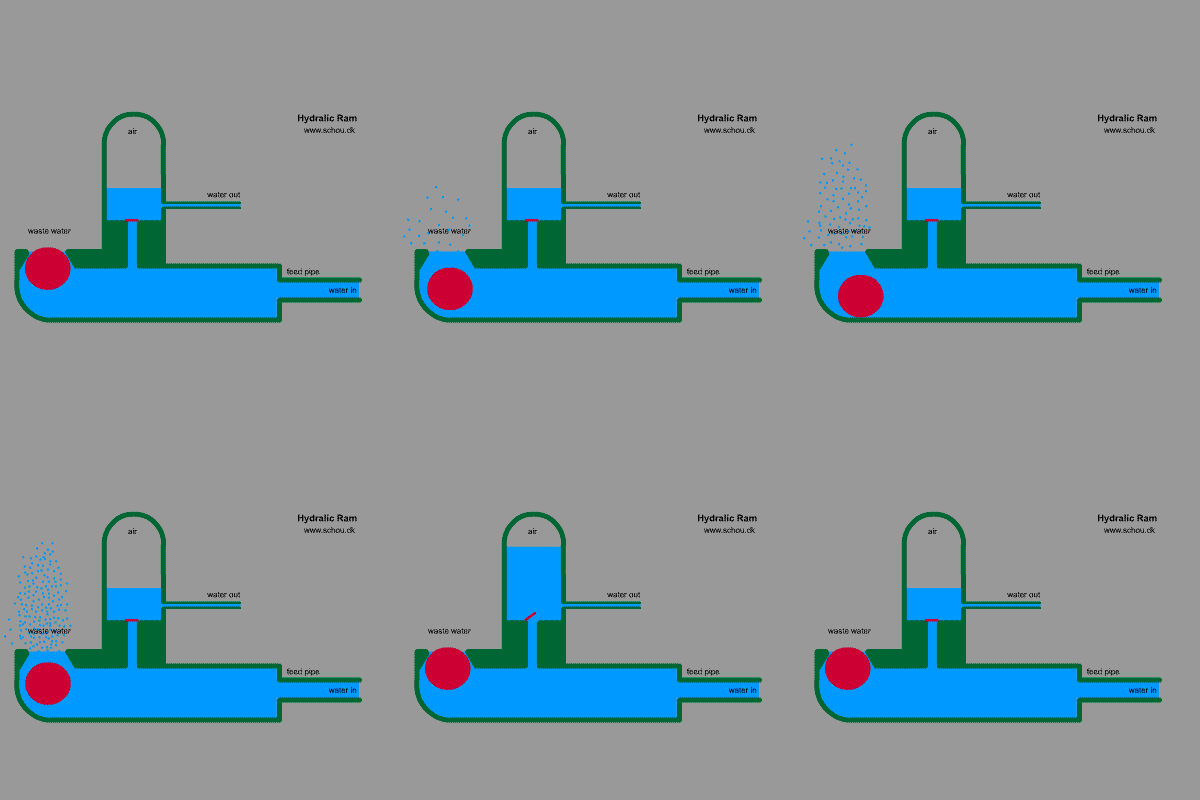
The hydraulic ram pump is the gold standard for passive uphill water transfer. It converts the kinetic energy of flowing water into pressure using gravity and the water hammer effect, and it requires no external power input.
Water Hammer Creates Pressure
When flowing water stops suddenly, inertia causes a shockwave called water hammer that generates high pressure. A ram pump uses this surge to push water uphill. The momentum forces a small amount of water into the tank until both pressures equalize, at which point the check valve closes again and the cycle starts all over. This self-sustaining pulse repeats every 2 to 5 seconds, creating continuous pumping action without any electronics or fuel.
The Seven-Step Cycle
- Flow Begins: Water enters through the drive pipe, fed by a source with at least 4 to 6 feet of vertical drop.
- Valve Slams Shut: The waste valve closes abruptly due to flow inertia.
- Pressure Surge: The sudden stop creates a high-pressure pulse up to 35 PSI.
- Check Valve Opens: Water is forced through into the air-charged pressure chamber.
- Delivery Phase: Pressurized water exits via the delivery pipe, rising uphill.
- Vacuum Reopens Valve: Pressure drops, creating suction that reopens the waste valve.
- Cycle Repeats Automatically: As long as water flows, the pump runs continuously.
Build a Hydraulic Ram Pump: Key Components

You do not need a factory to build a ram pump. Standard plumbing parts and a flowing water source are all that is required. The essential components include the drive pipe that carries water to the pump, the waste valve that triggers water hammer, the check valve that prevents backflow, the pressure chamber that smooths pulses, and the delivery pipe that sends water uphill. Use an intake screen to block debris, because even small particles can jam valves and reduce efficiency. Pre-filtration is critical for reliable operation.
Essential Parts Summary
The drive pipe should be rigid material such as black poly, PVC, or galvanized steel. The waste valve controls cycle timing and directly impacts performance. The check valve must be brass or stainless steel and replaceable. The pressure chamber is an air-cushioned tank that must stay air-filled to function properly. Unions and valves should be installed for easy maintenance and disassembly.
Maximize Efficiency: Valve Design Matters

The waste valve is the heart of the system. Its weight, closure speed, and durability directly impact how much water you can pump uphill without power.
Tested Valve Performance Results
| Valve Type | PSI Generated | Daily Output | Efficiency |
|---|---|---|---|
| Brass check valve | 18 | 166 gallons | Baseline |
| Stainless steel | 35 | 237 gallons | Durable |
| Modified foot valve | 34.5 | 245 gallons | 48% more flow |
Heavier valves close faster, which creates a stronger water hammer effect. The optimal mass improves cycle timing, but too heavy means the valve will not reopen and too light creates a weak surge. A modified foot valve with added weight delivers the best results, nearly 250 gallons per day with just a 5-foot head.
Installation: Requirements and Setup
You cannot simply place a ram pump anywhere. Specific conditions must be met for the system to work effectively.
Minimum Requirements
The vertical head or drop must be at least 4 to 6 feet. Water flow must be at least 4 GPM minimum, with 10 or more GPM being ideal. Drive pipe length should not exceed 100 feet because longer pipes weaken the pressure pulse. Rigid pipe material is required, and flexible hoses should never be used in the drive line. The water source must be a flowing stream or spring, not still water.
Real-World Installation Example
One user had a spring 20 feet below their cabin with 120 feet of horizontal distance. Friction loss added approximately 6 feet equivalent lift, for a total lift requirement of about 26 feet. They used an Atlas Ram Pump with 100 feet of 1-inch black poly for intake and 300 feet of half-inch poly for delivery. The result was 10 to 20 gallons per hour delivered to a 50-gallon storage tank. Even with friction losses, the system works as long as the head is sufficient.
Boost Performance: Filtration and Pre-Treatment
Sediment kills efficiency. Clean water means reliable pumping, and a few simple additions can dramatically improve your system.
Prevent Clogs with Smart Filtration
A basic mesh screen over the intake clogs fast and requires constant attention. A better approach uses a 55-gallon drum with one-quarter-inch holes filled with number 1 crushed stone as a barrel filter. For even better results, install a gravel pre-filter in the spring bed to trap silt before water reaches the pump.
Add a Settling Tank
Using a 50 to 55 gallon poly barrel between the spring and pump increases effective head by 4 feet while acting as a sediment trap. Flush the tank monthly, which takes approximately 10 minutes. Maintenance is almost nonexistent, with only normal wear on the check valve plunger.
Reduce Noise and Vibration
Yes, ram pumps make noise, but it is manageable and far less intrusive than generators or electric pumps.
Typical Operation Sound
The pump produces a muffled thump every 2 to 5 seconds. This is described as a heartbeat in the woods and is barely audible at 100 feet distance. The sound blends naturally into outdoor environments.
Vibration Control Tips
Mount the pump on flat rocks or a concrete pad and shim with wood to level it perfectly. Use a T-fitting with standpipe to dampen pulses before the delivery rise. Avoid hose loops because they amplify vibration rather than reduce it. Ensuring the pump is perfectly level reduces shaft wear and extends component life.
Winterize Your Ram Pump
Freezing can crack pipes and tanks, so proper winter preparation is essential for systems in cold climates.
Cold Weather Operation
One user successfully ran their system at 20 degrees Fahrenheit while actively pumping. The risk comes when water sits idle in the chamber and freezes. The solution is to remove and drain the pump during freezing months.
Freeze Protection Plan
Remove the pump from October to April and store it indoors. For year-round operation, build an insulated enclosure with a small heat source such as a kerosene lamp. One site experienced minus 24 degrees Fahrenheit, proving that insulation is essential for winter operation.
Cost: DIY vs. Commercial
You do not need to spend hundreds of dollars to get water uphill without power. Both commercial and DIY options exist at different price points.
Price Comparison
Commercial units cost up to 520 dollars, which is expensive for most budgets. A DIY build costs only 50 to 60 dollars using basic hardware store parts. A more robust build runs approximately 100 dollars, such as an Atlas Ram Pump. Plans are available for around 11 dollars. All the parts are regular galvanized fittings, so the total cost would not be more than 100 dollars even for a quality build.
Advantages of Ram Pumps
Why choose a ram pump when learning how to pump water uphill without power? Several compelling benefits make this the preferred method for off-grid applications.
The system requires zero energy input with no electricity or fuel needed. It runs 24/7 as long as water flows from the source. Maintenance is low because there are few moving parts to wear out. The operation is quiet and blends into nature. The design is durable and outlasts the user with proper care. Best of all, it is eco-friendly with no emissions. There is no equal available today for economy, rugged reliability, and simplicity of operation.
Limitations to Know
Not every site is suitable for a ram pump. Understanding these limitations helps you choose the right method for your situation.
The system wastes 80 to 90 percent of input water, discharging it as part of the cycle. It needs a flowing source and will not work with ponds or still water. A minimum head of 4 to 6 feet is required. Freeze risk means the system must be drained in winter. Sediment sensitivity requires filtration to avoid clogging. The flow rate is low, making it best for storage accumulation rather than direct high-volume use. You need a cistern to store the water because daily accumulation is the goal, not instant delivery.
Alternative: Hydropneumatic Pressure Loop (HCPL1)
No stream? No problem. The HCPL1 system offers an alternative way to pump water uphill without power using compressed air instead of flowing water.
How It Works
The system uses pre-charged air that expands to push water through a Venturi nozzle. Suction draws in more water from a reservoir. Flow continues as long as the tap remains open. The key components include PVC pipes, T-fittings, elbows, reducers, a non-return valve, a schraeder valve for pressurization, and high-pressure PVC adhesive.
Operation Steps
First, pressurize the system via the tire valve using a hand pump. Next, open the tap to begin flow. The air expands and water flows through the system. The Venturi effect sustains suction to draw in more water. The system cycles continuously until the tap closes. Flow stops when the tap is closed, and re-pressurization is required to restart.
Compare: Ram Pump vs. HCPL1
| Feature | Ram Pump | HCPL1 Loop |
|---|---|---|
| Power Source | Flowing water | Compressed air |
| Input Needed | 4+ ft head, 4+ GPM | Manual pressurization |
| Flow Type | Pulsating, continuous | Continuous when open |
| Maintenance | Low | Low |
| Startup | Automatic | Manual |
| Best For | Streams, constant flow | Intermittent use |
The ram pump is best for continuous off-grid pumping. The HCPL1 loop is best for low-flow on-demand delivery where no stream exists.
Other Methods and Why They Fall Short
Several alternative methods exist for pumping water uphill without power, but each has significant drawbacks.
Siphon systems have a maximum lift of about 22 feet due to atmospheric pressure limits and require priming. They are not sustainable for daily use. Manual hand pumps can push water uphill but require constant labor and are impractical for household supply. Trompe systems use falling water to compress air but are rare and complex, with lower efficiency than ram pumps. Solar pumps require panels and batteries, so they are not truly no-power solutions. The ram pump remains the only fully passive, continuous, and scalable solution for those needing to pump water uphill without power.
Final Takeaways on Pumping Water Uphill Without Power
Hydraulic ram pumps are the best way to pump water uphill without power because they use gravity and water hammer, requiring no electricity, fuel, or solar input. The minimum requirements are 4 to 6 feet of head and 4 or more GPM flow with rigid pipe. Output is 10 to 20 percent of input water delivered uphill, but the system can lift water 5 to 10 times the height of the drop. The HCPL1 loop offers an alternative using compressed air for locations without flowing water. DIY costs range from 50 to 100 dollars, far cheaper than commercial units. Maintenance is minimal, involving filter cleaning, valve checks, and winterization. With a ram pump, you harness free perpetual energy from flowing water, turning a small stream into a lifelong lifeline for your off-grid home. Build one, and you will have water on the hilltop forever without spending a single watt of power.
Frequently Asked Questions About Pumping Water Uphill Without Power
How does a hydraulic ram pump work without electricity?
A hydraulic ram pump uses the water hammer effect. When flowing water suddenly stops, the resulting pressure surge pushes water through a check valve into a pressure chamber. This pressurized water is then forced uphill through a delivery pipe. The cycle repeats automatically every 2 to 5 seconds as long as water flows into the system.
What is the minimum head required for a ram pump to work?
You need at least 4 to 6 feet of vertical drop from your water source to the pump location. With this head, a properly designed ram pump can lift water 5 to 10 times higher than the source drop. More head generally means better performance and higher possible elevation.
How much water can a ram pump deliver per day?
A well-optimized ram pump with a modified foot valve can deliver approximately 245 gallons per day. Typical systems deliver 10 to 20 gallons per hour. Output depends on available head, flow rate, and valve efficiency. The system runs 24/7, so daily accumulation can meet household needs when paired with storage tanks.
Can I build a ram pump myself from hardware store parts?
Yes, you can build a functional ram pump for 50 to 100 dollars using standard PVC pipe, galvanized fittings, check valves, and a pressure chamber. Detailed plans are available for purchase, and all components are readily available at hardware stores. No welding or specialized tools are required for basic builds.
Does a ram pump work in winter freezing conditions?
Ram pumps can operate in freezing temperatures while actively pumping, but they must be drained when idle to prevent cracked pipes and tanks. In cold climates, remove the pump in late autumn and reinstall in spring. Alternatively, build an insulated enclosure with a small heat source for year-round operation.
What is the alternative to a ram pump if I have no flowing water?
The HCPL1 hydropneumatic pressure loop system uses pre-charged compressed air to push water uphill. You pressurize it manually with a hand pump, then open a tap to release water. This system works without a stream but requires re-pressurization each time you want to use it. It is best for intermittent small-scale delivery rather than continuous pumping.