A sudden pressure surge just damaged a check valve in your steam line, and now you’re scrambling to find the right replacement before the next shift. The problem is, you ordered a swing check valve when your system actually needed something built for high pressure and rapid cycling. This common mix-up costs industrial facilities thousands in downtime and replacement parts every year. Understanding piston check valve types before you buy can prevent these costly errors.
This guide breaks down every major piston check valve type, how they operate, and where each design excels. You’ll learn how to match valve construction to your fluid, pressure, and orientation requirements. We’ll also cover installation best practices, common failure modes, and how piston valves compare to swing, ball, and pulse-dampening alternatives.
Key Piston Check Valve Types by Closure Mechanism
Spring-Loaded vs. Gravity-Operated Designs
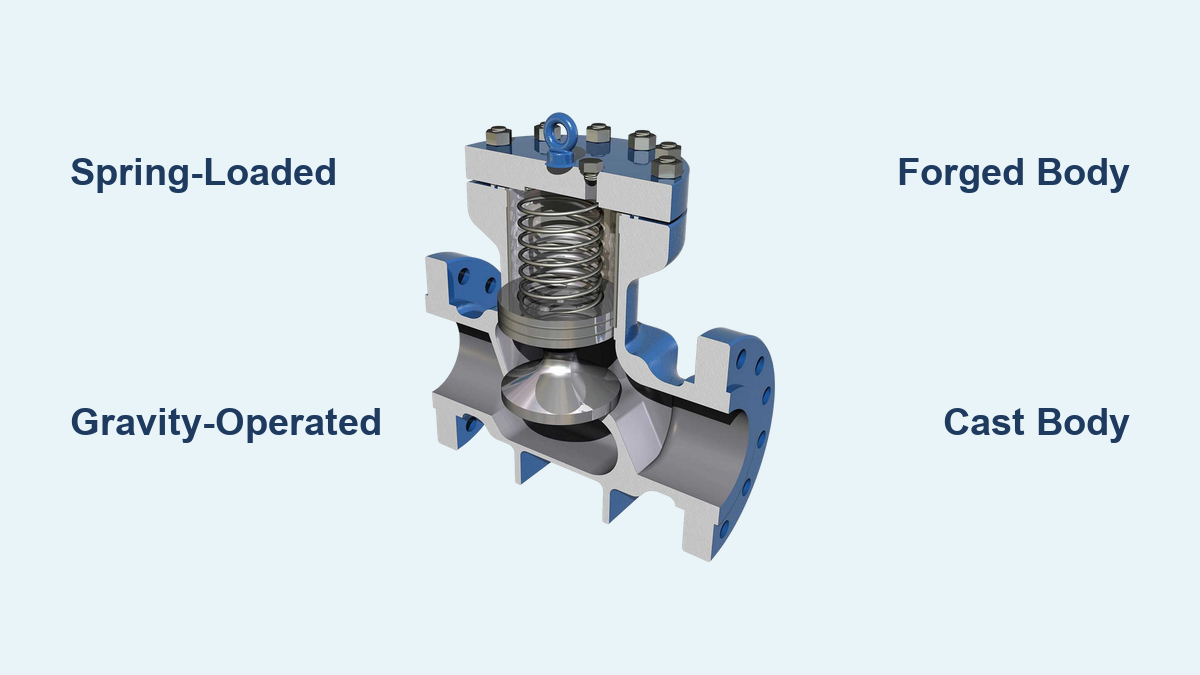
Spring-loaded and gravity-operated piston check valves serve different installation scenarios. Spring-loaded models use an internal coil spring to actively push the piston back onto its seat when flow stops. This positive closure works in any orientation, including vertical pipes with upward flow where gravity alone would fail. Spring assistance also shortens closing time, which reduces water hammer risk in high-speed systems.
Gravity-operated valves depend entirely on the piston’s weight to close. These designs only function correctly in horizontal installations, since vertical mounting can prevent proper seating or cause unintended opening. While simpler and more affordable, they lack the versatility and rapid response of spring-assisted models. For critical systems or variable orientations, spring-loaded is the safer choice.
Forged vs. Cast Body Construction
Forged and cast piston check valves differ in manufacturing method, pressure capability, and ideal use case. Forged valves are machined from solid steel billets like ASTM A105N, producing a denser grain structure with superior strength. These valves handle extreme pressure and temperature in steam, oil, and gas service. Forged bodies typically range from 1/4 inch to 6 inches and often feature welded bonnets that make them maintenance-free.
Cast valves are formed by pouring molten metal into molds, making them cost-effective for larger diameters from 6 inches to 24 inches and beyond. They serve large-bore pipelines in water treatment and general industrial processes. Cast bodies usually have bolted bonnets for internal access, though their pressure ratings run slightly lower than forged equivalents of the same class.
Bronze, Steel, and Exotic Material Options
Material selection determines compatibility with specific fluids and operating environments. Bronze piston check valves in sizes from 1/2 inch to 2 inches suit moderate-pressure water, air, and mildly corrosive services. They often include reinforced PTFE seats and threaded NPT or BSP ends for commercial HVAC and plumbing installations.
Carbon steel (A105N) and stainless steel dominate industrial applications. Carbon steel handles high-pressure steam and oil, while stainless steel resists corrosion in chemical and food processing. For aggressive media like strong acids or extreme temperatures, exotic alloys such as Hastelloy, Inconel, Monel, or titanium provide extended service life at a premium price.
How Piston Check Valves Operate
Forward Flow and Cracking Pressure Explained
A piston check valve opens when upstream pressure exceeds the cracking pressure threshold. This minimum force depends on piston weight, spring tension, and seat geometry. Gravity-only models have very low cracking pressure, allowing flow to begin with minimal upstream force. Spring-loaded versions offer adjustable cracking pressure, useful when systems require a specific minimum pressure before opening.
As fluid enters the inlet, pressure builds beneath the piston. Once this force overcomes the combined resistance of the spring and gravity, the piston lifts vertically within its guide. The guided motion keeps the piston centered, which minimizes turbulence and uneven wear. Flow continues until pressure drops or reverses.
Closure Mechanics and Backflow Prevention
When forward flow stops or reverses, the piston returns to its seat to block backflow. In gravity-operated valves, the piston simply drops due to its mass. Spring-loaded models use the spring to actively push the piston down, ensuring rapid and positive closure. Downstream backpressure also forces the piston tightly against the seat, enhancing the seal.
The large sealing surface and precise guide alignment prevent leakage even under high differential pressure. This makes piston check valves more reliable than swing types for backflow prevention. The closure happens fast enough to minimize water hammer, though extreme pulsating flow can still cause issues.
The Guide’s Role in Long-Term Performance
The guide is a critical internal component that keeps the piston moving straight up and down. Without proper guidance, misalignment would cause uneven wear, seat damage, and leakage. The guide also restricts lateral movement, preventing the piston from dragging or sticking during operation.
In high-cycle applications, the guide extends valve life by reducing friction and wear. This matters most in dirty or viscous media, where misalignment can trap particles and trigger failure. Forged piston check valves often integrate the guide directly into the body, which improves durability and eliminates potential leak paths.
Body Design and Configuration Variations
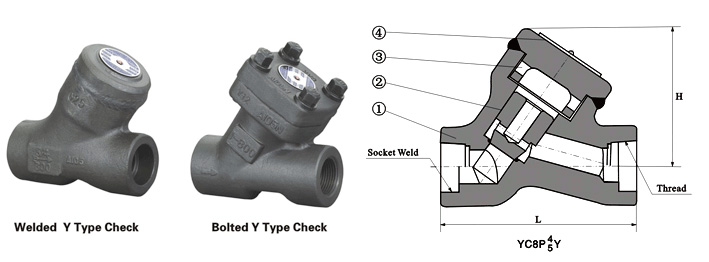
Y-Pattern vs. Straight and Angle Bodies
Piston check valves come in three main body configurations. Straight-body valves provide a direct inline flow path and fit compact piping layouts. Angle-body valves redirect flow by 90 degrees, useful in tight spaces where piping must change direction.
Y-pattern valves feature an inclined seat and piston alignment that reduces flow resistance. This design improves performance in high-velocity or dirty media by minimizing turbulence and pressure drop. Y-pattern configurations are preferred in steam and boiler feedwater systems where flow efficiency matters most.
Screwed-In vs. Integral Seat Construction
Seat design affects both maintenance access and material flexibility. Integral seats are machined directly into the valve body, creating a robust leak-resistant seal common in forged steel valves. However, damage to an integral seat often requires complete valve replacement.
Screwed-in seats can be removed and replaced, allowing maintenance without replacing the entire valve. This modularity also enables seat material changes, such as switching to Stellite or PTFE for different media. Screwed-in seats appear more often in cast valves and larger-diameter designs where field service is expected.
One-Piece vs. Bolted Bonnet Designs
One-piece body valves have no body-bonnet joint, eliminating a potential leak path entirely. These designs serve high-integrity or fugitive emission-critical services where zero leakage is mandatory. They are typically non-repairable in the field but offer superior leak-tightness when welded into the pipeline.
Bolted bonnet designs allow access to internal components for inspection, cleaning, and repair. This makes them suitable for applications with expected maintenance needs. The gasketed joint introduces a potential leak point, so proper installation torque becomes critical. Bolted bonnets are standard in larger cast piston check valves.
Installation Best Practices
Flow Direction and Orientation Rules
Piston check valves are strictly unidirectional. Installing one backward causes immediate failure. Always align the flow arrow on the valve body with the intended fluid direction. The inlet must sit beneath the piston so pressure can lift it properly.
Orientation matters significantly. Gravity-operated valves require horizontal installation only. Spring-loaded models work in horizontal or vertical lines with upward flow. Never install a standard piston check valve in vertical downward flow, since gravity will keep it permanently open. Always check manufacturer guidelines for orientation in pulsating or high-cycle systems.
Pipeline Preparation and Debris Control
Clean the pipeline thoroughly before installation. Welding slag, dirt, and metal shavings can lodge in the guide or seat, causing the piston to stick or leak. Flush the line completely and install temporary strainers if the system has recent welding or maintenance history.
Inspect the valve interior before installation. Even small particles can prevent a tight seal. Installing a permanent filter or strainer upstream of the valve is a best practice, especially in dirty or viscous media applications where debris is likely.
Connection Tips for Flanged, Welded, and Threaded Ends
For flanged connections, use the correct gasket type (RF or RTJ) and material compatible with the process fluid. Tighten bolts evenly in a star pattern to prevent flange warping. Use a calibrated torque wrench to meet manufacturer specifications, since overtightening can crack the valve body.
For socket or butt weld ends, follow proper beveling and welding procedures per ASME B16.11 or B16.25. Post-weld heat treatment may be required for high-pressure or high-temperature services. Threaded NPT or BSP connections should be sealed with appropriate thread compound, but avoid over-application that could enter the valve and interfere with piston movement.
Maintenance and Troubleshooting
Common Failure Modes and Root Causes
Piston check valves are often labeled maintenance-free, but failures still occur. The most common issues include:
- Sticking: Caused by debris in the guide or dirty media preventing piston movement
- Leakage: Resulting from worn, pitted, or scored seating surfaces or guide damage
- Chatter: Rapid cycling in pulsating flow from reciprocating compressors
- Water hammer: Possible when closure is too slow or surge protection is inadequate
Root causes typically trace back to improper installation, incorrect valve selection, or contaminated media.
Diagnosing Sticking and Chatter Problems
To diagnose sticking, shut down the system and check whether the piston moves freely by hand if accessible. A frozen piston requires disassembly and inspection for debris or corrosion. Clean all internal parts and verify guide alignment before reassembly.
For chatter, listen during operation. A rapid ticking or hammering sound indicates the piston is reacting to flow pulses, common in compressor discharge lines. When chatter occurs, consider switching to a pulse-dampening check valve (PDC) or silent check valve designed specifically for pulsating flow.
When to Repair vs. Replace
Minor issues like debris accumulation or light wear often resolve through cleaning and reseating. Heavily damaged seats or pistons may require replacement. Valves with screwed-in seats or replaceable trim are good candidates for repair.
Forged valves with welded bonnets are typically replaced rather than repaired. If the guide is damaged or the body is cracked, replacement is the only safe option. Always follow manufacturer recommendations when deciding between repair and replacement.
Comparing Piston Valves to Other Check Valve Types
Piston vs. Swing Check Valves
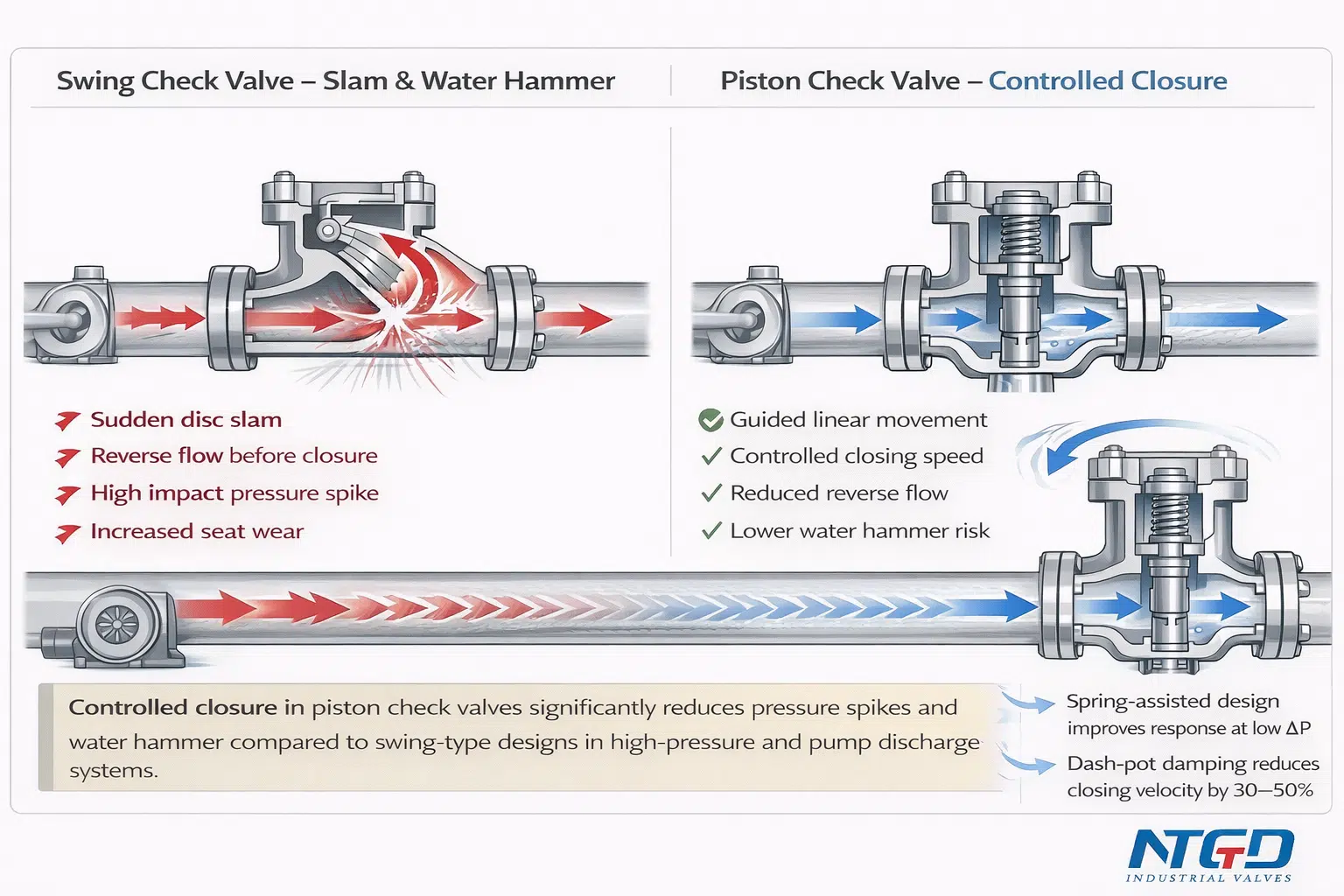
Piston and swing check valves both prevent backflow but differ significantly in performance. Piston valves use a guided linear piston while swing valves use a hinged disc. Piston designs respond faster to flow reversal, reducing water hammer risk. Swing valves carry higher inertia and are more prone to slamming.
Sealing runs tighter in piston valves due to larger contact area and precise alignment. Swing valves may leak under high pressure or when the disc fails to seat fully. However, swing valves offer lower flow resistance and work better for large-diameter, low-pressure applications.
Piston vs. Ball Check Valves
Ball check valves use a free-moving ball that lifts off a seat. They work in any orientation and handle viscous fluids well due to the ball’s self-cleaning wiping action. Piston valves with tight guide clearance can stick in dirty or viscous media unless properly filtered.
Ball valves are simpler, cheaper, and easier to maintain. Piston valves deliver more durability in high-pressure, high-temperature, and high-cycle applications. For steam or oil systems, piston valves are preferred. For fuel or chemical injection at moderate pressure, ball valves often suffice.
Piston vs. Pulse-Dampening Check Valves
In reciprocating compressor applications, standard piston check valves often fail due to chatter. PDC (Pulse-Dampening Check) valves solve this with a damping chamber that keeps the disc open during pressure fluctuations, eliminating rapid cycling.
PDC valves feature a one-piece body for zero leak paths and are specifically engineered for compressor discharge lines. While more expensive, they last longer and operate quietly. For any reciprocating compressor, PDC or silent check valves are recommended over standard piston types.
Selecting the Right Piston Check Valve
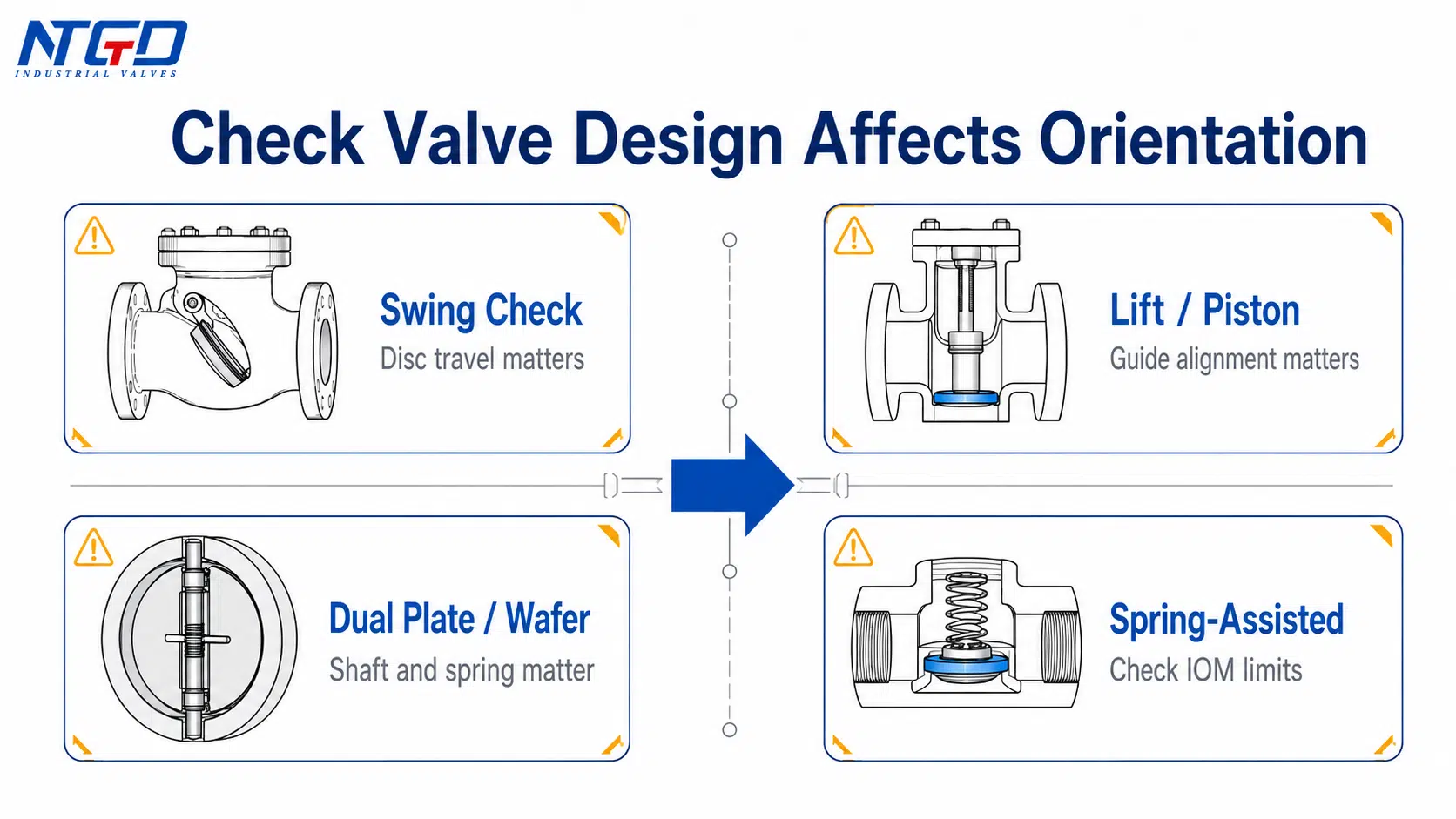
Match Valve to Fluid and Pressure Requirements
Choose the valve material based on fluid compatibility. Use carbon steel for steam and oil, stainless steel for corrosive chemicals, and bronze for water and air. For aggressive media, specify exotic alloys like Hastelloy or titanium.
Ensure the pressure class (ANSI 150 to 4500 or PN10 to PN640) matches or exceeds system requirements. High-pressure steam lines at Class 800 and above demand forged steel with Stellite trim. Low-pressure water systems can use cast iron or bronze.
Consider Flow Dynamics and Cycling Frequency
High-frequency cycling demands a durable, fast-closing valve. Spring-loaded piston checks excel in these conditions. For pulsating flow, avoid standard piston valves and opt for PDC or silent check valves instead.
If the system has rapid flow reversals or high velocity, verify the valve can handle the dynamic load without slamming or chattering. Y-pattern designs reduce turbulence and improve response time in demanding flow conditions.
Choose End Connections and Verify Standards
Select end connections based on your piping system. Flanged connections allow easy maintenance, welded connections provide permanent leak-free joints, and threaded connections suit small-diameter lines. Ensure compliance with ASME B16.5 for flanges, B16.11 for socket weld, or B1.20.1 for threads.
Verify the valve meets required industry standards. API 594 covers check valve design, API 598 covers testing, and API 624 or ISO 15848 addresses fugitive emissions in critical services.
Industry Applications for Piston Check Valves
Oil, Gas, and Petrochemical Service
Piston check valves play critical roles in refinery processes, injection lines, and high-pressure gas systems. Forged steel valves with Class 800 and higher ratings plus Stellite seats handle extreme conditions. They prevent backflow in boiler feed pumps and ensure process safety during hydrocarbon transfer.
Power Generation and Steam Systems
Power plants rely on these valves for boiler feedwater and steam flow control. Their resistance to water hammer and ability to seal tightly under fluctuating loads make them ideal for these applications. Y-pattern piston checks reduce pressure drop in high-velocity steam lines.
Chemical Processing and Water Treatment
Chemical plants use stainless steel or exotic alloy piston checks for corrosive fluid handling. Water treatment facilities deploy cast steel or nodular iron valves for pump discharge and recycling lines. PTFE-seated variants handle moderate temperatures up to 200°C in these environments.
HVAC and Medical Gas Installations
Hospitals and commercial buildings use bronze or stainless steel piston checks for steam, air, and medical gas control. Compact forged valves fit tight mechanical spaces. Spring-loaded models ensure reliable closure in vertical medical gas lines where orientation matters.
Frequently Asked Questions About Piston Check Valve Types
What is the main difference between a piston check valve and a lift check valve?
The terms piston check valve and lift check valve are often used interchangeably. Both use a disc that lifts off a seat to allow forward flow. However, true piston check valves feature a body-guided mechanism that keeps the disc perfectly aligned during every cycle. This guidance provides tighter sealing and longer life compared to basic lift checks that may lack precise guiding.
Can piston check valves be installed vertically?
Spring-loaded piston check valves can be installed vertically with upward flow. The internal spring ensures positive closure regardless of orientation. Gravity-operated piston check valves without springs must be installed horizontally only. Installing a gravity-operated valve vertically will cause improper seating or prevent closure entirely.
What causes chatter in piston check valves?
Chatter occurs when the piston rapidly opens and closes in response to pressure pulsations. This is most common in reciprocating compressor discharge lines where flow pulses with every cycle. The rapid cycling creates noise and accelerates wear on the piston, seat, and guide. Switching to a pulse-dampening check valve (PDC) or silent check valve eliminates this problem.
What materials are best for corrosive fluid service?
Stainless steel suits most corrosive applications in chemical and food processing. For aggressive media like strong acids or high-temperature corrosive fluids, exotic alloys such as Hastelloy, Inconel, Monel, or titanium provide superior resistance. PTFE soft seats also work well for corrosive service at temperatures up to approximately 200°C.
How do I know when to repair versus replace a piston check valve?
Repair is feasible for valves with screwed-in seats or replaceable trim when damage is limited to wear surfaces. Cleaning and reseating can resolve minor issues. Replace the valve when the body is cracked, the guide is damaged, or the valve has a welded bonnet that prevents internal access. Forged valves with welded bonnets are typically replaced rather than repaired.
Are piston check valves truly maintenance-free?
Many forged piston check valves with welded bonnets are marketed as maintenance-free under normal conditions. However, periodic inspection is recommended for critical applications. Valves operating with dirty media, pulsating flow, or extreme cycling will require more frequent attention. Bolted bonnet designs allow internal access for cleaning and component replacement when needed.
Key Takeaways for Choosing Piston Check Valve Types
Piston check valve types vary by closure mechanism, body construction, material, and configuration. Spring-loaded models offer installation flexibility and faster closure, while gravity-operated designs suit horizontal installations at lower cost. Forged bodies handle high pressure in compact sizes, while cast bodies serve large-diameter applications economically.
Material selection should match your fluid chemistry and operating temperature. Bronze works for water and air, carbon steel handles steam and oil, and exotic alloys tackle aggressive corrosive media. Always verify pressure class ratings meet or exceed your system requirements.
Proper installation and maintenance extend valve life significantly. Clean pipelines, correct orientation, and appropriate end connections prevent most common failures. For pulsating flow applications, choose pulse-dampening or silent check valves instead of standard piston designs to avoid chatter and premature wear.
Start your selection process by identifying your fluid type, pressure class, installation orientation, and flow dynamics. Match these requirements against the piston check valve types covered in this guide to find the best fit for your specific application.