Is your car overheating, leaking coolant, or making strange noises from the front of the engine? These could all point to a failing water pump, the heart of your cooling system. This critical component circulates coolant through the engine, radiator, and heater core, preventing dangerous overheating that can warp cylinder heads or blow head gaskets. Ignoring early signs can lead to catastrophic engine damage and expensive repairs.
Knowing how to check a water pump on a car gives you the power to catch problems early, before they leave you stranded. In this guide, you will learn how to identify telltale symptoms, perform hands-on inspections, run functional tests, and avoid common misdiagnoses.
Spot Early Warning Signs of Water Pump Failure
Catching water pump trouble early can save you thousands in repairs. Do not wait for total failure. Watch for these red flags.
Overheating Engine
If your temperature gauge climbs into the red zone, especially under load or at idle, it may signal poor coolant flow. While a stuck thermostat or clogged radiator can also cause overheating, a failing water pump becomes suspect when coolant levels are normal and radiator fans are working. Overheating without an obvious cause often traces back to internal pump failure like a broken impeller.
Coolant Leaks Under Front of Car
Puddles of green, orange, pink, or blue fluid under the front of your vehicle are a classic sign. The water pump has a weep hole designed to leak when the internal seal fails. Look for wetness or drips around the pump housing, crusty deposits near the mounting flange, or staining along the timing cover. Use a paper towel to absorb the fluid. Coolant has a sweet, syrup-like smell that helps confirm its identity.
Low Coolant Without Visible Leaks
If you are constantly topping off coolant but see no puddles, the leak might be internal. A degraded pump seal can allow coolant to seep into areas where it evaporates or gets consumed. Always check the coolant level at the radiator filler neck, not just the overflow tank. The radiator may be low even if the reservoir looks full.
Grinding or Rumbling Noises
Unusual sounds from the front of the engine often precede mechanical failure. Squealing could be belt slippage due to pump bearing resistance. Grinding or rumbling indicates worn or contaminated bearings, often from coolant intrusion. Whining suggests a misaligned pulley or loose drive belt. Use a mechanic’s stethoscope or a long screwdriver against the pump housing to isolate the noise source.
Visually Inspect Your Water Pump for Leaks and Damage
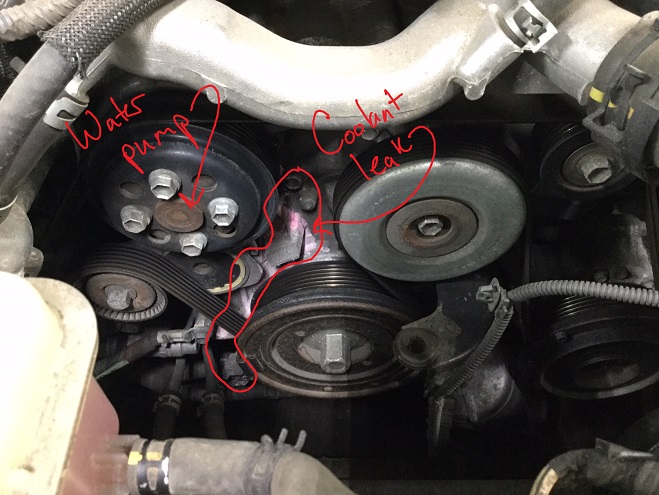
Seeing is believing. A thorough visual check can confirm or rule out many issues quickly.
Check for External Leaks
Park on a clean, flat surface overnight. Look for colored puddles, especially near the center-front of the engine. Open the hood and inspect the weep hole at the bottom of the pump, hose connections, and the pump-to-engine mounting surface. Even minor seepage can dry into white, chalky deposits, clear evidence of chronic leakage.
Look for Corrosion or Rust Buildup
White, crusty, or rust-colored residue around the pump pulley, bracket, or housing indicates repeated coolant exposure. This corrosion often forms at the weep hole or along gasket lines. Use only manufacturer-recommended coolant and flush every 30,000 to 60,000 miles to prevent internal corrosion and impeller damage.
Test Water Pump Bearings and Pulley for Play
Mechanical wear inside the pump can go unnoticed until it is too late. This test checks for bearing play directly.
Inspect for Pulley Wobble
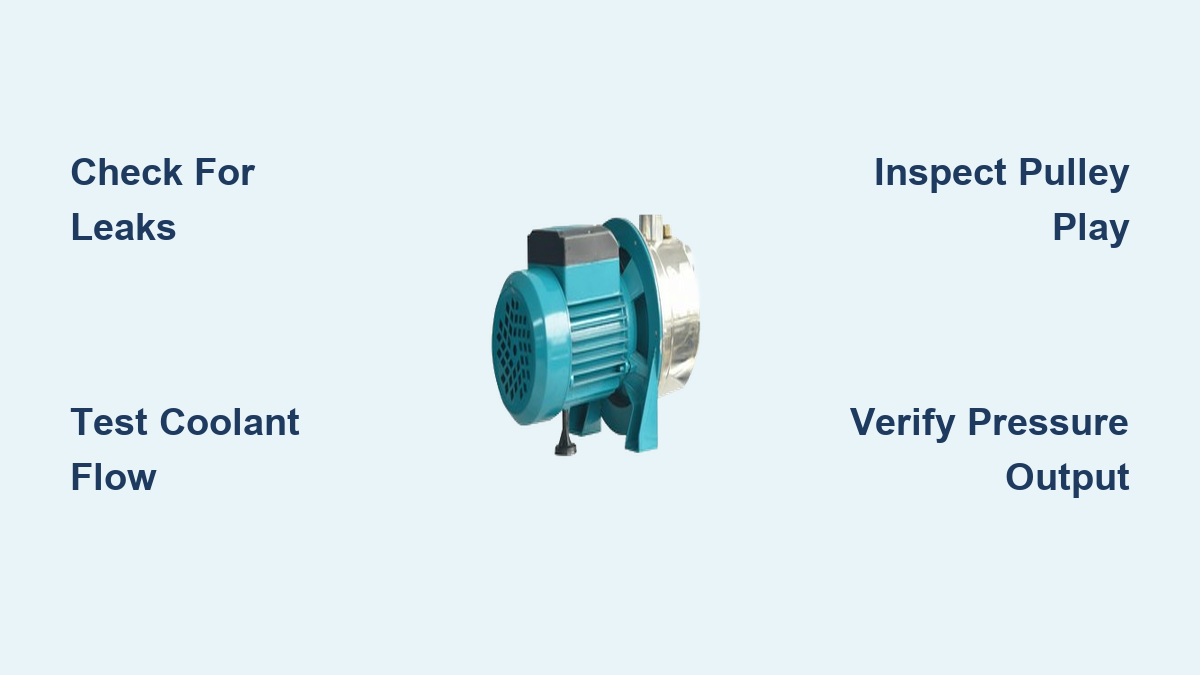
The engine must be off. Remove or loosen the drive belt for accurate results. Grasp the water pump pulley and gently move it side-to-side and in-and-out. Watch for radial play (side-to-side wobble) and axial play (in-and-out movement). Any detectable movement means the bearings are worn and the pump should be replaced. Even slight play can compromise the mechanical seal, leading to leaks.
Check Coolant Flow Through Upper Radiator Hose

A pump might spin but not pump coolant. These tests verify actual coolant movement.
Upper Radiator Hose Pressure Test
Start with a cold engine and radiator cap on. Let the engine warm up for 10 to 15 minutes. Once the upper hose is hot (thermostat open), squeeze it firmly and rev the engine to 2,000 to 2,500 RPM. You should feel a pulsing surge in the hose, proof of active flow. No pressure change suggests poor circulation.
Alternative Cold Start Test
Remove the radiator cap when the engine is cold. Start the engine and let it idle, then rev slightly. Coolant should rise or flow visibly in the filler neck. No movement indicates possible impeller damage.
Verify Heater Core Flow for Proper Circulation
The heater system provides another window into pump performance.
Check Both Heater Hoses
Start the engine and set the heater to max heat and fan speed. After 5 to 10 minutes, feel both heater hoses. Both hoses should be hot to the touch. One hose cool means restricted flow. This could indicate an air pocket, a clogged heater core, or a failing water pump. If combined with overheating, pump failure is likely.
Bleed Air from the Cooling System
Air pockets mimic pump failure by blocking flow and causing overheating.
Symptoms of Air Lock
Temperature gauge fluctuates. The engine overheats quickly after startup. The heater takes forever to warm up. These symptoms point to air in the system, not necessarily a bad pump.
How to Bleed the System
Cool the engine completely. Remove the radiator cap and fill to the top. Start the engine with the cap off. Let it warm up until the thermostat opens and the upper hose gets hot. Watch for bubbles and keep topping off coolant as the level drops. Once bubbles stop, replace the cap. Some cars have bleed screws on the thermostat housing. Consult your service manual.
Run the Professional Flow Verification Test
This is the most reliable way to confirm pump function, especially when symptoms are unclear.
Why It Is Essential
Modern water pumps often use plastic impellers that can crack or erode without noise, leaks, or wobble. The pump spins but moves no coolant. This test measures actual pressure generated by the pump.
Tools Needed
You will need a cooling system pressure gauge (0 to 20 PSI), a bolt or hose clamp, and coolant or water for refill.
Step-by-Step Procedure
Cool the engine completely. Remove the lower heater hose (return line from heater core to engine). Block the open port with a bolt or clamp to create a closed loop. Attach the pressure gauge to the upper heater hose outlet side. Start the engine and warm to operating temperature. Rev to 2,000 to 2,500 RPM and hold steady. Read the gauge.
Interpreting Results
10 to 15 PSI (70 to 100 kPa) means the pump is working properly. Below 7 PSI indicates restricted flow or pump failure. Zero pressure means broken impeller or severe blockage.
Rule Out Other Overheating Causes First
Overheating does not always mean a bad water pump. Do not replace parts blindly. Check these first.
Test Radiator Fan Operation
Start the engine and let it warm up. Watch electric fans. They should turn on around 200 to 220 degrees Fahrenheit. Turn on A/C to trigger the secondary fan. Fans not running cause overheating at idle, mimicking pump failure.
Check for Head Gasket Failure
Coolant disappearing without leaks could be a blown head gasket. Look for milky residue on the oil cap, bubbles in the radiator while the engine runs, sweet-smelling white exhaust smoke, or rough idle. Use a block tester to detect combustion gases in coolant. Apply 15 PSI to the cooling system. Rapid drop indicates internal leak.
Timing Belt-Driven Pumps: Special Considerations
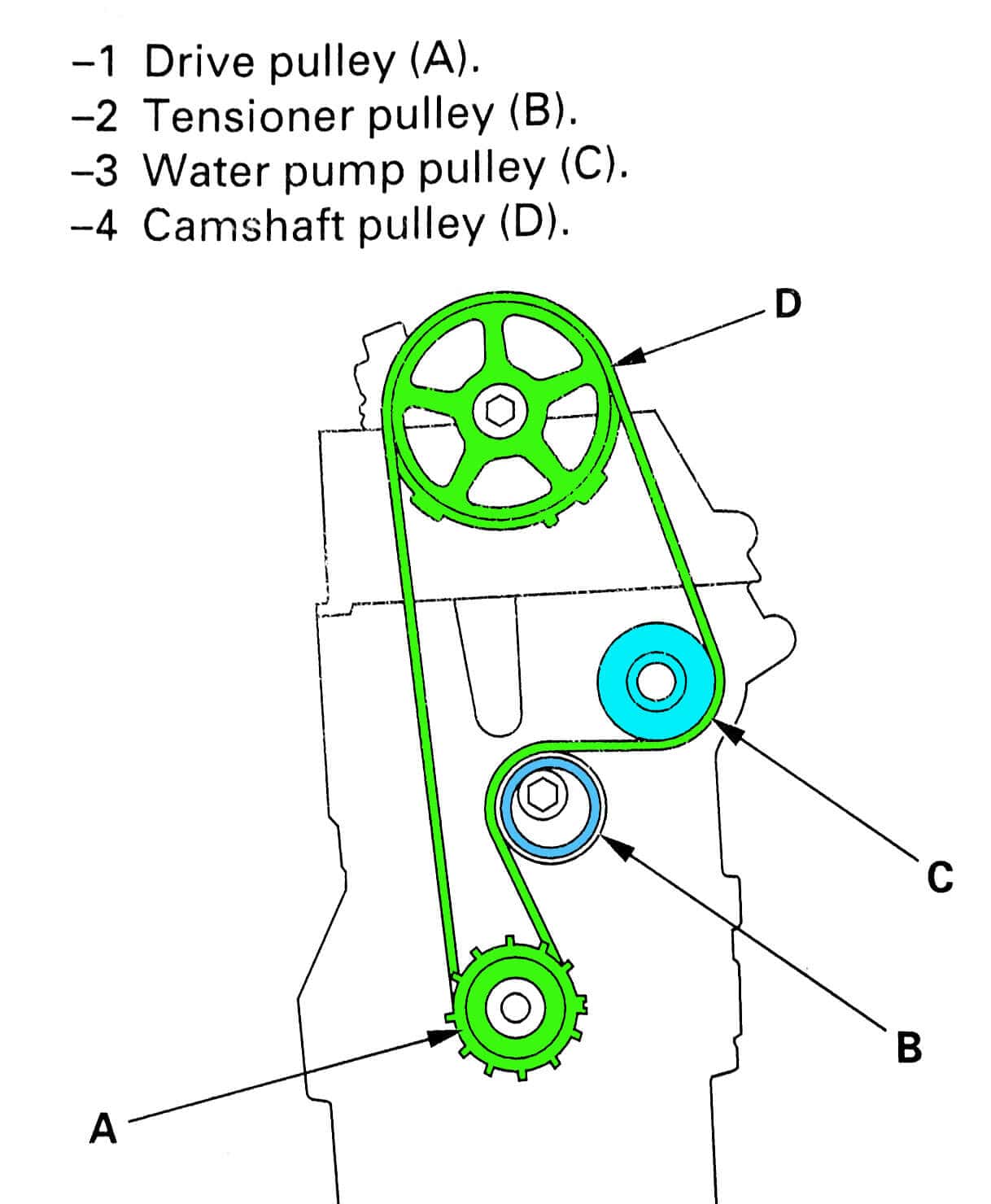
On many vehicles, the water pump is driven by the timing belt.
Replace Pump During Timing Belt Service
The recommended interval is every 90,000 to 105,000 miles. Replace the water pump at the same time as the timing belt. Labor cost is the bulk of the job. Doing it twice is expensive. Parts to replace together include the water pump, timing belt, tensioner and idler pulleys, thermostat, and coolant.
Risk Alert
A seized water pump bearing can snap the timing belt. On interference engines, that means bent valves and destroyed pistons.
Maintenance Tips to Extend Water Pump Life
Prevention beats repair. Follow these habits to keep your water pump healthy.
Use the Right Coolant
Always use manufacturer-specified type (OAT, HOAT, or IAT). Mix 50/50 with distilled water. Never mix coolant colors or types.
Flush Every 30,000 to 60,000 Miles
Old coolant turns acidic, corroding the pump impeller and housing.
Inspect During Oil Changes
Quick monthly checks can catch issues early. Look for leaks. Listen for new noises. Check for crusty deposits.
Replace Proactively
If you are near timing belt service mileage, replace the pump even if it seems fine. A $50 pump can save a $2,000 engine job.
Key Takeaways for Checking Your Car’s Water Pump
Do not ignore a small drip or occasional overheating. The water pump is a wear item. It will fail eventually. By learning how to check a water pump on a car, you take control of your vehicle’s health.
Listen for new noises from the front of the engine. Look for leaks and deposits around the pump housing. Test for flow and pressure using the methods outlined above. Replace proactively during major services like timing belt replacement. A $150 repair today can prevent a $3,000 engine rebuild tomorrow.
Frequently Asked Questions About Checking a Water Pump on a Car
How do I know if my water pump is failing?
Watch for overheating, coolant leaks under the front of the car, low coolant without visible leaks, and unusual noises like grinding or rumbling from the engine front. The weep hole leaking and crusty deposits around the pump are also telltale signs.
Can I test my water pump without removing it?
Yes. You can check for pulley wobble (bearing play), perform the upper radiator hose pressure test, verify heater core flow, and run the professional flow verification test. These procedures confirm pump function without disassembly.
What happens if I drive with a bad water pump?
Driving with a failing water pump risks engine overheating, which can warp cylinder heads, blow head gaskets, or cause complete engine seizure. The damage can quickly escalate from a $150 repair to a $3,000 engine rebuild.
How often should I replace my water pump?
Replace the water pump during timing belt service, typically every 90,000 to 105,000 miles. Even without symptoms, proactive replacement saves labor costs since the pump is behind the same cover.
Can a water pump fail without leaking or making noise?
Yes. Modern pumps with plastic impellers can crack or erode silently. The pump spins but does not circulate coolant. The flow verification test (10 to 15 PSI) is the only way to detect this type of internal failure.