Imagine needing fresh water for your garden, livestock, or off-grid home, and the solution flows right past your property. But how do you actually move water from that stream to where you need it? Pumping water from a stream requires more than dropping a pump in the water. You need the right equipment, proper intake design, accurate system sizing, and legal compliance.
This guide walks you through every step. You will learn how to choose the right pump type, calculate your system’s needs using Total Dynamic Head, protect your equipment from debris, and stay compliant with local water laws. Whether you are filling a 50-gallon tote or supplying indoor plumbing, this article covers submersible pumps, jet pumps, ram pumps, and even zero-electricity options.
Check Your Legal Rights First
Before installing any equipment, confirm you are allowed to pump from the stream. Water laws vary significantly by region and can override property ownership.
Understand Water Rights in Your State
Water rights determine how much water you can extract and for what purposes. Two primary legal frameworks govern surface water use in the United States.
Riparian Rights apply in the Eastern United States. If your land borders the stream, you may use water reasonably for domestic, livestock, or garden purposes. However, you cannot resell water or transfer it off-property. Usage must not interfere with downstream users.
Prior Appropriation dominates Western states like California, Colorado, and Nevada. This system operates on a “first in time, first in right” basis. The first person to divert and beneficially use water gains senior rights. During droughts, junior users may be cut off. You must file a claim with your state water agency to establish your rights.
Warning: Even on private property, surface water is often considered a public trust resource. Unauthorized pumping can result in significant fines.
Permits May Be Required
Contact your county environmental office or state water board before installing a permanent system. Permits are typically required when pumping continuously, extracting more than a few hundred gallons per day, or installing permanent pipes and storage tanks.
Define Your Water Use
Your intended purpose determines system complexity, equipment needs, and filtration requirements.
Outdoor Use: Irrigation, Livestock, and Washing
Outdoor applications do not require pressurized plumbing. A simple storage tank system works well for these needs.
Use a storage tank between 50 and 1,000 gallons to collect water. Fill the tank during daylight hours or peak solar output if using solar pumps. Distribute water via gravity-fed drip lines or hose bibs.
A 55-gallon IBC tote placed on an elevated stand can gravity-feed garden beds without any pump pressure. This setup is ideal for irrigation systems and livestock watering.
Indoor Use: Drinking, Showers, and Sinks
Indoor use requires a full pressurized system with additional components.
You will need filtration including sediment removal, carbon treatment, and UV or reverse osmosis purification. A pressure tank maintaining 30 to 80 psi is essential for consistent water delivery. The pump must be capable of sustained delivery, making submersible or jet pumps the best choices.
Code Note: Indoor systems connected to plumbing may require health department approval. Check local regulations before installation.
Calculate System Requirements
A pump’s performance depends on flow rate measured in GPM and Total Dynamic Head, not just the manufacturer’s label ratings.
Determine Your Flow Needs
Estimate how much water you will use simultaneously during peak demand.
A standard faucet delivers 1 to 2 GPM. A showerhead uses 2 to 3 GPM. A garden hose flows approximately 5 GPM. A washing machine requires 3 to 5 GPM.
Add your expected simultaneous uses together. For example, running a shower plus a kitchen sink equals approximately 5 GPM total demand.
Calculate Total Dynamic Head
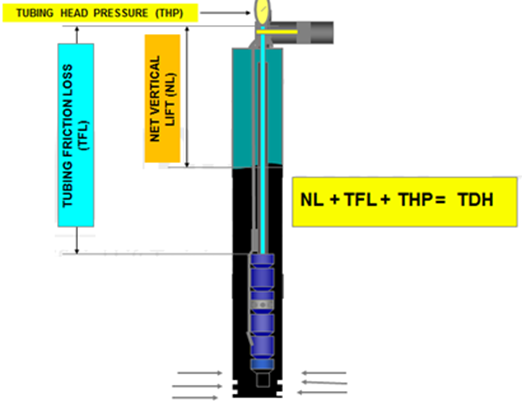
Total Dynamic Head represents the total resistance your pump must overcome, measured in feet. Use this formula:
TDH equals Static Head plus Friction Loss plus Pressure converted to feet.
Static Head is the vertical distance from the stream surface to your highest outlet. If your house is 20 feet above the stream, your static head equals 20 feet.
Friction Loss is the resistance from water moving through pipes. It depends on pipe diameter, length, material, and the number of bends and fittings. Use 2-inch PVC for long runs to minimize loss. One hundred feet of 1-inch hose at 10 GPM creates approximately 10 feet of friction loss. Online friction loss calculators provide precise figures for your specific setup.
Operating Pressure converts to feet by multiplying psi by 2.31. Fifty psi equals 115.5 feet of head.
Example Calculation: Static head of 25 feet plus friction loss of 10 feet plus pressure equivalent of 115.5 feet equals a Total Dynamic Head of 150.5 feet.
Match Pump to Your Requirements
Use the manufacturer’s pump curve chart to verify suitability. Find your required GPM on the bottom axis and your TDH on the side axis. If the intersection point lands on or below the curve, the pump will work. The best efficiency occurs near the middle of the curve.
Reality Check: A pump labeled “10 GPM” only delivers that rate at low head. Performance drops significantly when pumping uphill.
Choose the Right Pump Type
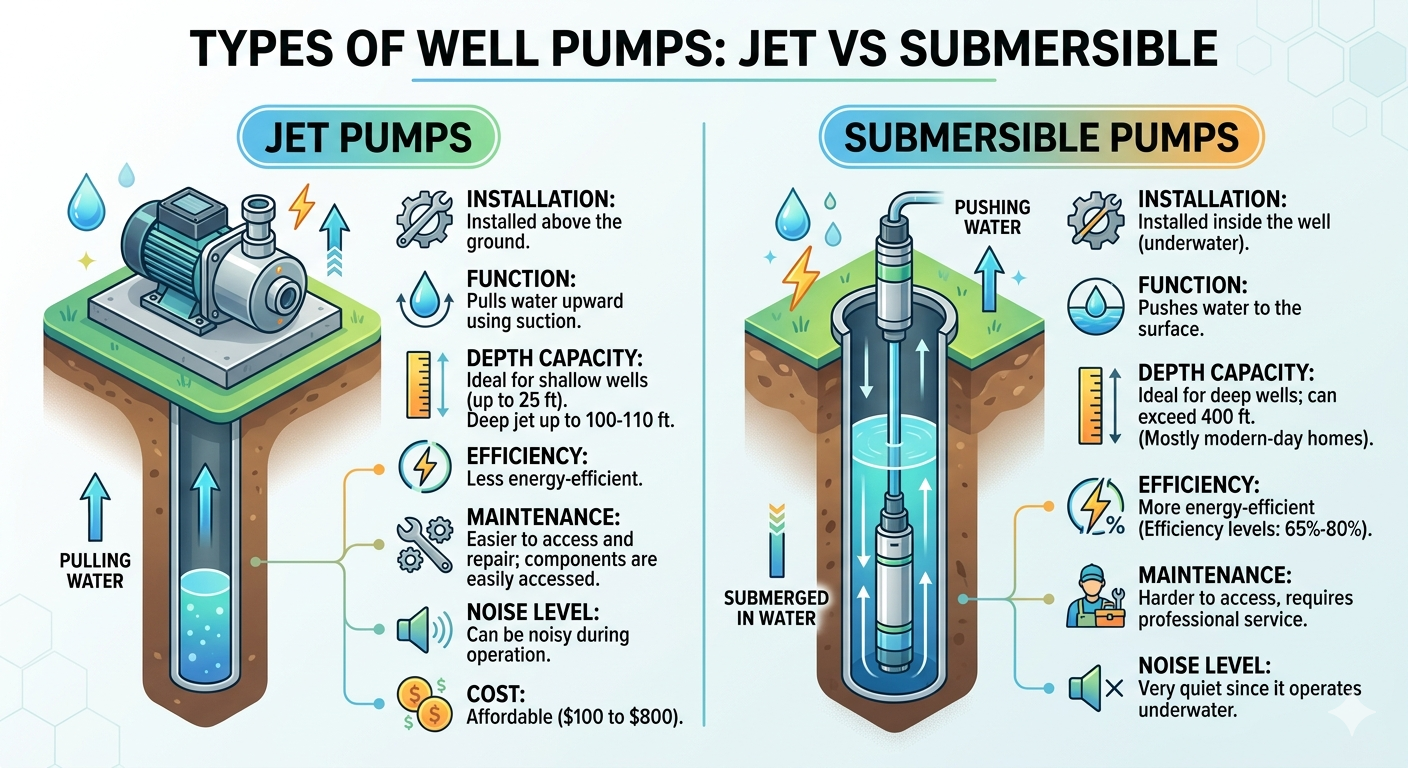
Select your pump based on available power, water depth, head height, and flow requirements.
Submersible Pump: Best for Most Stream Applications
Submersible pumps are ideal for depths of 2 feet or more where power is available.
Advantages include no priming required, ability to handle high head exceeding 100 feet, quiet operation, and efficient design. The pump sits underwater and pushes water upward rather than pulling it.
Setup involves suspending the pump with floating rope and a counterweight rock. Use a perforated bucket as a pre-filter to keep debris away from the intake. Run submersible cable to your power source.
A 1/3 HP submersible pump can move 33 GPM from a creek to an 8-foot-high tank, making it suitable for most residential stream applications.
Jet Pump: Shallow Suction with High Flow
Jet pumps work well when the pump can be placed near the water level on the stream bank.
The maximum suction lift is 25 feet due to atmospheric pressure limits. This makes jet pumps suitable for shallow streams where you can position the pump close to the water surface.
Jet pumps must be primed before first use by filling the casing with water. Add a sediment filter at the intake to prevent damage.
Pro Tip: Place the pump as close to water level as possible. Push water uphill rather than pulling it through long suction lines.
Hydraulic Ram Pump: Zero Electricity Needed
Ram pumps use gravity and water hammer effect to move water without any external power source.
Requirements include a flowing stream, a minimum of 3 to 5 feet of drop from source to pump, and continuous flow. Spring-fed streams work best.
How it works: Water flows down the drive pipe, the waste valve slams shut creating a pressure spike, and the check valve opens forcing water uphill. The lift ratio is approximately 1 to 7, meaning 5 feet of fall can lift water 35 feet vertically. Output ranges from 0.5 to 2 GPM, perfect for slow tank filling.
Setup tips: Use 2-inch PVC with holes for the intake, weighted with rocks. The drive pipe should be 1.5-inch PVC with adjustable length. A 6-foot vertical stand pipe via T-junction keeps the system primed. Prime using a drill-powered pump at the waste valve. Use 1/2-inch polyethylene for the delivery pipe, upgrading to 3/4-inch for long runs.
Real-World Example: A ram pump successfully lifts water into a 55-gallon tote on a hill with no fuel and no electricity, using only physics.
Solar-Powered Pump: Off-Grid Reliability
Solar pumps work excellently in remote locations where grid power is unavailable.
Components needed: Solar panels sized to your daily water needs, a charge controller, a battery bank for nighttime operation, and a DC-compatible submersible or jet pump.
Match panel wattage to pump demand and TDH requirements. Solar systems can run indefinitely with proper component sizing.
Alternative Option: The Bunyip pump operates similarly to a ram pump using water-powered pulsing.
Design Efficient Intake Systems
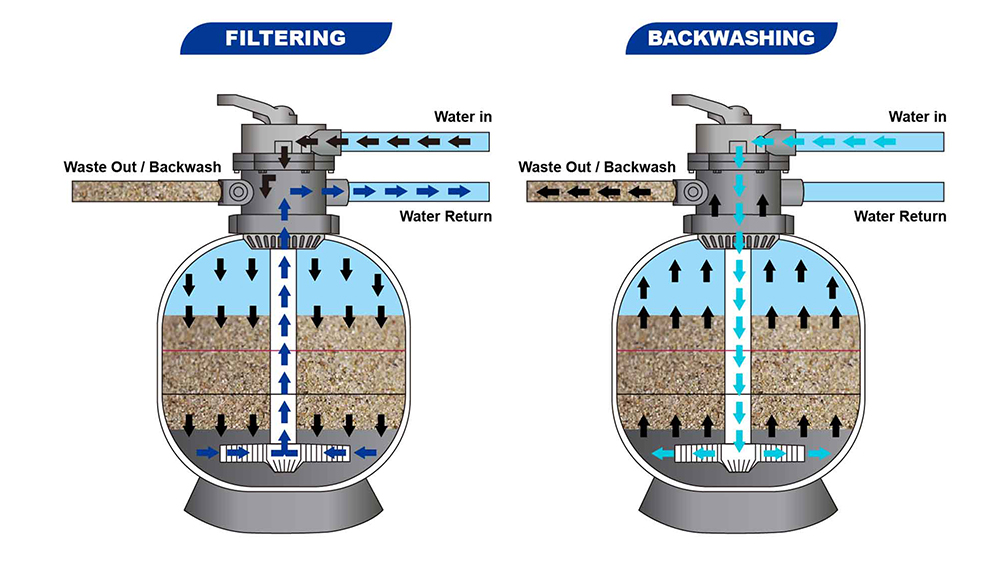
A clogged intake kills performance quickly. Protecting your pump from debris is essential.
Shallow Water? Dig a Sump Pit
When water depth is less than 6 inches, excavate a deeper hole in the streambed. Line the hole with rocks or gravel to allow water to seep in while keeping the pump submerged.
Users report successfully pumping from 4 inches of water using an electric sump pump placed in a dug sump hole lined with rocks.
Use a Perforated Bucket Filter
Cut holes in the sides of a 5-gallon bucket. Submerge it in the sump and place the submersible pump inside. This acts as a pre-filter, keeping the pump intake clear.
Pro Upgrade: Stack two buckets and fill the outer layer with gravel. This creates a natural pre-filter that removes sediment before water reaches the pump.
Build a Holding Dam
Use cinder blocks or logs to create a small reservoir in the stream. This holds over 1,000 gallons and allows silt to settle before pumping. Calm water improves pump intake clarity and reduces clogging.
Install Multi-Stage Intake Filters
Blocking debris at multiple stages prevents clogging and extends pump life.
Stage 1: Coarse Mesh Screen
Wrap 1/2-inch hardware cloth around a milk crate or bucket. This stops sticks, leaves, and pebbles from reaching the pump.
Stage 2: Fine Mesh Screen
Layer window screen over the coarse mesh. This catches silt and fine particles that would otherwise clog the pump.
Pro Tip: Extend the screen beyond the pipe opening. More surface area means less clogging and reduced velocity at any single point.
Stage 3: Side-Inlet Pipe Design
Cut slits or holes along the sides of the intake pipe. This reduces suction speed at any single point, prevents vortexing, and minimizes sediment swirl.
Stage 4: Seal the Structure
Use a cinder-block wall with a plywood shield to direct flow into the pipe. Slide the plywood to block unwanted side flow. Seal gaps with sandbags.
Use Proper Pipe and Reduce Friction
Pipe choice impacts flow significantly. Small diameter hoses restrict water movement more than most people realize.
Best Pipe Materials
PVC pipe in 1 to 2 inch diameters offers smooth interior surfaces, low friction, and durability. Polyethylene tubing provides flexibility and freeze resistance for uneven terrain.
Avoid narrow rubber hoses. They kink easily and create high friction loss.
Friction Reduction Tips
Use 2-inch main lines for runs exceeding 50 feet. Minimize elbows and bends. Keep pipes low and flat to prevent air locks. Support pipes on the ground to prevent dragging and damage.
Golden Rule: Push water uphill whenever possible. Long suction lifts are inefficient and limited to approximately 25 feet maximum.
Add Storage and Pressure Systems
Storage and pressure systems transform intermittent stream flow into reliable water supply.
Storage Tank for Outdoor Use
Storage tanks hold 50 to 1,000 gallons or more at ambient pressure. Fill during optimal times and use whenever needed. Elevate the tank on a stand to enable gravity-fed distribution.
Efficiency Hack: Use multiple totes. Fill one while using another to maintain continuous supply.
Pressure Tank for Indoor Plumbing
Pressure tanks hold water at 30 to 80 psi, preventing the pump from cycling constantly. This is required for showers, toilets, and sinks.
Key Difference: A storage tank holds water at normal pressure. A pressure tank maintains water under force for household fixtures.
Filter for Safe Water Use
Stream water requires treatment before drinking or indoor use.
Non-Potable Applications
For irrigation, livestock watering, or washing, a basic sediment filter removing 5 to 20 micron particles is sufficient.
Potable Applications
For drinking, cooking, and bathing, install a point-of-entry filtration system with three stages. First, use a sediment filter to remove dirt. Second, add a carbon filter to reduce chemicals and odors. Third, install a UV purifier to kill bacteria including Giardia and E. coli.
For the highest quality drinking water, add reverse osmosis under the sink.
Maintain and Winterize Your System
Regular maintenance keeps your system running efficiently for years.
Seasonal Maintenance
Flush the intake line via a screw cap installed at the end. Clean screens and sumps seasonally. Replace torn mesh or degraded seals.
Winter Preparation
Drain all above-ground pipes and pumps before freezing temperatures arrive. Store equipment indoors. This prevents freeze cracks and seal damage.
Prevent Seizing
Run the pump for 30 seconds monthly if it sits idle. This keeps seals lubricated and prevents mechanical binding.
Try Low-Tech Emergency Methods
When pumps fail or power is unavailable, simple methods can provide water.
Bucket Dipping with Sump
Dig a rock-lined hole in the stream bed. Dip 5-gallon buckets repeatedly. This method is surprisingly efficient for small volumes and requires no equipment.
Siphon Method
Siphons work only downhill. Prime the line with your mouth or a small pump, then let gravity transfer water between tanks.
Collapsible Water Bags
Lay collapsible bags in shallow water to fill them. Seal and carry. No power or pipes required.
Recommended Systems by Scenario
Choose your system based on your specific situation.
Shallow stream with nearby power: Use a submersible sump pump with 1/3 to 1 HP motor, 10-gauge extension cord, perforated bucket filter, and 1-inch hose.
No power, temporary use: Use a hand bilge pump with a 5-gallon bucket and screen filter.
Off-grid, permanent installation: Use a solar-powered or ram pump with panels, battery backup, storage tank, and proper piping.
High-volume transfer: Use a 1 to 2 HP trash pump with 2-inch intake, 100-foot hose, and appropriate fuel source.
Minimal effort, long-term: Build a holding dam with a riser pipe and dual-screen intake feeding a vertical pump.
Emergency preparation: Dig a sump and use bucket transfer with a shovel, rocks, buckets, and cloth filter.
Key Takeaways for Pumping Water from a Stream
Successfully pumping water from a stream requires careful planning and the right equipment. Start by checking local water laws and obtaining necessary permits. Calculate your Total Dynamic Head and required flow rate before purchasing a pump. Match your pump type to your specific conditions, whether that is a submersible for deep water, a jet pump for shallow access, or a ram pump for off-grid operation.
Design your intake system with a sump pit and multi-stage filtration to prevent clogging. Use large-diameter pipes to minimize friction loss. Push water uphill rather than relying on long suction lines. Install storage for outdoor use or a pressure tank for indoor plumbing. Treat water appropriately for your intended application.
Maintain your system seasonally and winterize before freezing weather arrives. With proper setup, a stream can provide reliable water for irrigation, livestock, or domestic use for decades.
Final Tip: Prime your system, connect the power, and let gravity do the work. With the right setup, your stream becomes your most dependable water source.
Frequently Asked Questions About Pumping Water from a Stream
Do I need a permit to pump water from a stream on my property?
Permits depend on your location and intended use. Western states with prior appropriation systems often require filing a water right claim. Eastern states with riparian rights may allow limited domestic use without permits. Contact your state water resources department for specific requirements in your area.
What is the minimum water depth needed to pump from a stream?
With proper setup including a sump pit, you can pump from water as shallow as 4 to 6 inches. Electric submersible sump pumps work best in shallow conditions. Gas-powered trash pumps typically require at least 8 inches of depth to maintain prime.
How do I calculate Total Dynamic Head for my stream pump?
Total Dynamic Head equals Static Head plus Friction Loss plus Operating Pressure converted to feet. Static Head is your vertical rise from stream to outlet. Friction Loss depends on pipe length, diameter, and bends. Pressure converts to feet by multiplying psi by 2.31. Add these three values together for your TDH.
Can I drink water pumped directly from a stream?
No. Stream water contains biological contaminants like Giardia and E. coli, plus sediment and potential chemical runoff. For drinking water, install multi-stage filtration including sediment filters, carbon treatment, and UV purification or reverse osmosis.
What pump works without electricity?
Hydraulic ram pumps move water using gravity and water hammer effect. They require 3 to 5 feet of elevation drop from the source and continuous flowing water. Solar-powered pumps also operate without grid electricity when paired with batteries.
How far can I pump water uphill from a stream?
The distance depends on your pump’s head capacity and your system’s friction loss. Most submersible pumps handle 100 feet or more of head. A 1/3 HP submersible can easily pump 33 GPM to an 8-foot elevation. Calculate your TDH to determine actual range for your specific setup.