
Imagine your farm or homestead with water flowing reliably to crops, livestock, and your home without diesel fuel, grid electricity, or any fuel costs. A solar water pump converts sunlight into electricity to power a mechanical pump, moving water from wells, rivers, or boreholes to storage tanks or irrigation systems automatically. Unlike traditional pumps, solar systems run only during daylight hours, producing zero emissions and requiring no manual refueling.
In this guide, you will learn exactly how sunlight becomes water flow, from the photovoltaic effect in solar panels to the smart sensors that prevent dry-running and overflow. You will understand each component’s role, how automation works, and what system configuration suits your specific needs.
The Step-by-Step Process: From Sunlight to Water Flow
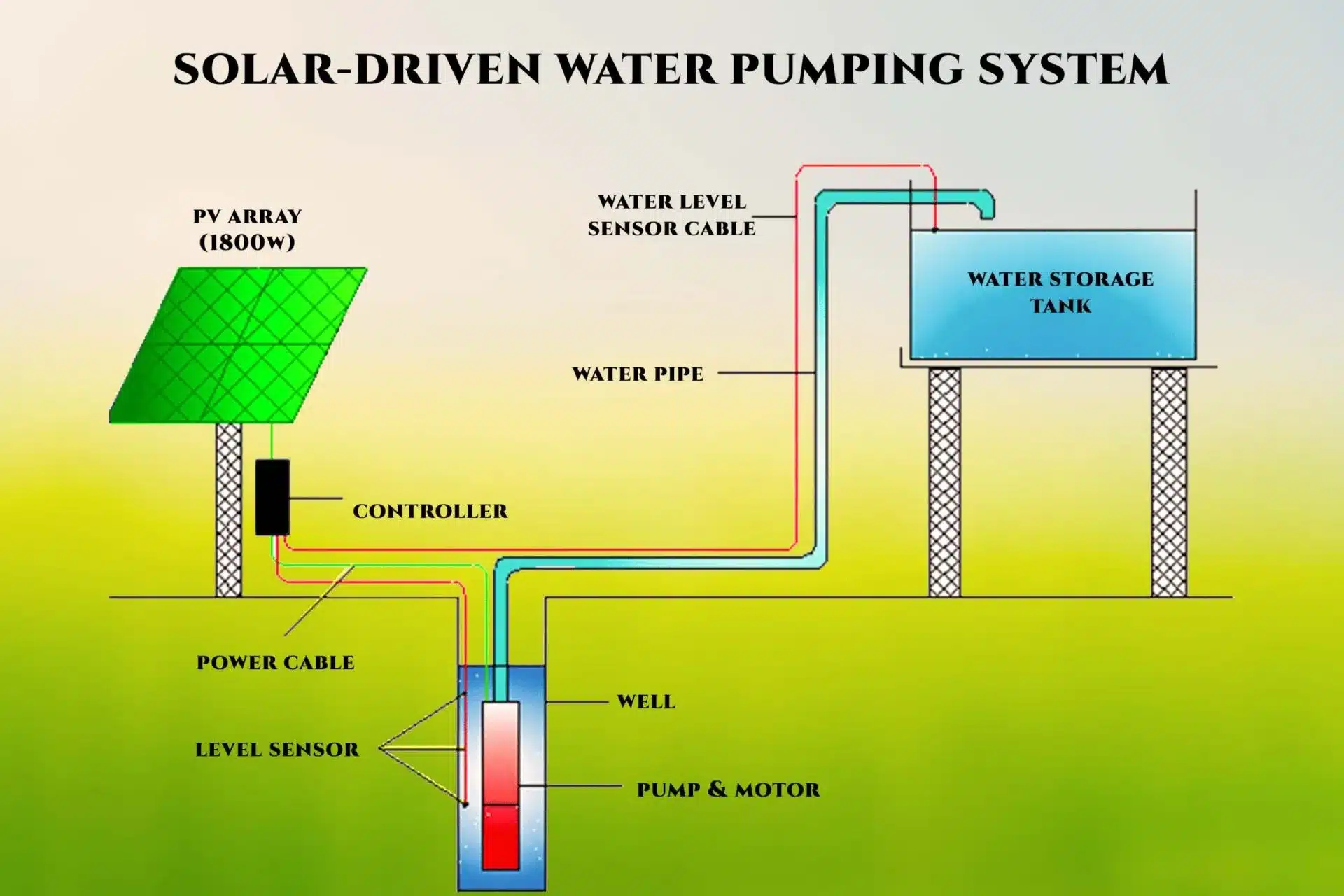
A solar water pump transforms energy through a clear sequence that requires no human intervention once installed. Understanding this flow helps you troubleshoot issues and optimize performance.
Converting Sunlight into Electricity
Solar panels contain silicon-based photovoltaic cells that absorb photons from sunlight. When photons strike these cells, they knock electrons loose, generating direct current electricity through the photovoltaic effect. This DC power flows directly to the pump controller, with output varying based on sunlight intensity, panel angle, and weather conditions. On cloudy days, the system operates at reduced capacity but continues functioning.
Power Regulation and Pump Activation
The raw electricity from solar panels is unstable and fluctuates with changing light conditions. A pump controller acts as a smart regulator, stabilizing this power before sending it to the motor. It monitors conditions and only allows power flow when safe and efficient. Once regulated, electricity drives the pump motor, spinning an impeller or rotor to create pressure and move water. The system starts automatically at sunrise and shuts down at dusk or when water demands are met.
Automatic Delivery and System Protection
Water is drawn from the source and pushed through pipes to a storage tank or irrigation system. Sensors monitor water levels continuously, signaling the controller to stop the pump when the tank fills or when water in the well drops too low. This prevents overflow and protects the pump from dry-running damage. When water is used from the tank, the system restarts automatically.
Essential Components of a Solar Water Pump System

Each component plays a critical role in efficiency, reliability, and automated operation. Knowing what each part does helps you choose the right system and maintain it properly.
Solar Panels: The Power Source
Solar panels generate the electricity needed to run the entire system. Most residential setups use 24V or 48V DC panels, wired in series to match pump voltage requirements. Small systems may need only 150W, while deep-well applications can require over 1,000W. Panels typically last 25 to 30 years, making them the most durable component. Adding extra panels is often more cost-effective than installing solar trackers, which tilt panels toward the sun.
Pump Controller: The Smart Brain
The controller optimizes performance and protects equipment from damage. MPPT controllers extract up to 30% more energy from panels by adjusting voltage and current in real time, making them ideal for variable weather. Linear controllers are simpler and cheaper but less efficient. Essential protection features include dry-run protection, overvoltage shutdown, tank-level sensing, and adjustable speed control.
Water Pump Types and Their Uses
The pump type depends on your water source depth and flow requirements. Submersible pumps install underground in boreholes and work best for depths over 65 feet. Surface pumps mount above ground and suit shallow sources like ponds or rivers within 3 to 6 meters. Centrifugal pumps use a spinning impeller for high flow, while positive displacement pumps move water in sealed chambers and maintain lift even at low speeds, perfect for deep wells and low-light conditions.
Motor, Pipes, and Storage Tank
Most solar pumps use brushless DC motors for high efficiency and 10 to 20-year lifespans, operating at 12V, 24V, or 48V depending on system size. PVC, HDPE, or galvanized steel pipes carry water from source to destination, with small-diameter pipes often sufficient due to continuous low-flow pumping. Storage tanks hold 3 to 10 days of water, with elevated placement enabling gravity-fed pressure without booster pumps.
Sensor-Based Automation
Modern systems use sensors for fully autonomous operation. Tank-level sensors detect when storage is full and signal the controller to stop pumping, with pumps shutting down within 10 seconds in tested installations. Dry-run protection sensors placed about 30 cm above the pump in boreholes prevent motor damage when water levels drop too low, often with a 20-minute delay before restart to allow the well to refill.
Choosing the Right Solar Pump Configuration
Different setups match different needs, budgets, and reliability requirements. Selecting the right configuration prevents overspending or inadequate performance.
Direct Solar-Powered Systems
These systems connect panels directly to the pump without battery storage, offering the lowest cost and simplest design. They work идеально for irrigation, livestock watering, and daytime-only use since they cannot operate at night or during extended cloud cover. A storage tank is essential to hold daytime water for nighttime use. Ranchers often use this setup to fill a 5,000-liter tank by noon, then gravity-feed water to cattle throughout the day.
Solar with Battery Backup
Batteries store excess solar energy to power the pump when sunlight is unavailable, enabling nighttime operation and pressurized plumbing systems. Required components include deep-cycle batteries, a charge controller, and an inverter if using an AC pump. The drawbacks are higher upfront cost, batteries requiring replacement every 5 to 10 years, and increased complexity. This setup suits homes needing 24/7 water access.
Hybrid Power Systems
These combine solar with grid power, generator, or wind energy for uninterrupted operation. The controller automatically switches between power sources when solar output drops, ensuring continuous water supply. Hybrid systems work best for commercial farms, community water projects, or locations with unreliable sunlight where constant water availability is critical.
How Automation Keeps Your Pump Running
Modern solar water pumps are intelligent, self-regulating systems that adapt to conditions without manual input. Understanding automation helps you trust the system and know what to check if problems arise.
Automatic Start and Stop Logic
The system follows a simple daily cycle. Sunlight generates power, and if the tank level is low, the controller activates the pump. When the tank fills or the source water drops too low, the pump shuts off automatically. When water is used from the tank, the cycle restarts. This loop runs daily with no manual intervention, making the system truly hands-off once installed.
Adjustable Speed Control
Users can fine-tune pump speed based on demand. Reducing speed works for gentle drip irrigation or low water periods, extending pump life and improving efficiency. Increasing speed maximizes output during peak sun hours for high-demand situations. This flexibility lets you match water delivery to actual needs rather than running at full capacity constantly.
Solar Trackers: Are They Worth It?
Trackers tilt panels to follow the sun, increasing daily energy harvest by up to 55%. The benefits include higher energy capture and potentially smaller panel arrays. The drawbacks are higher cost, moving parts requiring maintenance, and reduced effectiveness in cloudy regions. With solar panel prices falling, adding extra panels is typically more cost-effective than installing trackers for most applications.
Matching Your Water Needs to Solar Pump Capacity
Proper sizing ensures reliable performance without overspending. Undersized systems fail to deliver enough water, while oversized ones waste money on unnecessary capacity.
Key Sizing Parameters
You need four main inputs to size a system correctly. Daily water requirement is how much water you need in liters or gallons. Total dynamic head is the vertical lift plus friction loss from source to delivery point. Static water level is the depth to water in your well. Peak sun hours at your location, typically 4 to 7 hours per day, determines how long the system can operate at full capacity.
Flow Rate Calculation
Use this formula to determine required flow rate. Flow rate in gallons per hour equals daily water need divided by peak sun hours. For example, 900 gallons per day divided by 6 sun hours equals 150 gallons per hour needed. This calculation gives you the minimum pump capacity required to meet your daily water needs during optimal sunlight.
Solar Panel Sizing
Calculate panel requirements using pump power and daily runtime. A 746-watt pump running 5 hours daily needs 3,730 watt-hours per day. Accounting for system losses at 1.3 times yields approximately 4,849 watt-hours per day. Dividing by 5 peak sun hours suggests around 970 watts needed, then oversize by 10 to 20% for a recommended 1,000 to 1,200-watt panel array.
Where Solar Water Pumps Are Used
Solar water pumps serve diverse needs across residential, agricultural, and community settings. Understanding common applications helps you envision how the technology applies to your situation.
Domestic Water Supply
Homes, cabins, and villages use solar pumps with elevated tanks for gravity-fed pressure, eliminating the need for electric booster pumps. Some installations include battery backups for consistent indoor plumbing and pressurized water throughout the day and night.
Livestock Watering
Ranchers in the Americas, Australia, and Africa widely use solar pumps to distribute water over 5 or more kilometers to remote pastures. A 200-watt system can deliver 900 gallons per day, enough for 30 cattle. Portable kits allow movement between seasonal water sources as grazing patterns change.
Agricultural Irrigation
Orchards, vineyards, and small farms benefit from solar irrigation, especially when paired with drip systems that reduce water needs by over 50%. Direct solar with water storage and gravity feed offers the lowest total cost for off-grid farming operations.
Community Water Projects
NGOs deploy solar pumps in developing regions to reduce reliance on fuelwood, improve health outcomes, and free time for productive work. These projects transform water access in areas without grid infrastructure.
Why Choose a Solar Water Pump: Benefits and Drawbacks
Solar water pumps offer significant advantages but also have limitations to consider. Understanding both helps you make an informed decision.
Key Benefits
Solar pumps eliminate fuel and electricity costs after installation, with zero greenhouse gas emissions during operation. They work идеально in remote locations without grid or fuel supply, requiring minimal maintenance with few moving parts. Systems are scalable and expandable as needs grow, and they save significant time collecting water, particularly benefiting women and children in developing regions.
Common Limitations and Solutions
Weather dependence reduces output on cloudy days. Size the system for your worst-case month or add battery backup. Without batteries, no nighttime operation occurs. Use a large storage tank to hold daytime water for evening use. High upfront costs can be offset by government rebates available in some regions. Always install dry-run protection sensors to prevent motor damage from low water levels.
Keeping Your Solar Water Pump Running for Decades
With proper care, solar water pumps provide decades of reliable service. Understanding maintenance needs helps you plan for long-term operation.
Expected Lifespans
Solar panels last 25 to 30 years or longer. Pumps typically endure 10 to 20 years with proper maintenance. Controllers last 10 to 15 years. Batteries, if used, require replacement every 5 to 10 years. Pipes and tanks last 10 to 20 years depending on material and installation quality.
Maintenance Tasks
Inspect electrical connections annually for corrosion or looseness. Clean solar panels every 6 months to remove dust and debris that reduces efficiency. Test sensors regularly to ensure accurate level detection and dry-run protection. Check pipe connections for leaks and verify tank float switches move freely.
Frequently Asked Questions About Solar Water Pumps
Can a solar water pump work at night?
Solar pumps without batteries cannot operate at night because they rely entirely on sunlight for power. However, storing water in an elevated tank during daylight hours allows gravity-fed water delivery at night without additional power sources.
How deep can a solar water pump lift water?
Submersible solar pumps can lift water from depths exceeding 200 feet. Small systems under 150 watts can lift 1.5 gallons per minute from 65 meters depth, delivering about 900 gallons over a 10-hour sunny day.
Do solar water pumps work on cloudy days?
Solar pumps continue operating on cloudy days but at reduced capacity. Output drops proportionally to sunlight reduction, which is why proper sizing for your lowest-sunlight month and adequate storage tanks are essential for reliable service.
What happens if the well runs dry?
Dry-run protection sensors detect low water levels and shut off the pump before damage occurs. These sensors are placed approximately 30 cm above the pump and may include a delay timer allowing the well to refill before automatic restart.
How much does a solar water pump cost?
Costs vary widely based on depth, flow requirements, and configuration. Small surface systems start around $500, while deep-well submersible systems with batteries can exceed $5,000. Long-term savings on fuel and electricity often offset upfront costs within 3 to 7 years.
Are solar water pumps difficult to maintain?
Solar water pumps require minimal maintenance compared to diesel or electric alternatives. Annual inspections, periodic panel cleaning, and sensor testing are the primary needs. There are no fuel filters to change, no oil to check, and no engine components to repair.
Key Takeaways for Understanding Solar Water Pump Systems
A solar water pump converts sunlight into electricity through photovoltaic panels, regulates that power with a smart controller, and uses the energy to move water through a mechanical pump. The entire system operates automatically during daylight, with sensors preventing dry-running and overflow while storage tanks ensure water availability when the sun is not shining. Choosing the right configuration depends on your specific needs: direct solar for daytime irrigation, battery backup for 24/7 home supply, or hybrid systems for commercial or community applications. Proper sizing using your daily water needs, well depth, and peak sun hours prevents undersizing or overspending. With components lasting 10 to 30 years and minimal maintenance required, solar water pumps offer a reliable, cost-effective solution for off-grid water needs ranging from small homesteads to community water projects.