
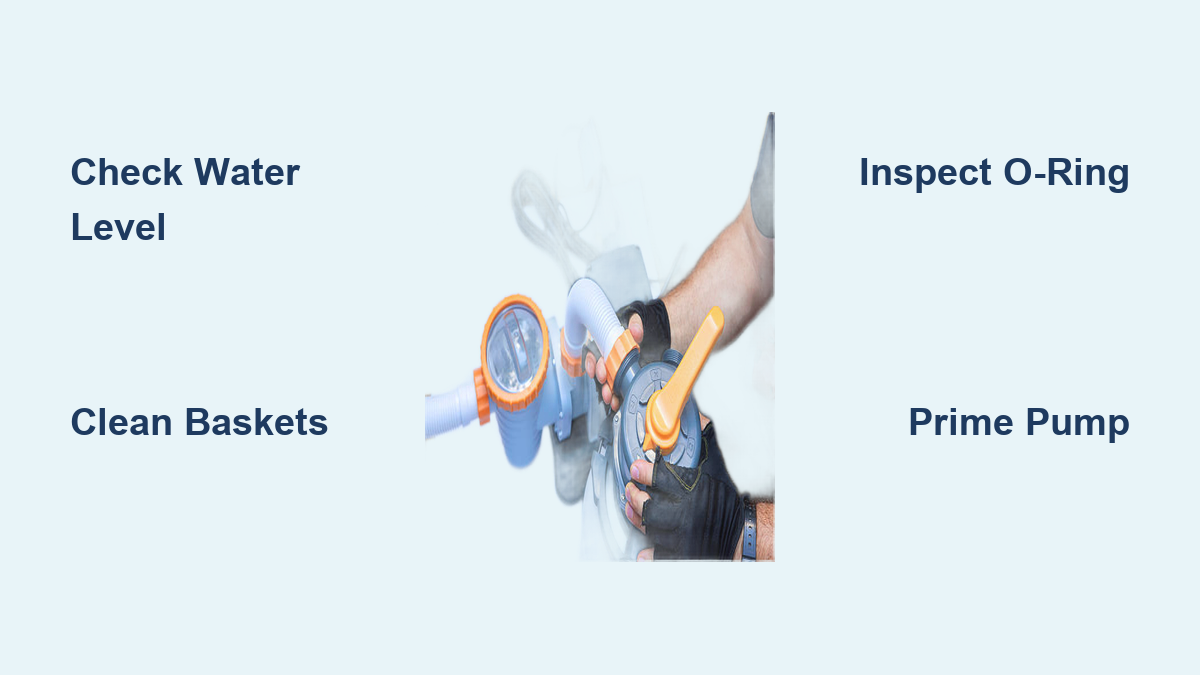
You turn on your pool pump, hear the motor humming, but notice something is wrong. No water is moving through the system. The return jets are silent, the filter gauge reads zero, and the pump housing might be gurgling. This is a classic pool pump running but no water flow issue, one of the most common yet urgent problems in pool maintenance. Left unresolved, it can lead to motor burnout, seal failure, and poor water quality. The good news is that in most cases, the cause is fixable with basic tools and a logical approach.
This issue stems from a break in the suction side of the system, not the motor itself. The pump spins, but it cannot draw water due to air intrusion, blockages, or misconfigurations. This guide walks you through every possible cause, how to diagnose it step by step, and what to do to restore flow fast.
Check Water Level First
The simplest cause is often overlooked. Low water level is the number one reason for no water flow despite a running pump. If the water is below the skimmer opening, the pump pulls in air instead of water, breaking suction and preventing prime.
Is Water Below Skimmer Inlet
What to look for. The water must cover the skimmer inlet to allow continuous suction. If you can see the skimmer throat or basket above water, that is your problem.
What to do. Fill the pool until water reaches midway up the skimmer opening. Avoid overfilling, as this can interfere with skimmer function. Recheck after heavy evaporation, rainfall, or backwashing.
Pro tip. Check water level before any other troubleshooting. It takes 10 seconds and solves approximately 20% of no flow cases.
Clear Skimmer and Pump Baskets
Clogged baskets are the second most common cause. Leaves, hair, algae, and small toys can block water before it reaches the pump, preventing flow even when the motor runs.
Remove Debris Blocking Flow
Steps to clean the baskets.
- Turn off the pump at the breaker.
- Open the skimmer lid and remove the basket.
- Rinse thoroughly with a hose.
- Repeat for the pump strainer basket.
- Reinstall both, ensuring tight seals.
Warning. Never run the pump without baskets in place. Debris can destroy the impeller and cause costly damage.
Expert note. Even if baskets look mostly clear, fine debris like hair or sand can restrict flow. Clean them weekly, more often in fall.
Inspect Pump Lid O-Ring

A damaged or dry O-ring lets air into the pump, breaking the vacuum needed to prime. This is one of the most frequent culprits when a pool pump runs but produces no water flow.
Fix Air Leaks at the Seal
What to check. Inspect the O-ring for cracks, flattening, or missing sections. Verify it is properly seated in the groove and lubricated with silicone based grease.
How to repair. Remove the O-ring and clean the groove thoroughly. Lubricate with pool safe grease, never petroleum based products. Replace if brittle or stretched. Reinstall the lid and tighten evenly.
User fix. One owner restored flow by replacing a five dollar O-ring after months of frustration.
Test for Suction-Side Air Leaks
Even tiny air leaks can prevent priming. The pump motor runs, but without proper suction, no water moves. Focus on the suction side, from skimmer to pump inlet.
Find Hidden Cracks and Loose Fittings
Common leak points include the pump lid union, drain plugs on the pump body, PVC joints or valves, and cracked suction pipes especially underground.
Leak detection methods. Use the soapy water test by spraying on joints. Bubbles form at leak points. Use the shaving cream test by applying thick cream. Suction pulls it into cracks. Use the plastic wrap test by covering a joint. If sucked inward, a vacuum leak exists. Use the water spray test by spraying on fittings. Temporary flow improvement indicates a leak.
User success. One homeowner found a hairline pipe crack using plastic wrap. They patched it and restored prime.
Fix leaks by tightening unions without over-tightening PVC, replacing cracked fittings, using PVC cement for permanent repairs, and applying Teflon tape on threaded connections.
Verify Valve Positions
A closed or misconfigured valve can completely block flow. This is an often overlooked cause when a pool pump runs but there is no water flow.
Ensure Water Path Is Open
What to check. Suction valves including skimmer and main drain must be fully open. The multi-port valve must be set to Filter or Recirculate, never in Backwash, Rinse, Waste, or Closed. Verify diverter valves are aligned correctly and return valves are open.
Common mistake. After backwashing, users forget to reset the valve to Filter, resulting in zero flow.
Visual cue. If the pump runs but no water enters the filter, check valve settings first.
Prime the Pump Manually
If the pump lost prime, it is full of air. You must refill it with water to re-establish the seal and restore suction.
Refill to Restore Suction
Manual priming steps.
- Power off the pump.
- Open the pump lid.
- Fill the housing completely with water using a bucket or hose.
- Ensure the O-ring is in place and lubricated.
- Secure the lid tightly.
- Set the multi-port valve to Recirculate if available.
- Turn on the pump and watch for flow.
- Once water circulates, switch the valve back to Filter.
Time needed. One to two minutes of continuous running to stabilize flow.
Pro tip. If using Filter mode, prime for two to three minutes to push air out of the filter.
Clear the Impeller
The impeller is the pump heart. If clogged with hair, string, or sand, it cannot move water even if the motor spins. This is a common reason why your pool pump runs but no water flows.
Remove Debris Jamming Rotation
How to access and clean the impeller.
- Turn off power at the breaker.
- Close suction and return valves.
- Open the pump housing.
- Use a screwdriver or wire hanger to dislodge debris.
- Rotate the impeller by hand. It should spin freely.
- Flush with a hose if needed.
- Reassemble and prime.
Warning signs include the motor running but no flow, grinding or rattling noise, and the impeller will not turn by hand.
Pro tip. Clean the impeller every six months, even if no symptoms. This prevents sudden failure.
Check for Clogged Suction Lines
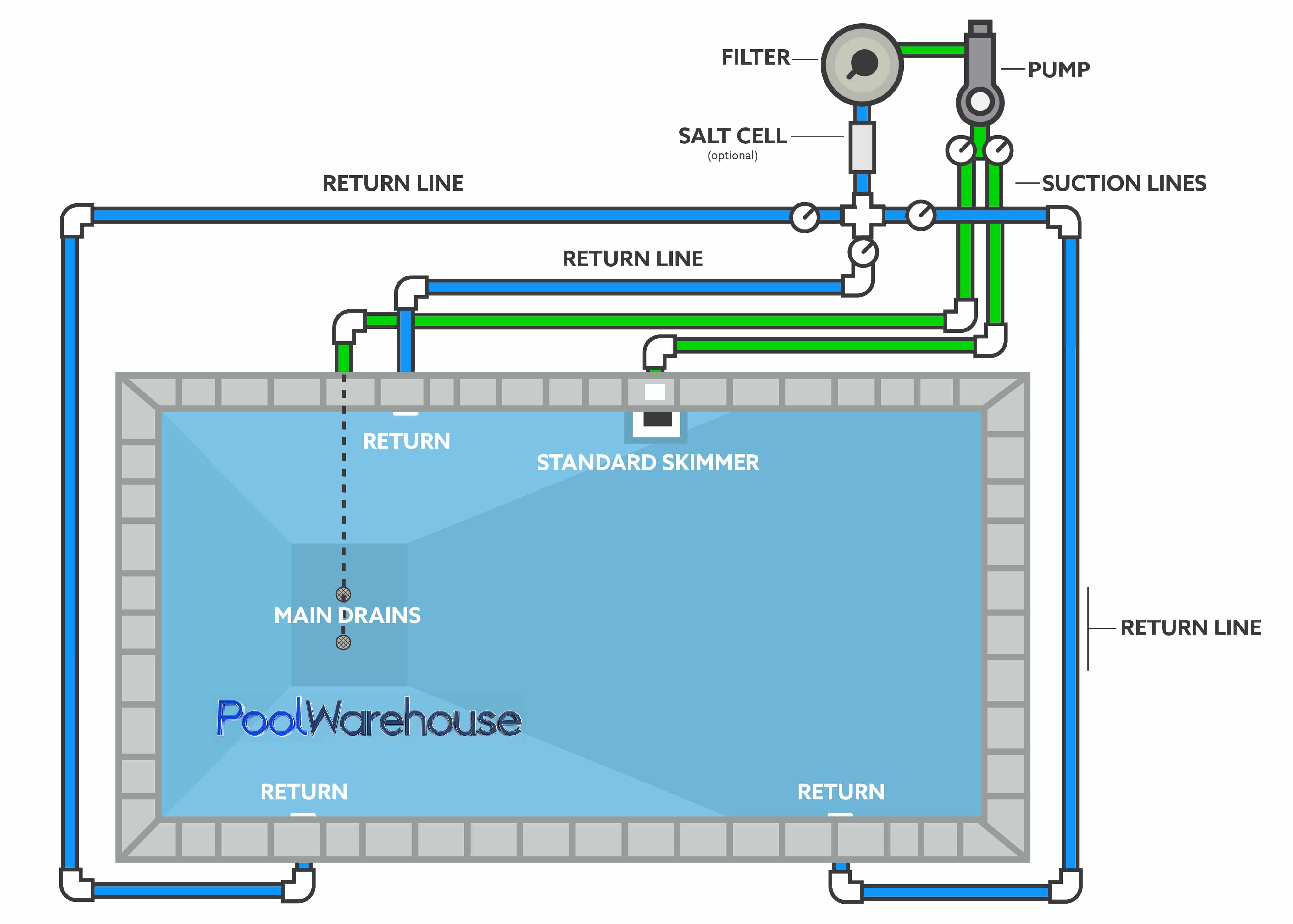
Debris can bypass the skimmer basket and lodge in underground plumbing. This creates a blockage that prevents water from reaching the pump.
Unblock Underground Pipes
Symptoms include strong suction at the skimmer but no flow at the pump, the pump primes briefly then loses flow, and air bubbles persist despite a sealed system.
Clearing methods. Use a plumbing bladder by inserting into the skimmer, connecting a hose, and turning on water for a reverse burst. Use an electric eel or fish tape to feed through the line and dislodge the clog. Use hydro-jetting for stubborn or deep blockages. Use a pressure test to confirm clog location, best done professionally.
User hack. Feeding an electrician fish tape down the line freed a stuck leaf cluster.
Inspect Skimmer Weir Door
The weir door is a floating flap that keeps debris from escaping the skimmer. When it fails, air enters instead of water.
Prevent Air Entry at Surface
Failure mode. The door stuck in the upright position allows air to enter instead of water and reduces suction efficiency.
Fix. Manually move the door to ensure free movement. Clean the hinge and track. Replace if cracked or warped.
Expert note. A stuck weir can cause flow reduction, not always total failure, but still contributes to priming issues.
Backwash or Clean the Filter
A severely clogged filter can restrict flow enough to stop circulation. This affects pressure on the return side but can also impact overall system performance.
Restore Flow After Filter Clogs
By filter type. For sand filters, backwash until sight glass runs clear and replace sand every five to seven years. For DE filters, backwash then recharge with the correct amount of DE powder. For cartridge filters, remove, rinse, or soak in cleaner and replace if torn or collapsed.
Warning. If the filter is the only issue, the pump should still pull water from the pool. Total lack of suction points to suction-side problems.
Diagnose Motor and Electrical Issues

Even if the motor hums, it may not spin the impeller fast enough to move water. This is a less common but important cause when a pool pump runs but there is no water flow.
Rule Out Internal Motor Failures
Common electrical faults include failed start capacitor which is the most common issue, burnt windings, worn bearings, and tripped GFCI or breaker.
Signs of motor trouble include humming but no rotation, overheating motor, burning smell, and tripped breaker.
Capacitor check. Use a multimeter to test microfarad rating. Replace if out of spec, typically a ten to twenty dollar part.
Critical warning. Capacitors store lethal voltage. Only trained users should handle replacement.
When to call a pro. If the motor hums but impeller does not spin, or you smell burning, shut off power and call a technician.
Adjust Variable Speed Pump Settings
Modern VSPs run quietly at low speeds, which can be mistaken for no flow. Understanding these settings helps avoid misdiagnosis.
Avoid Misdiagnosing Low RPM as Failure
What to check. Review the current RPM setting on the display. Verify it is not set too low for your pool size. Confirm the flow sensor is not triggering false alarms.
Troubleshooting. Temporarily increase speed to test flow. Verify the programmed schedule matches turnover needs. Confirm flow sensor is calibrated.
Expert insight. Low RPM settings can make it seem like the pump is not working when it actually is.
Inspect for Mechanical Damage
Physical damage can cause air or water leaks that disrupt operation. This includes damage to the pump housing, seals, and internal components.
Identify Cracked Housings or Failed Seals
Check for cracked pump housing or lid, water dripping from the motor shaft indicating failed seal, corroded or broken impeller blades, and loose internal components.
Signs of seal failure include water leaking from between pump and motor, white crusty residue from calcified water, and motor overheating.
Never run a pump with a leaking seal. Water can destroy the motor.
When to replace. If the housing is cracked or the seal is leaking, repair or replace promptly.
Follow the Diagnostic Flow
Use this sequence to isolate the issue efficiently. A systematic approach saves time and prevents overlooking common problems.
Step-by-Step Troubleshooting Checklist
- Water level. Is water above skimmer inlet?
- Baskets. Are skimmer and pump clean?
- O-ring. Inspected and lubricated?
- Prime. Is pump housing filled with water?
- Air leaks. Tested with soapy water?
- Valves. Are all suction lines open? Is multiport set to Filter?
- Impeller. Cleared of debris? Does it spin freely?
- Filter. Backwashed or cleaned?
- Suction line. No clogs or cracks?
- Motor. Running smoothly? No hum or burn smell?
If all steps fail, suspect underground pipe damage or internal pump failure. Call a professional.
Prevent Future Failures
Prevention beats repair. Following a maintenance plan keeps your pool pump running properly and avoids the frustrating pool pump running but no water flow scenario.
Maintain Peak Pump Performance
Recommended maintenance schedule.
- Clean skimmer basket weekly, daily in leaf season.
- Clean pump basket weekly.
- Inspect O-rings monthly.
- Lubricate seals every three months.
- Backwash filter when pressure rises eight to ten PSI.
- Check for air leaks quarterly.
- Get a professional tune-up annually.
Pro tip. Keep spare O-rings and a capacitor on hand. These are common failure points.
When to Call a Pool Pro
DIY fixes work for most issues, but some require expertise. Knowing when to escalate saves money and prevents damage.
Know Your Limits
Call a professional if water leaks from the motor shaft, capacitor or wiring needs replacement, underground pipe is cracked or clogged, the pump repeatedly loses prime, equipment is under warranty, or you are unsure about electrical safety.
Warning. DIY repairs on under-warranty equipment may void coverage.
Final advice. A pro does not just fix the problem. They help prevent the next one.
Frequently Asked Questions About Pool Pump Running But No Water Flow
Can low pool water stop circulation completely?
Yes. If water falls below the skimmer opening, air is drawn in, breaking suction and causing loss of prime.
Is it safe to run a pump with no water flow?
No. Running dry overheats seals and motor, leading to permanent damage within minutes.
How often should pump baskets be cleaned?
At least once per week, more frequently during high debris periods.
Are variable speed pumps harder to troubleshoot?
They add settings complexity, but most flow issues stem from the same root causes. Blockages, air leaks, or priming issues still apply.
When should I call a professional?
Call a professional for electrical issues, shaft leaks, repeated priming failure despite correct water level and sealed system, suspected underground pipe damage, or when DIY troubleshooting fails after all steps.
What is the most common cause of no water flow?
The most common causes are low water level, clogged baskets, and air leaks at the pump O-ring. These three factors account for the majority of cases.
Key Takeaways for Fixing Your Pool Pump Running But No Water Flow
A pool pump running but no water flow is a red flag, but rarely a death sentence. By methodically checking water level, baskets, seals, valves, and the impeller, you will solve the issue in most cases. The suction side of the system is where the problem almost always lies, whether from air intrusion, blockages, or misconfigured valves.
Act fast to protect your pool pump, maintain water quality, and keep your pool safe and clean. Running a pump without proper flow can destroy the motor and seals within minutes. Keep spare O-rings on hand, check water level daily, and clean baskets weekly to prevent recurrence.
For ongoing care, consult trusted resources like The Pool Care Handbook to stay ahead of problems before they start. If DIY troubleshooting fails after working through all diagnostic steps, call a professional to handle electrical issues, pipe repairs, or internal pump failures.